Free Chlorine vs Total Chlorine (and Combined): What Matters
Here is how I think about it: free chlorine (FC) is the chlorine doing the work right now. Combined chlorine (CC) is chlorine that is already spent — it fought contaminants and lost its punch. Total chlorine (TC) is just FC + CC added together. The number I watch is CC: under 0.5 ppm you are fine, over 1 ppm it is time to shock.
Most guides explain these three numbers backwards — definitions first, advice never. I will flip it. Think of FC as your army, CC as the casualties, and TC as the headcount of both. You manage the army. You watch the casualties.
This distinction is also the key to the SLAM method's endgame — I judge "done" more by CC than by anything else, and so does nearly every experienced owner whose write-ups I trust.
Free chlorine: the one you dose to
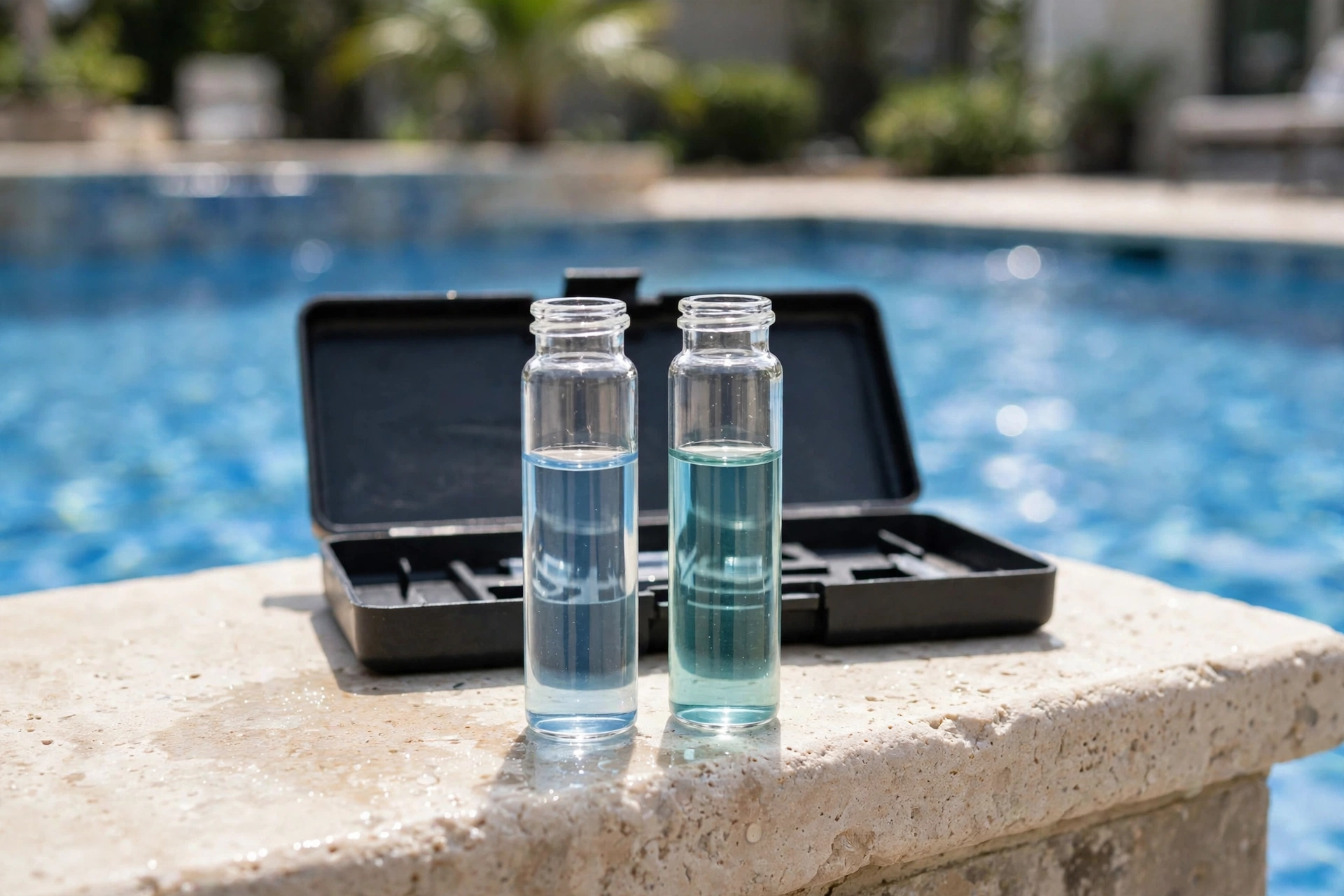
FC is chlorine that is ready to sanitize right now — nothing used up, nothing bound. Your daily target (3–5 ppm at CYA 30–50, higher for saltwater) is an FC target. So when someone tells me "my chlorine is 4," my first question is always: free chlorine, or total? Only one of those answers tells me anything.
Combined chlorine: the one that tells the truth
CC forms when chlorine binds to nitrogen waste — ammonia, sweat, urine, the usual suspects. It barely sanitizes, and it is behind the classic "chlorine smell" and the eye sting. And yes, that strong chlorine smell means used-up chlorine, not too much of it. Your nose is detecting the casualties, not the army.
Here is the principle I go by: CC level matters more than overnight FC loss for knowing whether something is growing in your water. If CC stays above 1 ppm while your FC is correct, there is an ongoing fight in there — time to shock to breakpoint.
Total chlorine: mostly arithmetic
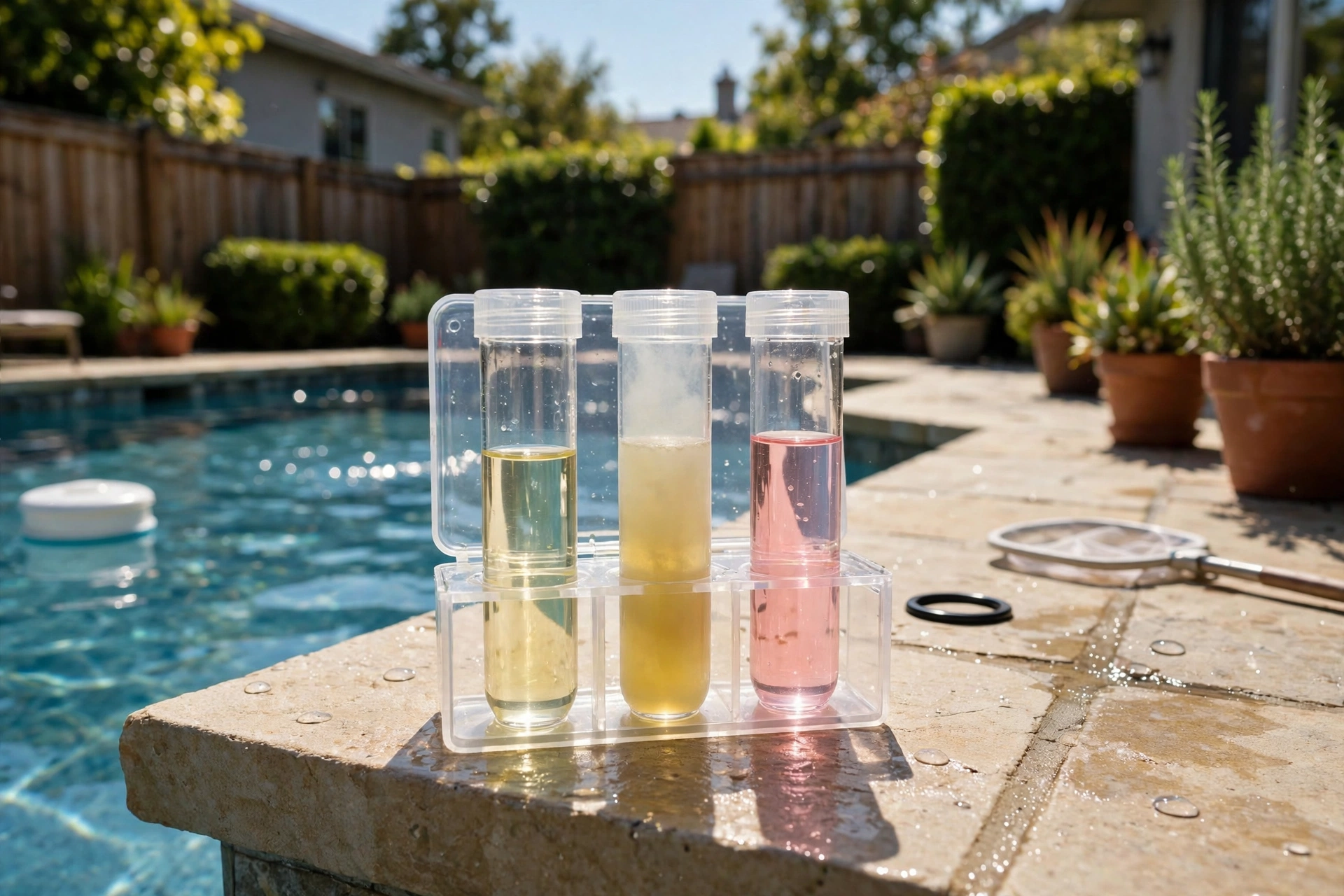
TC = FC + CC. The only reason TC gets reported at all is that cheap tests — OTO drops, strips — measure TC directly and cannot split it. So do the split yourself: TC 5 and FC 4.5 means CC is 0.5, and you are fine. TC 5 and FC 2 means CC is 3, and you have a problem. Never make a decision off TC alone.
What to do at each CC level
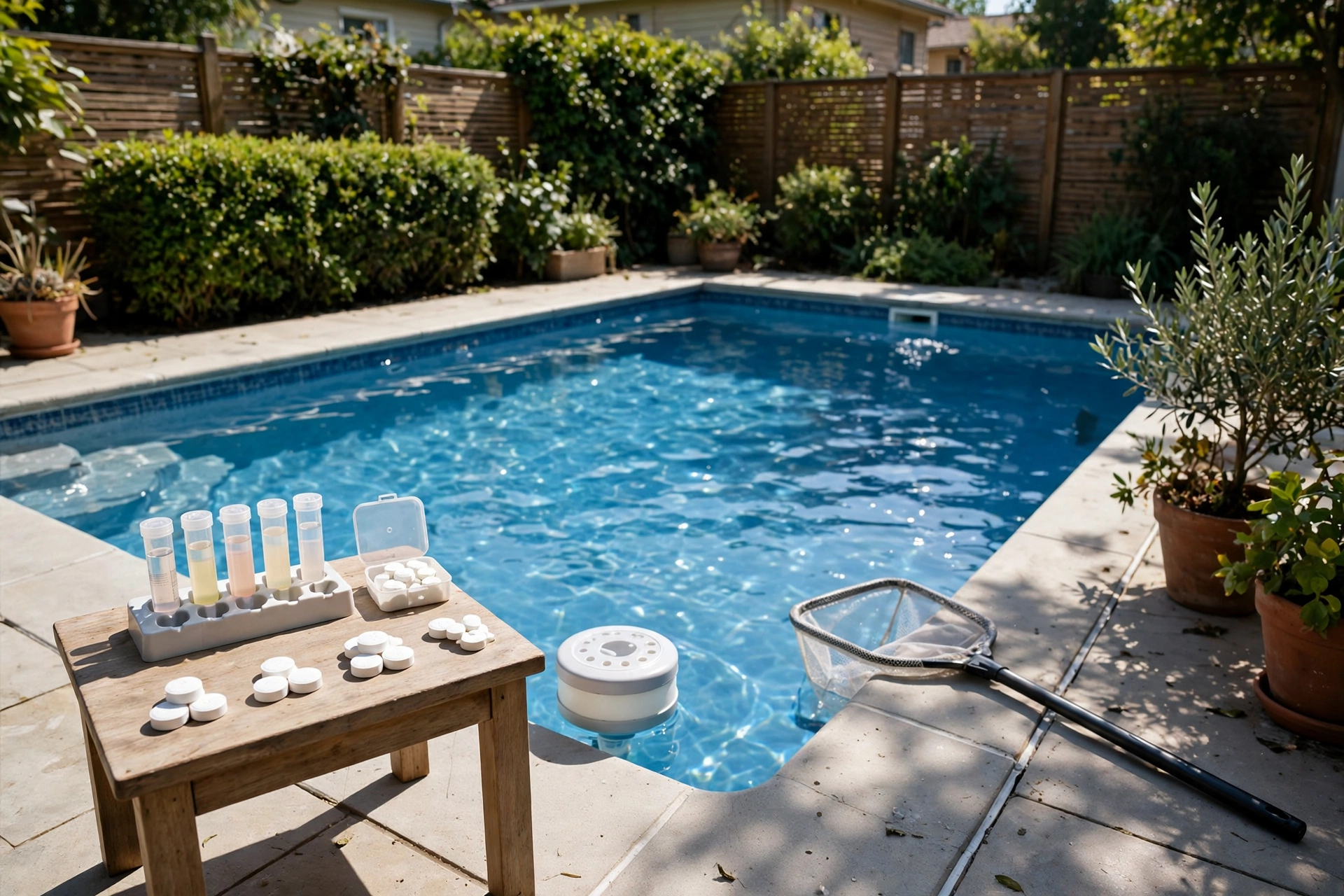
Here is my playbook. CC at or under 0.5 ppm: normal, do nothing. CC between 0.5 and 1.0: watch it — normal chlorination plus sun often clears it on its own. CC above 1.0 that will not come down: shock to breakpoint (roughly 10x the CC level in FC) and hold it there until CC drops. During a SLAM, CC falling to 0.5 or below is one of the three pass conditions — that is how you know the fight is over.
- TC = FC + CC. Always.
- CC ≤ 0.5 ppm: fine. CC > 1.0 ppm sustained: shock.
- The "chlorine smell" = combined chlorine, not free chlorine.
- Eye burn blamed on "too much chlorine" is usually chloramines (CC).