Black Algae in Pool: Why It Is the Hardest to Kill
Black algae survives chlorine because its layered biofilm shields the roots embedded in your plaster. My approach: scrub the spots hard with a stainless steel brush to break the heads open, then keep chlorine at shock level for your CYA until the spots stop returning. Expect 1–3 weeks, not days — anyone who tells you otherwise is selling something.
Black algae looks like dark spots that won't brush off easily — usually on plaster walls, in corners, and around steps. Technically it's a cyanobacteria, and it's the toughest algae you'll meet precisely because chlorine alone barely touches it.
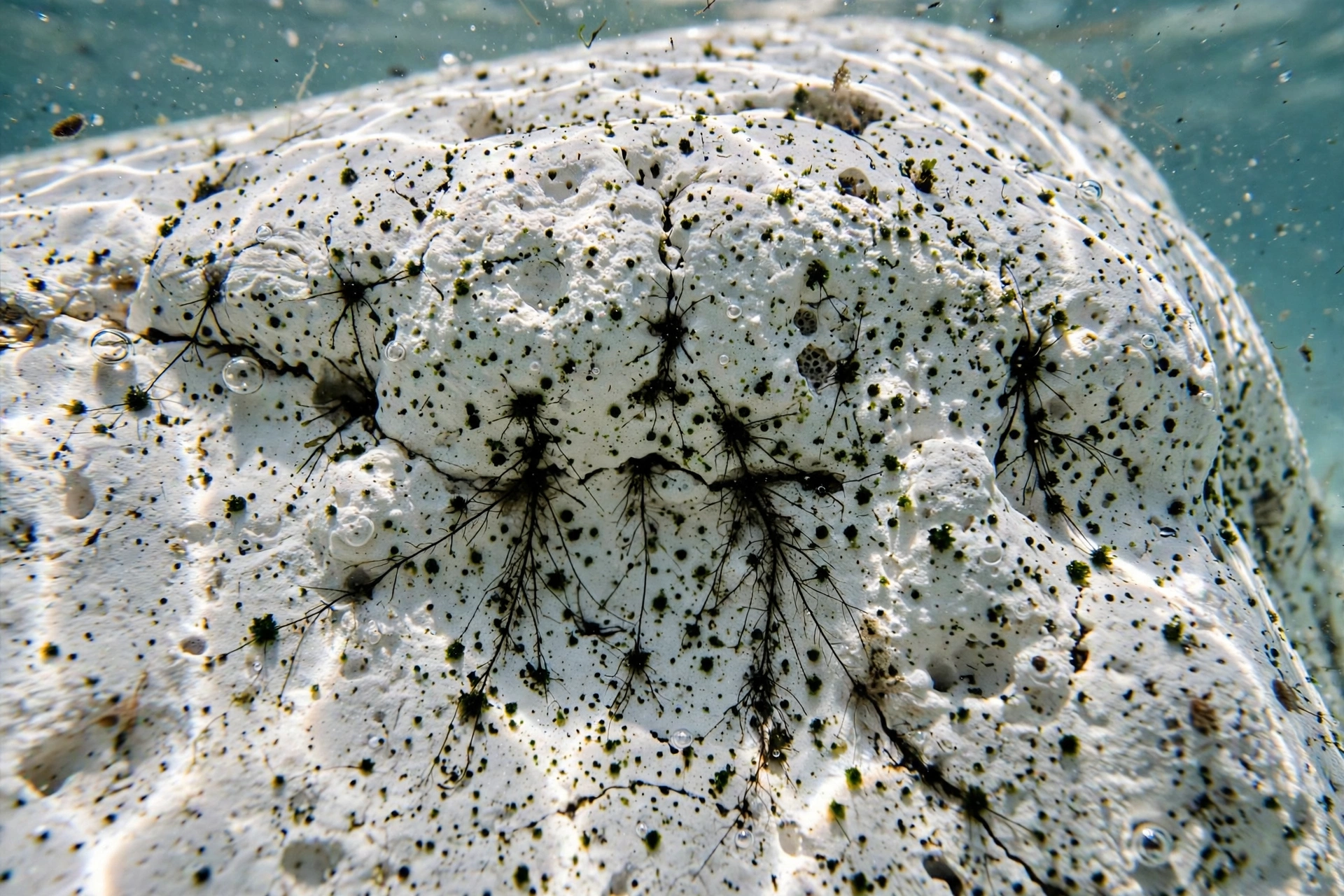
Here's the thing most guides bury: the chemical matters less than the brushing. Black algae grows in layers with waxy coatings, and its "roots" dig into porous plaster. Until you physically break those layers open, chlorine just washes over the top — expensive chlorinated water sliding right past the problem.
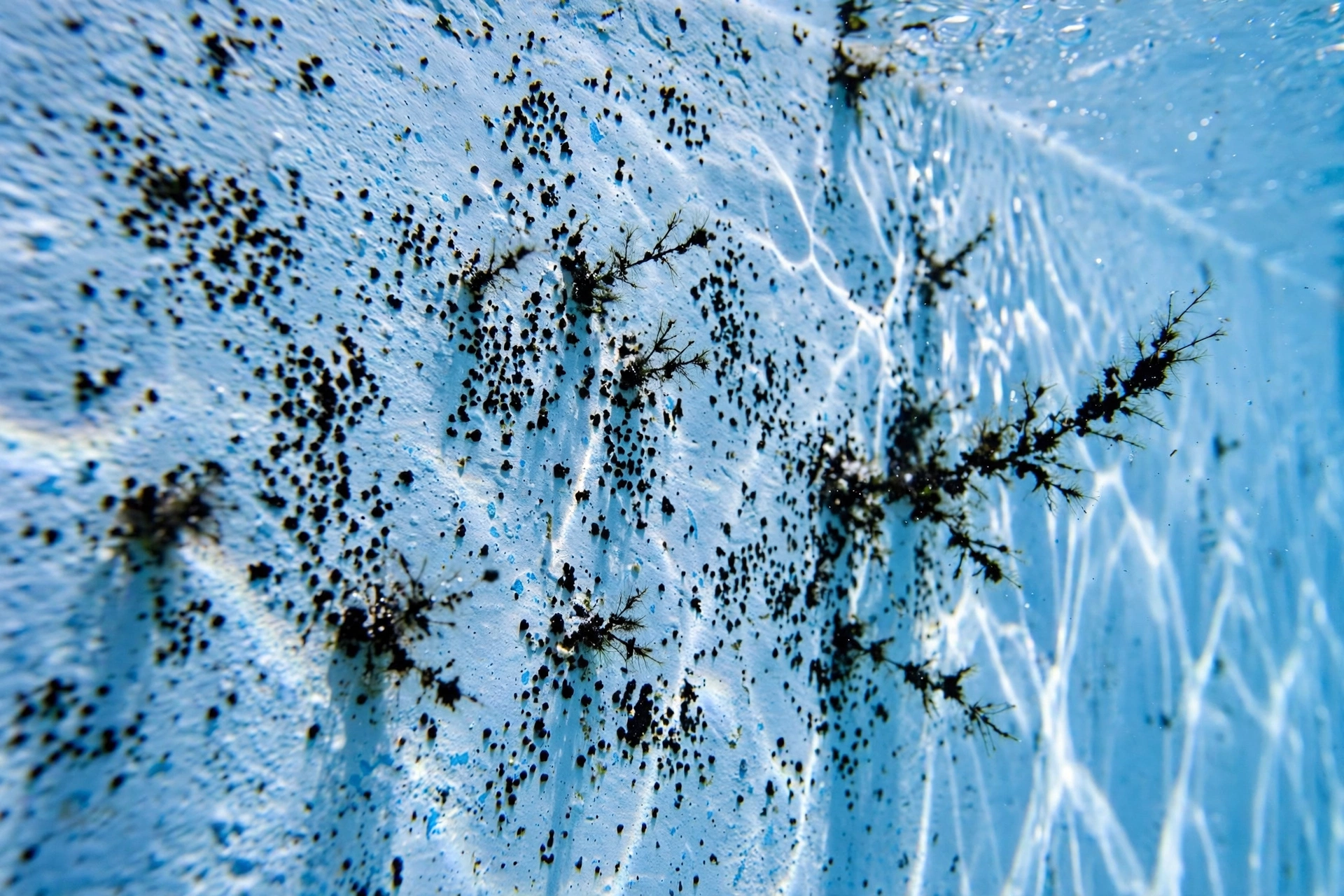
Step 1: Brush like you mean it
Use a stainless steel bristle brush on plaster or gunite — not nylon, it's too soft for this job — and scrub every black spot until the heads break. Vinyl liner owners: stick to a stiff nylon brush; steel will tear the liner. You'll see the spots lighten or smear. That's the protective layer breaching, which means chlorine can finally reach the living part.
Brush daily during treatment. Corners and behind ladders are the usual hideouts — pull the ladder out and scrub behind it. This is elbow-grease territory; there's no way around it.
Step 2: Shock level, sustained
After brushing, bring free chlorine to shock level for your CYA and hold it there — same as a SLAM. Test and top up daily. The spots will fade over days, then stop coming back. Black algae treatment takes 1–3 weeks. Anyone promising faster is selling something.
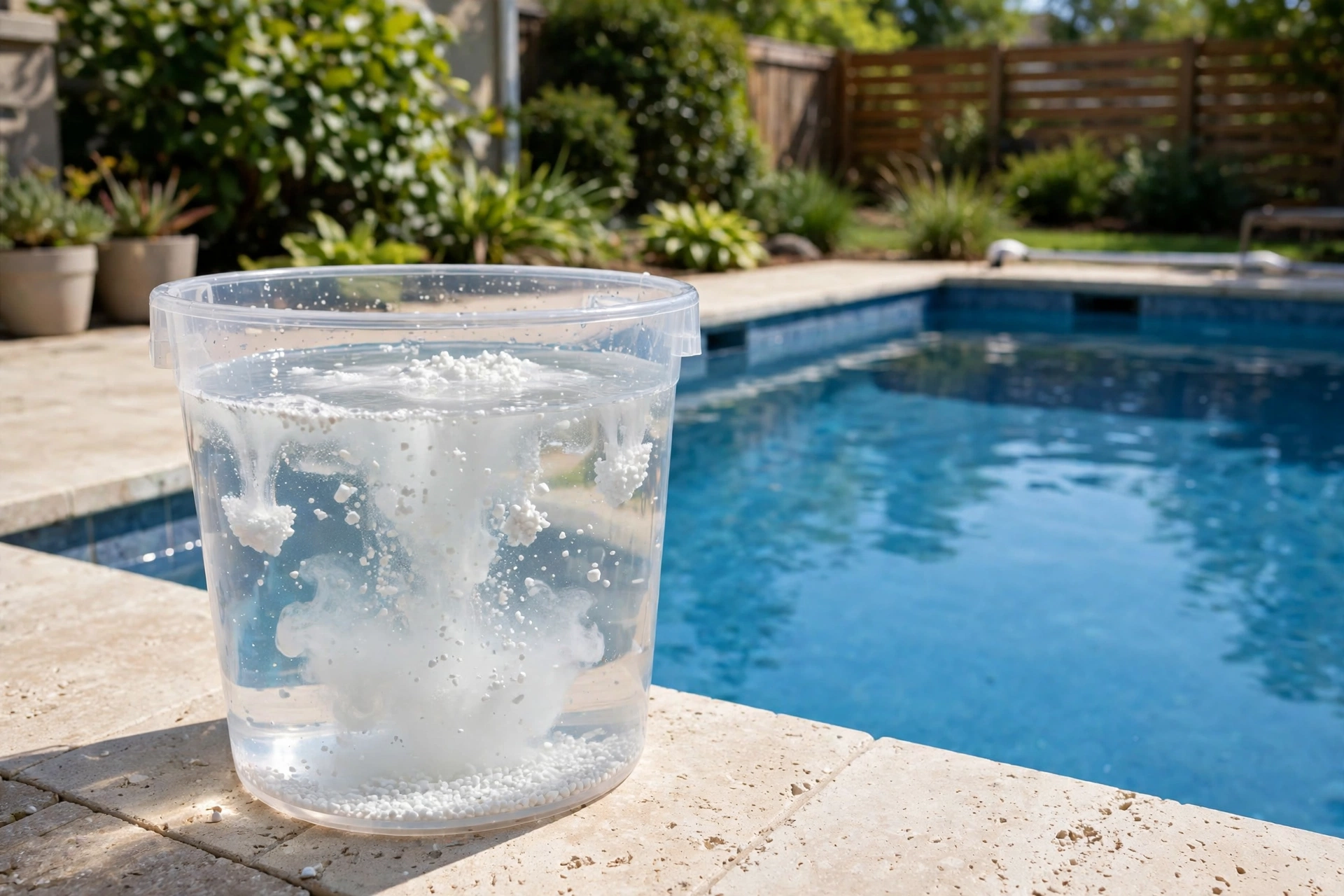
A trichlor tablet rubbed directly on a spot is an old trick you'll see on forums — it delivers intense local chlorine. But it's acidic and can bleach or etch plaster if left sitting, so I don't lead with it. Brushing + sustained shock is the safer core method.
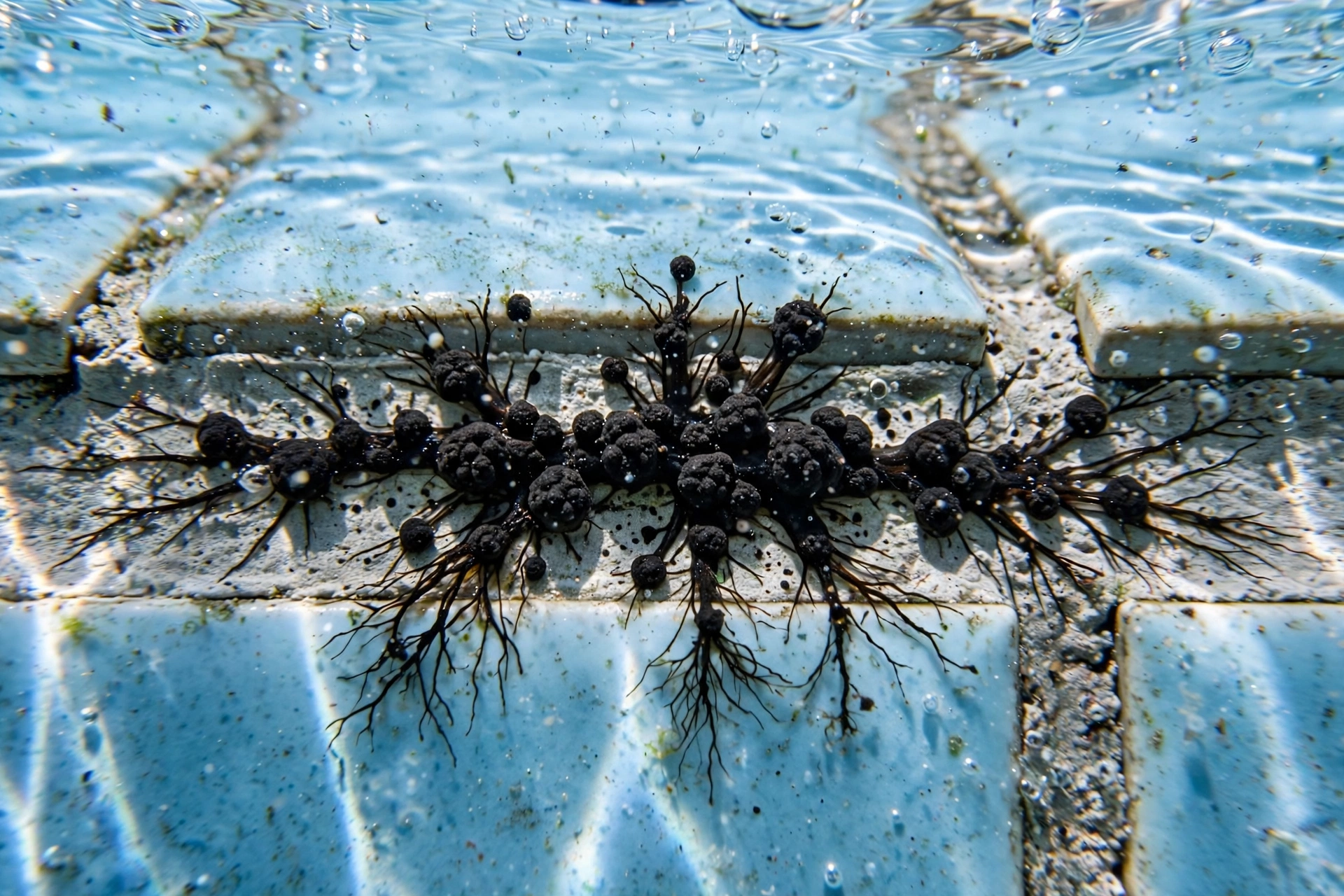
Why it keeps coming back
Because the roots survive in the plaster pores. The visible spot dies, the root doesn't, and it regrows in a week. This is why one shock treatment "works" and then the spots return — the treatment never reached the roots. Frustrating? Extremely.
Long-term prevention is boring but it works: keep chlorine at the proper level for your CYA every single day (black algae almost always starts during a low-chlorine period), brush weekly as routine, and don't let phosphates get absurd. Phosphate removers are optional, not required, if your chlorine is right.