Mustard Algae in Pool: Identification and Treatment
Mustard algae is a yellow, powdery dust that clings to shady walls and brushes off easily. Here's my rule: if it brushes off and returns in the same spots, it's mustard algae, not pollen. Treat with chlorine at "mustard shock level" (about 60% of CYA instead of the usual 40%), brush everything including toys and ladders, and wash anything that was in the pool. Yes, everything.
Mustard algae is the great impersonator: it looks like pollen or sand dust — yellowish and powdery, usually on the shady side of the pool. The test is simple, and you can do it right now: brush it. Pollen brushes away and doesn't come back in the same pattern. Mustard algae returns to the same spots within a day or two.
It's chlorine-resistant enough that a normal SLAM sometimes fails on it — which is why it gets its own protocol on this page. The good news: it's much easier to beat than black algae.
Confirm it is mustard algae, not pollen
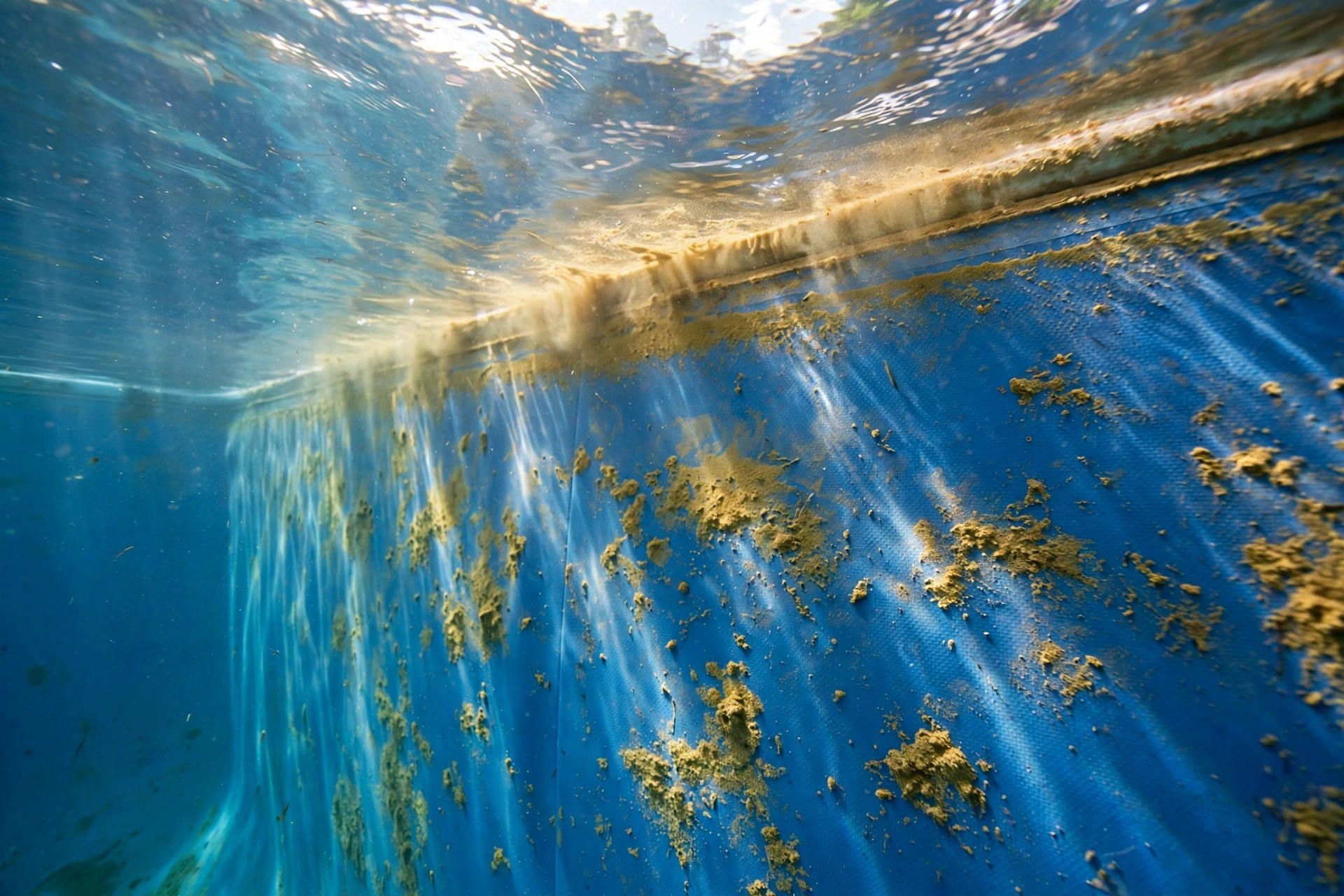
Pollen season fools a lot of people — don't feel bad if it got you. Key differences: mustard algae prefers shade and still water (under ladders, in corners), it has a distinct yellow-mustard color rather than pale yellow dust, and it reappears in the exact same spots after brushing. Pollen distributes evenly and doesn't regrow in patterns.
Still unsure? Brush a patch in the evening and check in the morning. Regrowth in the same spot is the verdict — case closed.
Yellow algae vs calcium scale: the brush test
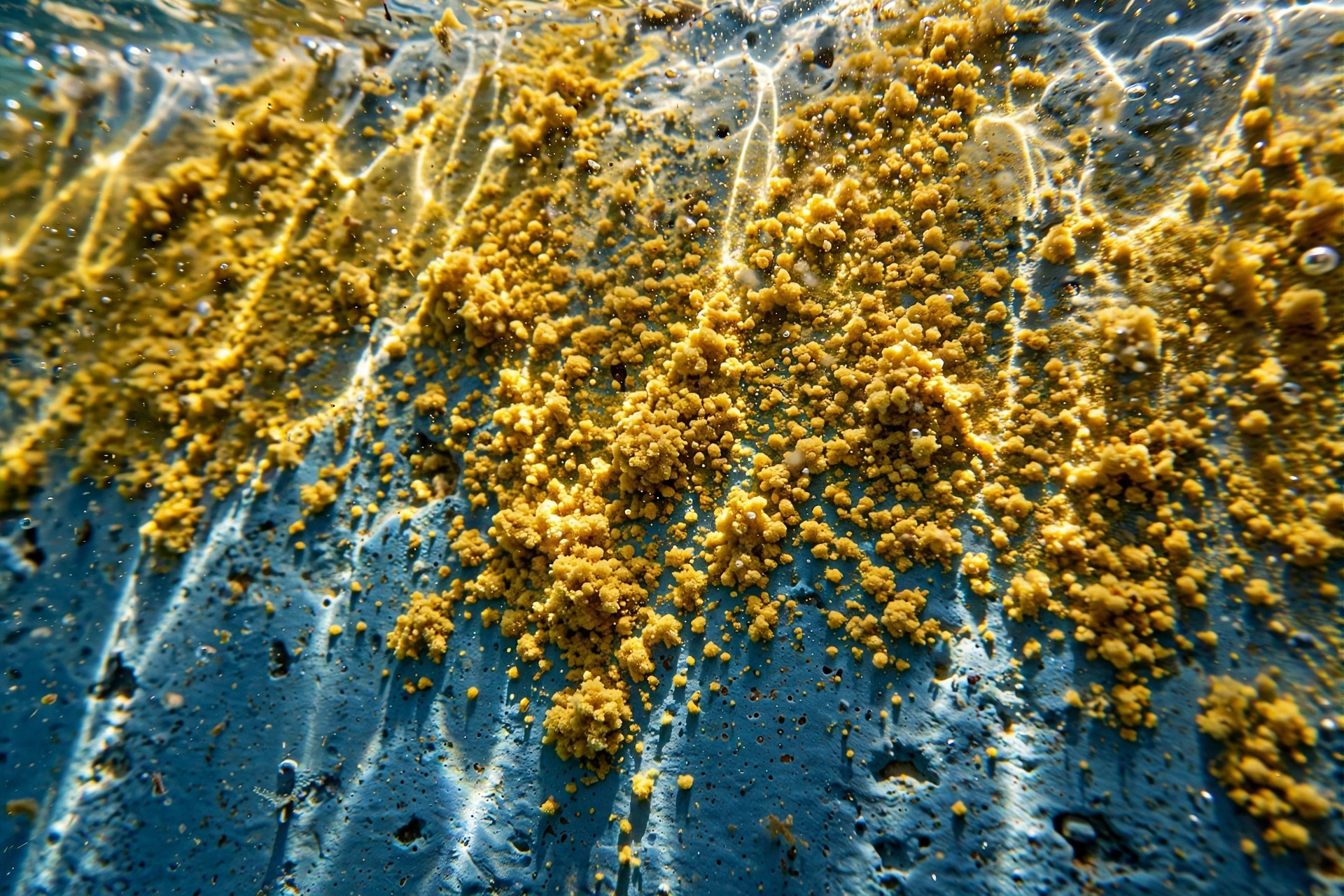
Mustard algae is also called yellow algae — same organism, two names. But here is the differential diagnosis that matters: yellow patches can also be calcium scale, and the treatments are opposites. Algae needs more chlorine; scaling needs less calcium and lower pH. Guess wrong and you waste a week.
The two-minute test: brush it. Yellow/mustard algae is powdery and brushes off with light effort; calcium scale is a crust that feels rough like sandpaper and does not move under a brush. Location helps too — algae loves shade and poor circulation (corners, behind ladders), while scale forms where water evaporates or chemistry precipitates it (waterline tile, salt cell plates).
Then confirm with a drop kit: CH over 400 ppm with pH drifting high is a scaling environment, and no amount of chlorine fixes that. If CH and pH are normal and FC has been low, it is algae. One more clue from history: scale often appears after high pH or heavy cal-hypo use; algae appears after low chlorine.
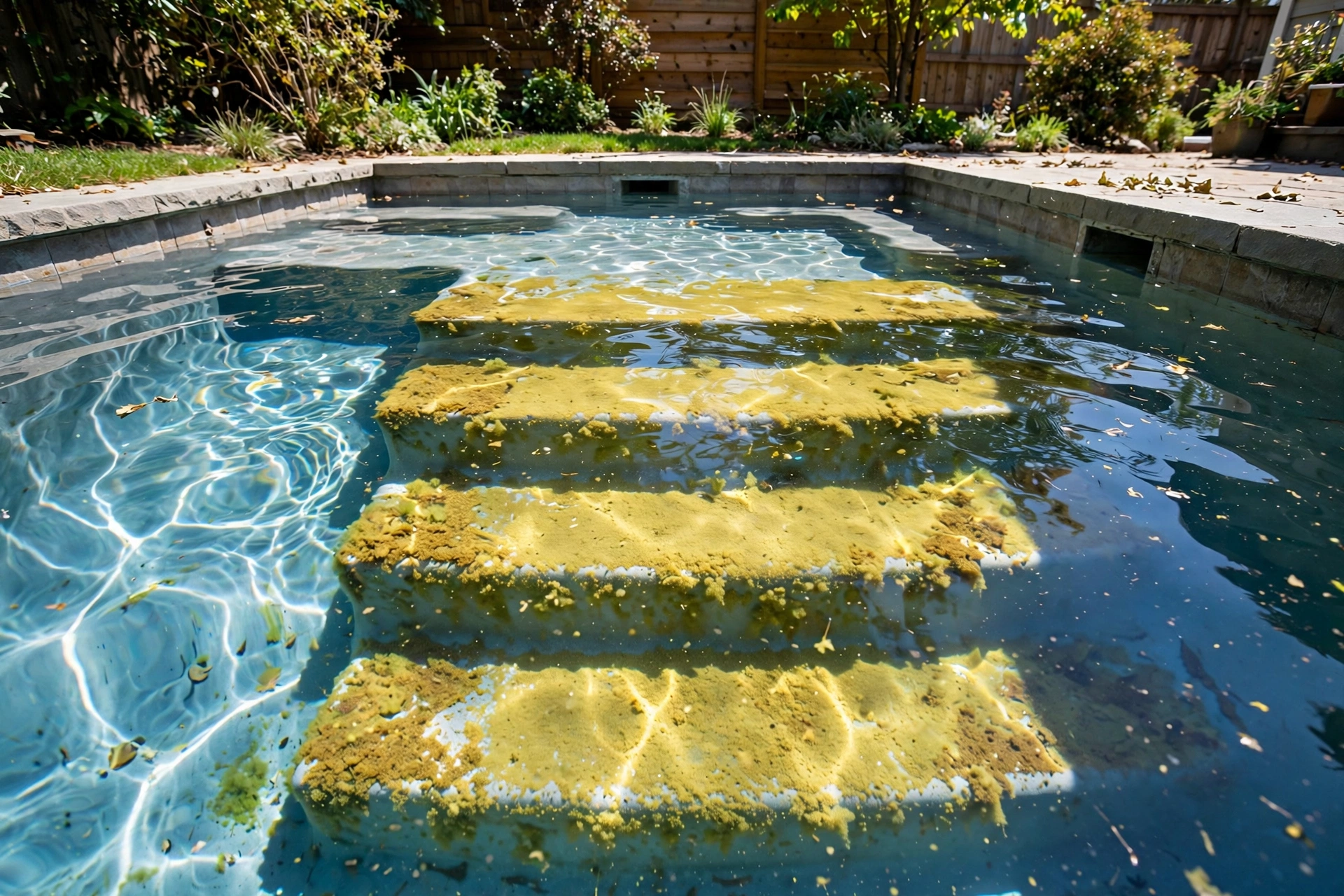
The mustard-algae shock level
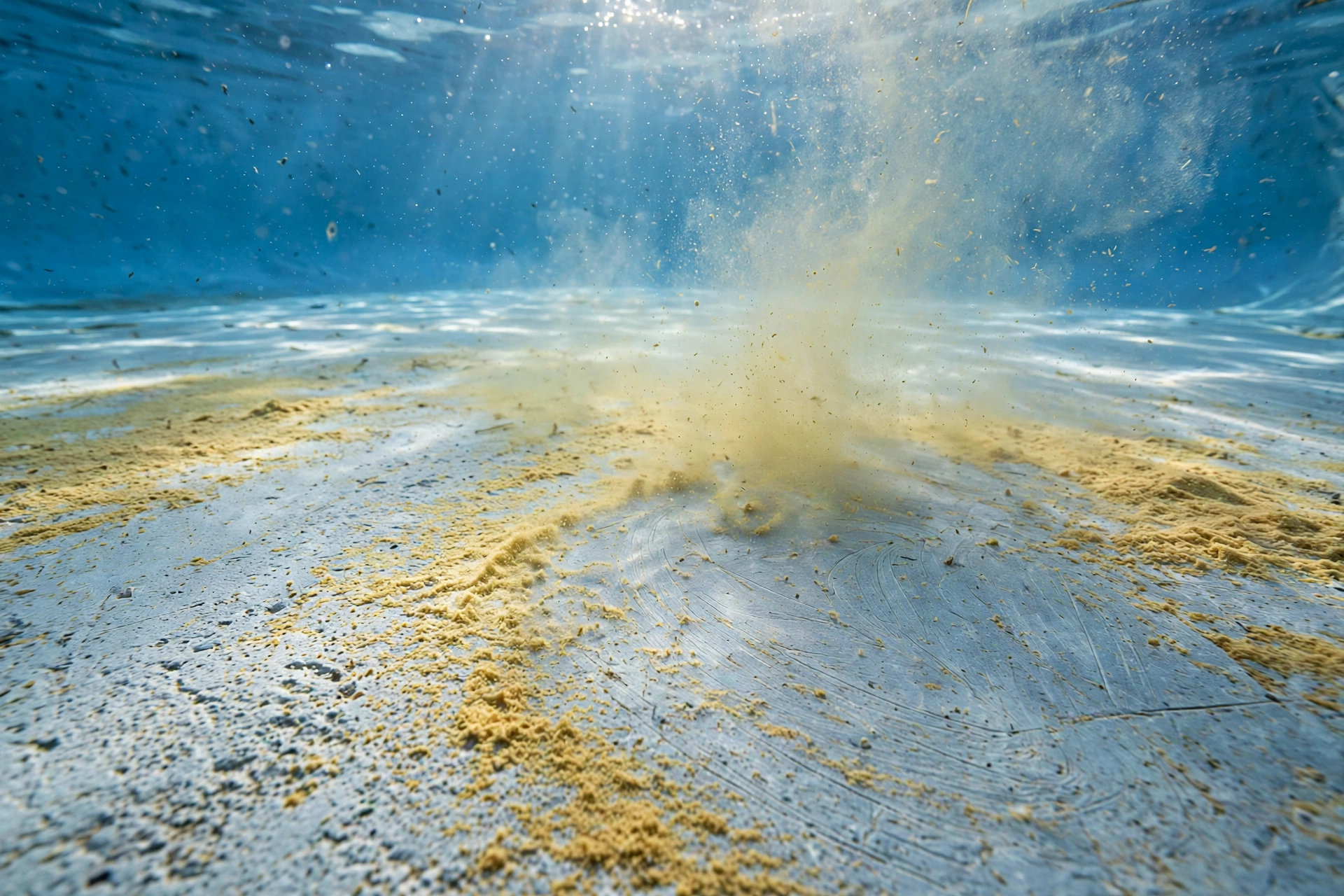
Standard SLAM targets shock level at ~40% of CYA. For mustard algae, I go to ~60% of CYA and hold it there. With CYA at 40, that means about 24 ppm FC instead of 16. Maintain it with daily testing and top-ups, brush everything daily, and run the pump 24/7.
Everything that was in the pool goes through treatment too: ladders, toys, covers, brushes — even swimsuits get washed. Mustard algae hides in all of them and re-seeds the pool otherwise. This is the step people skip, and it's what separates one-treatment success from round three.
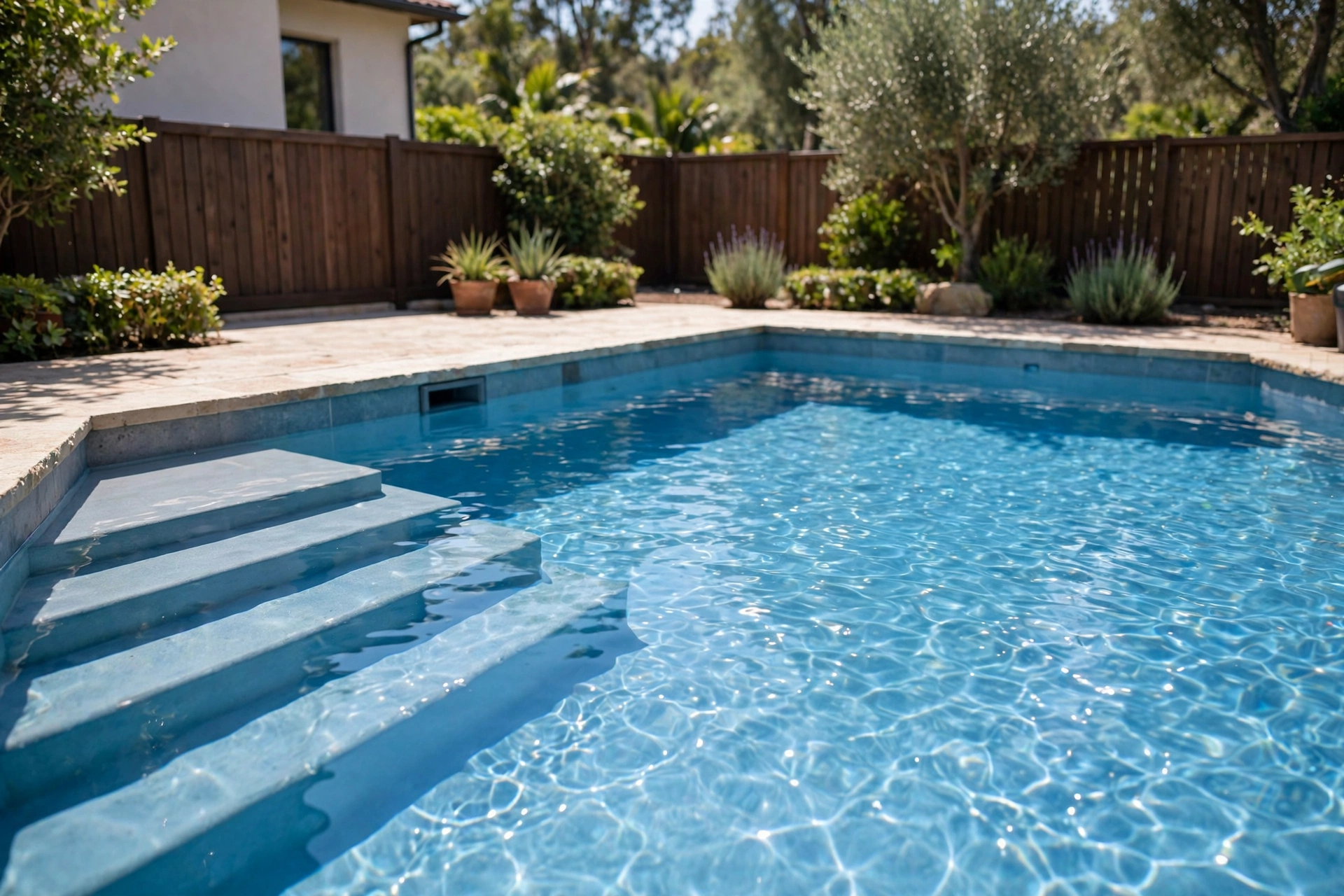
After it is gone
Keep chlorine at the high end of the normal range for your CYA for a couple of weeks afterward, and keep brushing weekly. Mustard algae often arrives via contaminated equipment from another pool — a friend's vacuum, a shared brush — so be a little suspicious of borrowed gear from now on.