Pool Salt Cell: Cleaning, Lifespan & Replacement Guide
Clean scale with a diluted muriatic acid soak (15–30 minutes, until the fizzing stops) — and never scrape the plates with anything. Cells last 3–7 years. When replacement day comes, size up: an oversized cell cruising at 40% will outlast a maxed-out one by years. That's the single best money you can spend on a salt system.
The salt cell is the engine of your saltwater pool — and its only real consumable. Treat it right and it'll hum along for years; neglect it and you'll be buying a new one way too early. Think of this page as the owner's manual the box should have included.
Cleaning: the acid soak
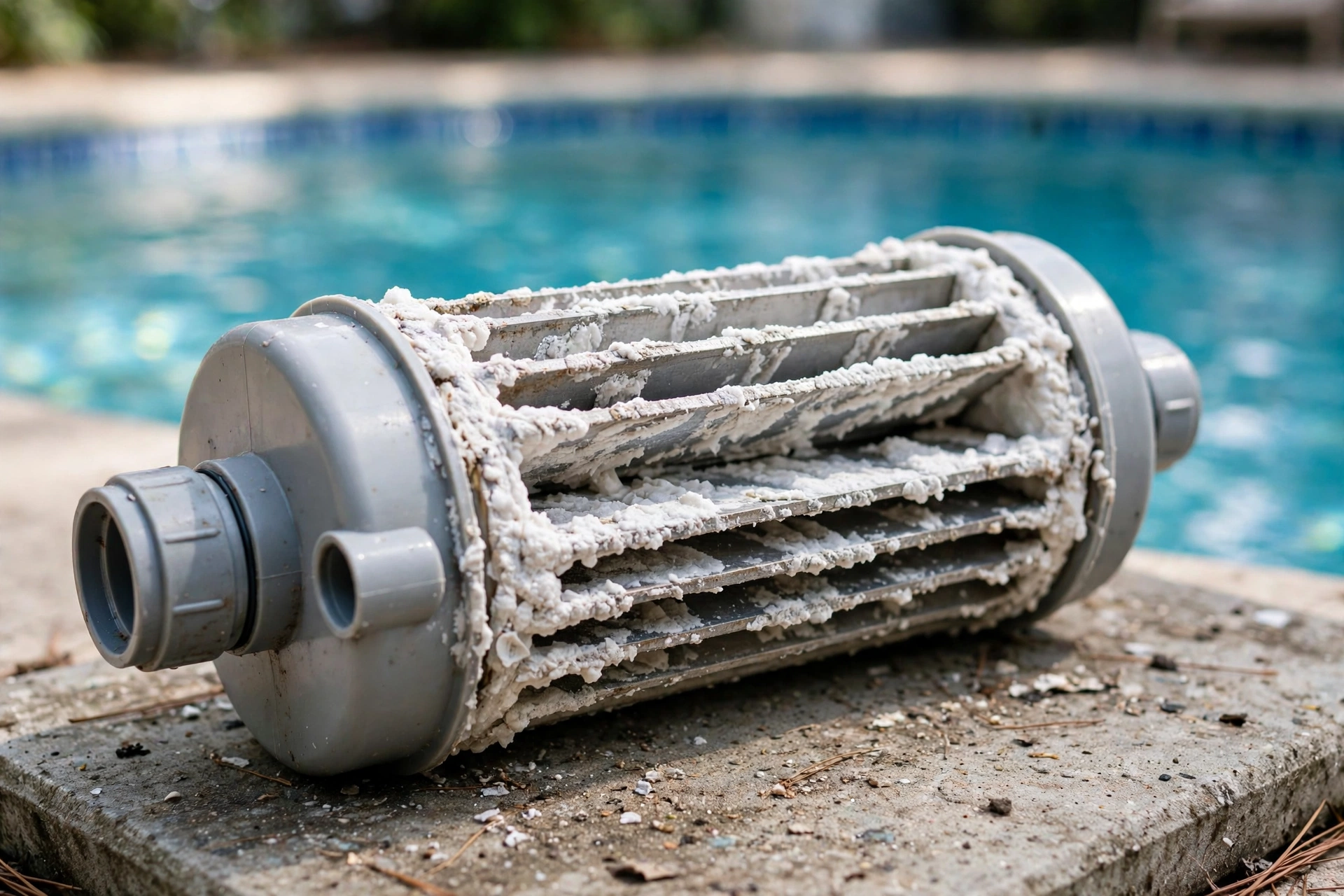
When white scale coats the plates, here's the drill: cap one end of the cell (or stand it in a cleaning stand), fill with a 4:1 water-to-acid mix — always acid into water, I can't stress that enough — and soak until the fizzing stops, usually 15–30 minutes. Rinse it thoroughly afterward. Gloves and eye protection, always. Do this outdoors — the fumes are no joke. Your product label and cell manual are the final word on dilution and procedure; follow them over any general guidance here.
How often you'll do this depends on your water: high pH plus high calcium scales a cell fast. Here's the thing most owners miss — keeping pH in range IS cell maintenance. Every week your pool sits at 8.2 is a cleaning you wouldn't have needed. The acid bottle and the cell have an inverse relationship: use one regularly, or you'll be soaking the other.
What kills cells early
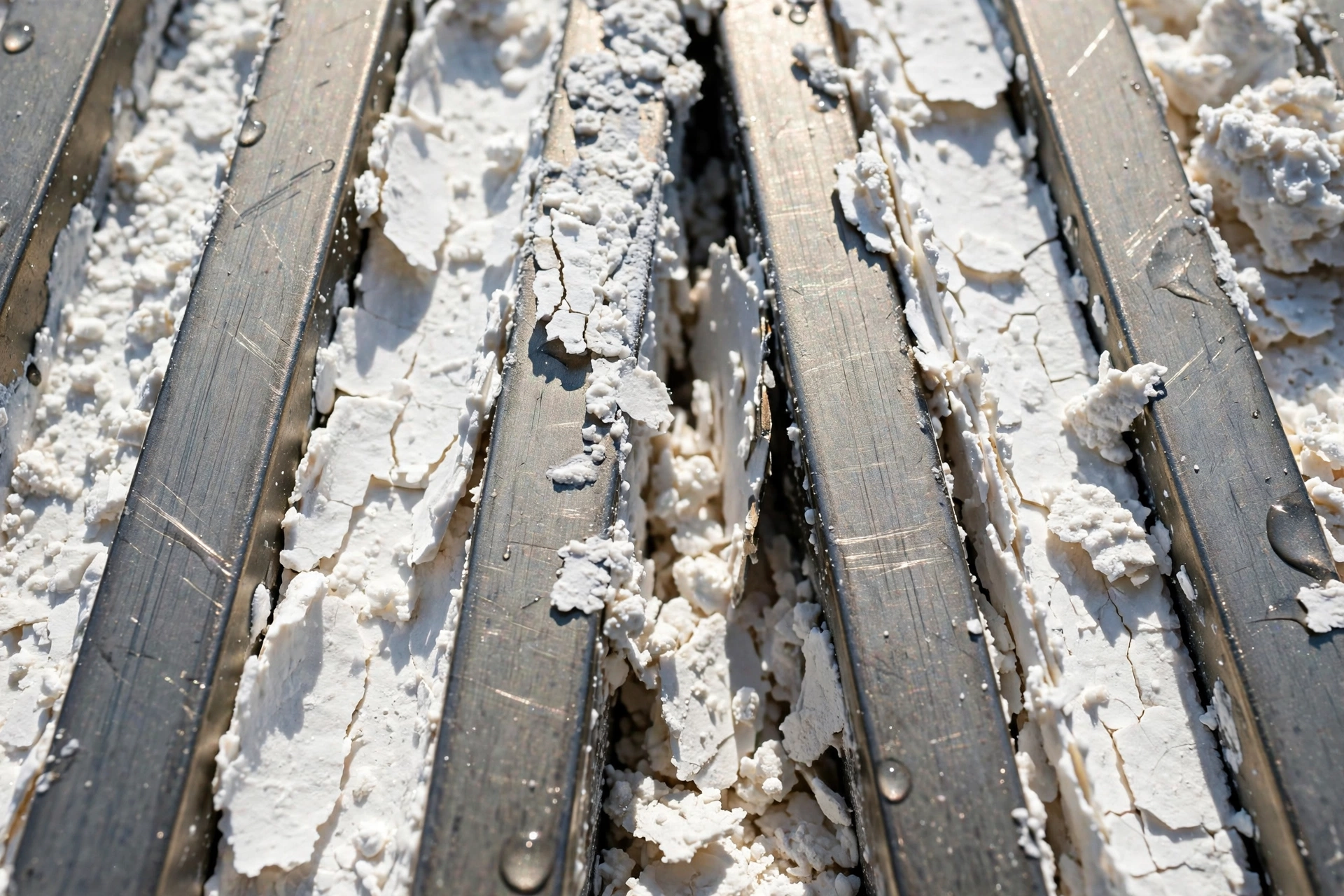
Four things kill cells early, and three of them are owner-inflicted: running at 100% constantly (which really means the cell was undersized), chronic high pH and the scale that comes with it, scraping the plates with metal during cleaning, and letting salt run very low (the unit strains to produce). The single best longevity move you can make: buy a cell rated for a bigger pool than yours, so it cruises at 40–60% output instead of redlining.
Signs yours is dying
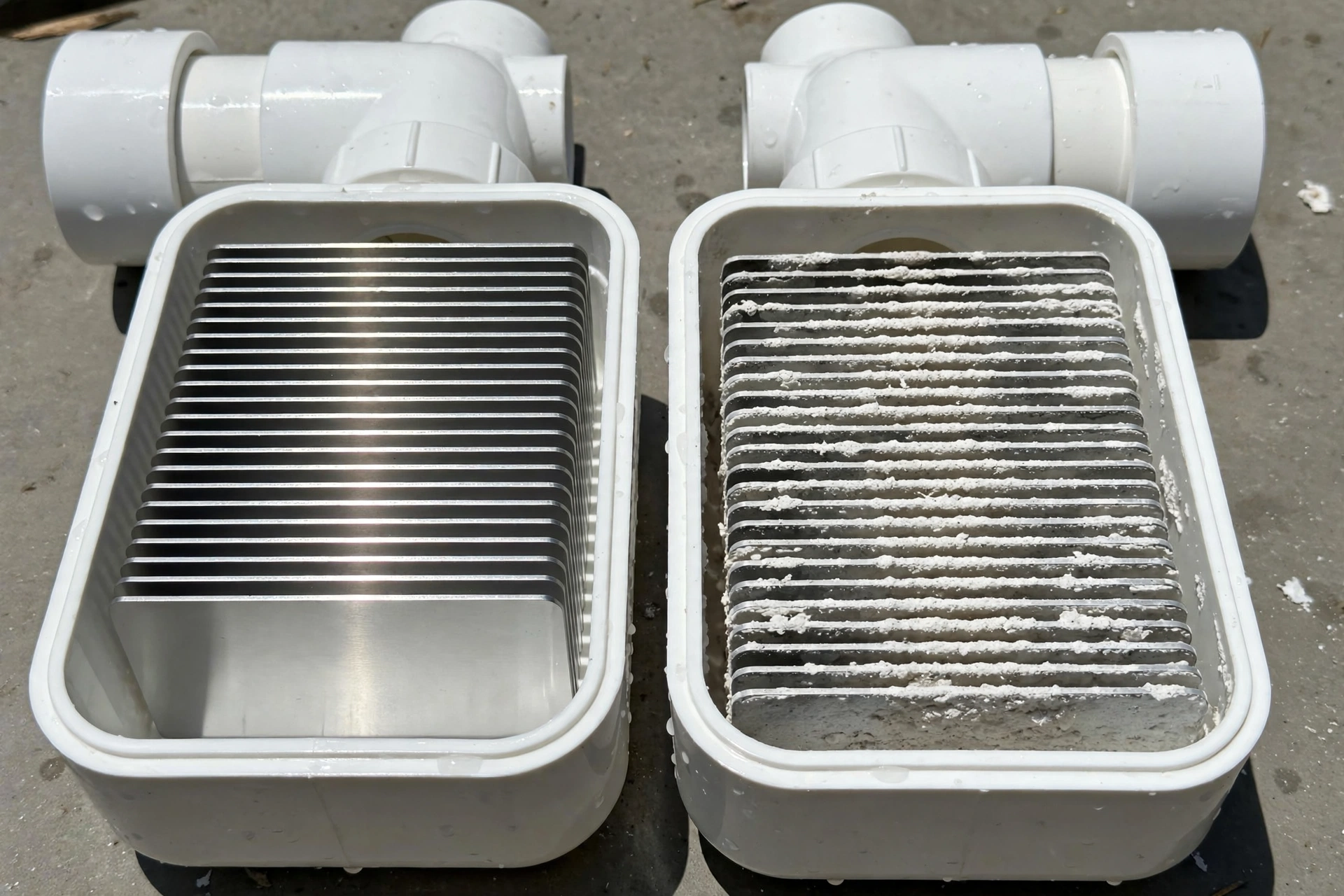
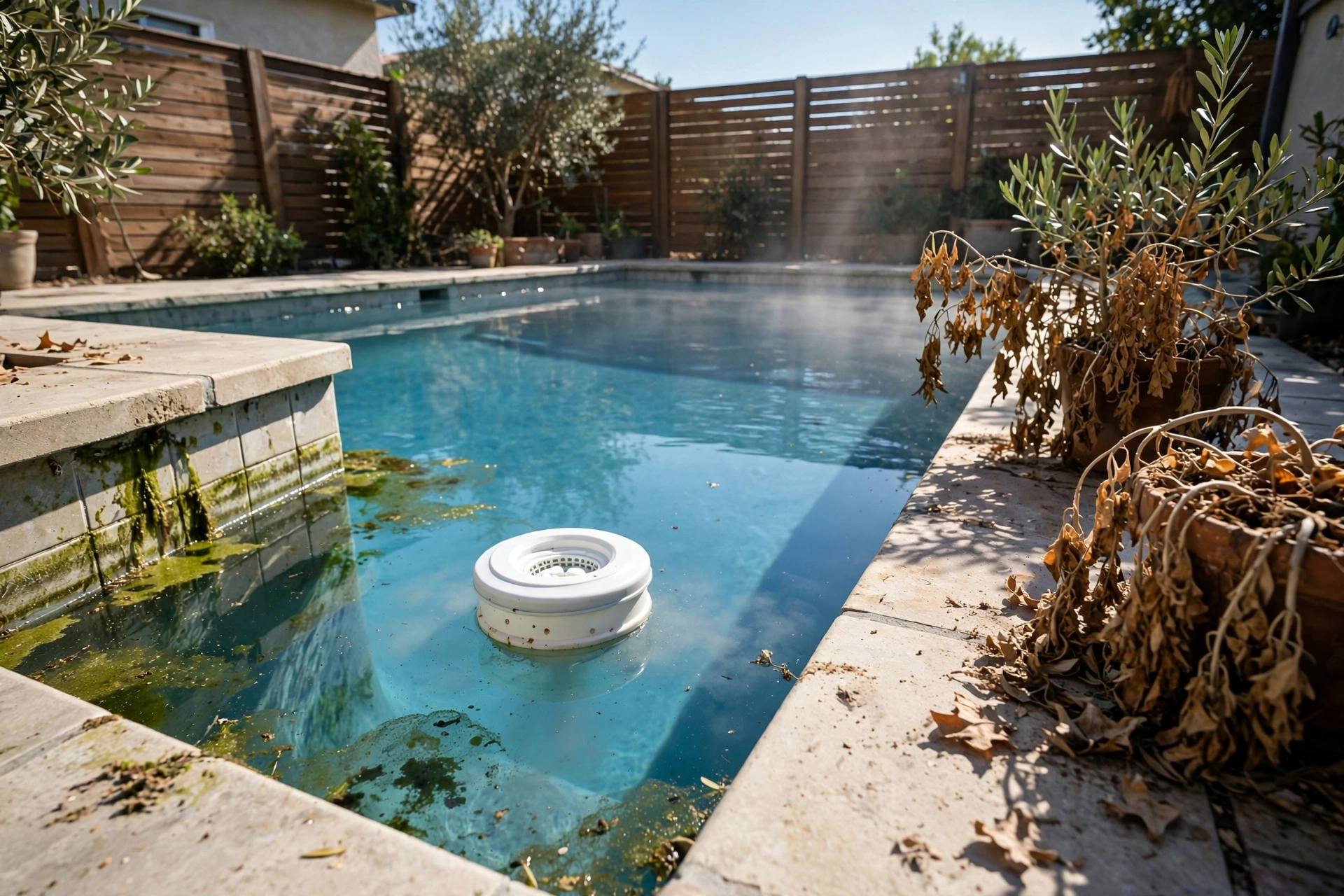
Here's what a dying cell looks like: you keep setting output higher and higher just to hold the same FC. Salt readings start wandering. "Check cell" lights that won't quit even after cleaning. Visible erosion on the plates. Age 5+ with any of the above. A dying cell rarely fails suddenly — it fades over a season, which is exactly why owners blame everything else first. If this list is starting to feel familiar, it's probably the cell.
- Lifespan: 3–7 years (rated in chlorine-pounds or hours — check your manual).
- Clean: diluted acid soak till fizzing stops. Never metal tools.
- Size up at replacement: bigger cell, lower %, longer life.
- Replacement cost: typically $400–800+ depending on brand/size.