What Is CYA in a Pool? (Cyanuric Acid, Plainly Explained)
CYA — cyanuric acid, sold as 'stabilizer' or 'conditioner' — shields your chlorine from sunlight. The ideal range is 30–50 ppm for chlorine pools and 70–80 for saltwater. Too little and the sun burns your chlorine off within hours; too much and chlorine becomes too weak to sanitize, no matter how much you add. The part that trips everyone up: CYA only leaves your pool through water replacement. No chemical, filter, or gadget removes it.
What I wish someone had told me on day one: the chlorine tablets I was buying contained a second chemical, and that second chemical never leaves the pool. Nobody mentioned it at the store. The tablets said 'chlorine' in big letters and the fine print named something I couldn't pronounce — and I didn't know the fine print was the part that would eventually break my water.
That second chemical is CYA — cyanuric acid — and if pool chemistry has a main character, it's this one. Nearly every 'my chlorine stopped working' story ends at the same plot twist: the CYA was 150 and nobody had tested it in months.
So here's the whole story in plain language: what CYA does, the exact ranges that matter, how it climbs without you noticing, and the only real ways to move it up or down. Five minutes now saves a summer of confusion.
- What CYA actually does (the 60-second version)
- CYA levels: what they mean and what to do
- The ratio that runs your pool: chlorine follows CYA
- The tablet trap: how CYA climbs while you're not looking
- Lowering CYA: the only real method, step by step
- Raising CYA — and the monthly habits that keep it in range
Pool chemical dose calculator
Estimate from standard pool-industry dosing ratios. Add two-thirds, retest after circulation, then top up. Never mix chlorine products together. Your product label has the final say.
What CYA actually does (the 60-second version)
Sunlight is brutal to unprotected chlorine. Without CYA, you can lose a big chunk of your free chlorine in a single sunny afternoon — UV simply tears it apart. CYA binds to chlorine and releases it gradually, like a time-release capsule. That protection is the entire reason outdoor pools need it, and why indoor pools barely do.
The catch is built into the same mechanism: the binding that protects chlorine also weakens it. The more CYA in the water, the less active your chlorine is. So there's a sweet spot — and it's narrower than the bottle labels suggest. Everything below is about staying inside it.
A concrete way to feel it: on a clear summer afternoon, an unstabilized pool can lose a big share of its free chlorine before dinner — while the same pool at 40 ppm CYA loses a fraction of that. That difference is the entire economic argument for stabilizer: without it, you're buying chlorine mostly to feed the sun.
CYA levels: what they mean and what to do
Bookmark this table. Most CYA problems are solved the moment you know which row you're in — the action column is the whole game.
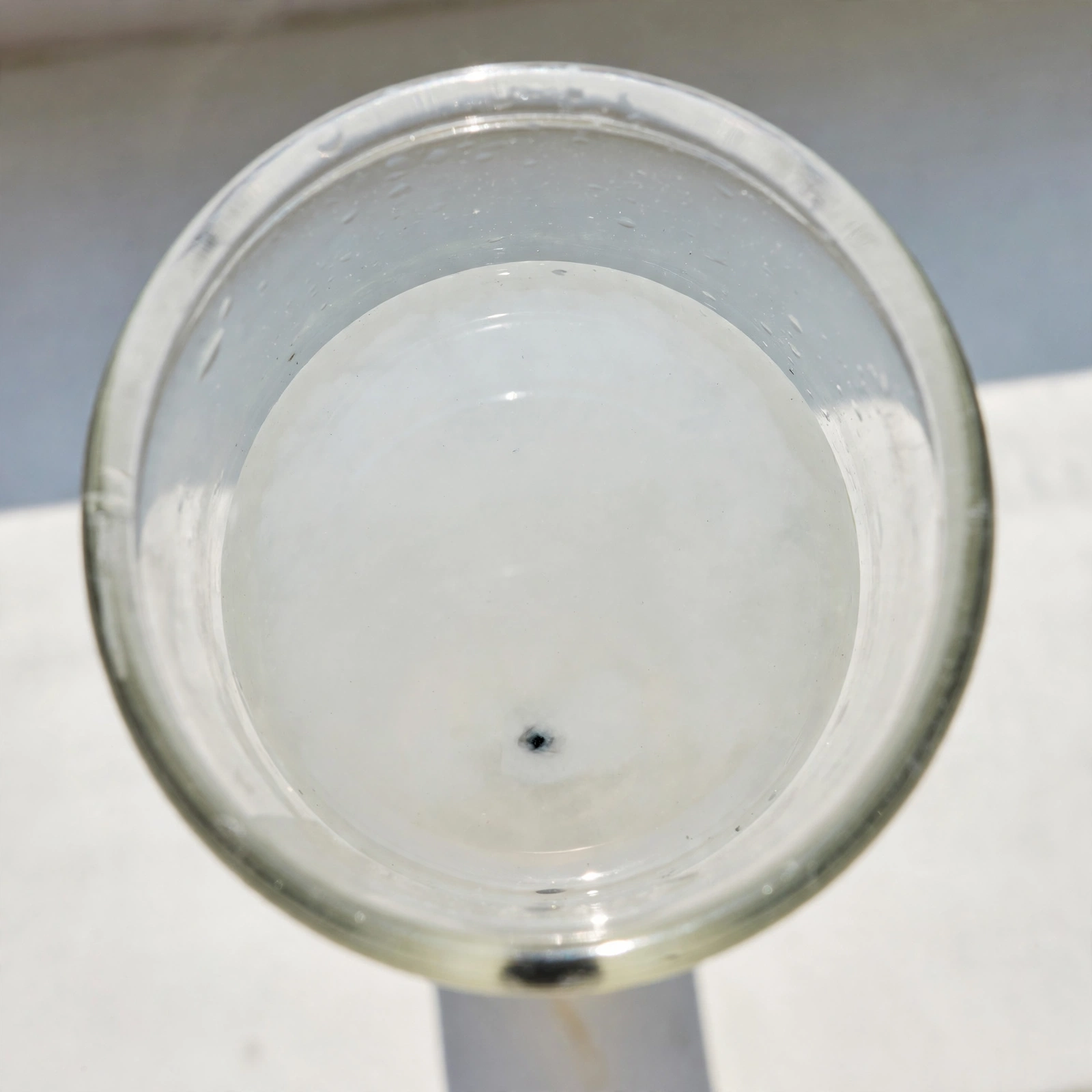
One note on that last row: CYA tests typically max out at 100, so a reading of '100' might actually be 200. If you're in drain territory, do the diluted test — half pool water, half tap water, then double the result — before you plan anything. You want the real number.
| Your CYA | What it means | What to do |
|---|---|---|
| 0 ppm | No protection — sunlight destroys chlorine within hours | Add stabilizer to 30–50 ppm |
| 1–29 ppm | Too low — you'll burn through chlorine and money | Add stabilizer; retest in a week (it dissolves slowly) |
| 30–50 ppm | The sweet spot for chlorine pools | Maintain it; test monthly |
| 51–90 ppm | Elevated — fine at 70–80 for saltwater, high for chlorine pools | Stop all stabilized products; let splash-out and backwashing bring it down |
| 90–100+ ppm | Too high — normal chlorine doses barely sanitize | Partial drain sized to your number |
| 150+ ppm | Severe — confirm it first, the test maxes at 100 | Diluted retest, then significant water replacement |
The ratio that runs your pool: chlorine follows CYA
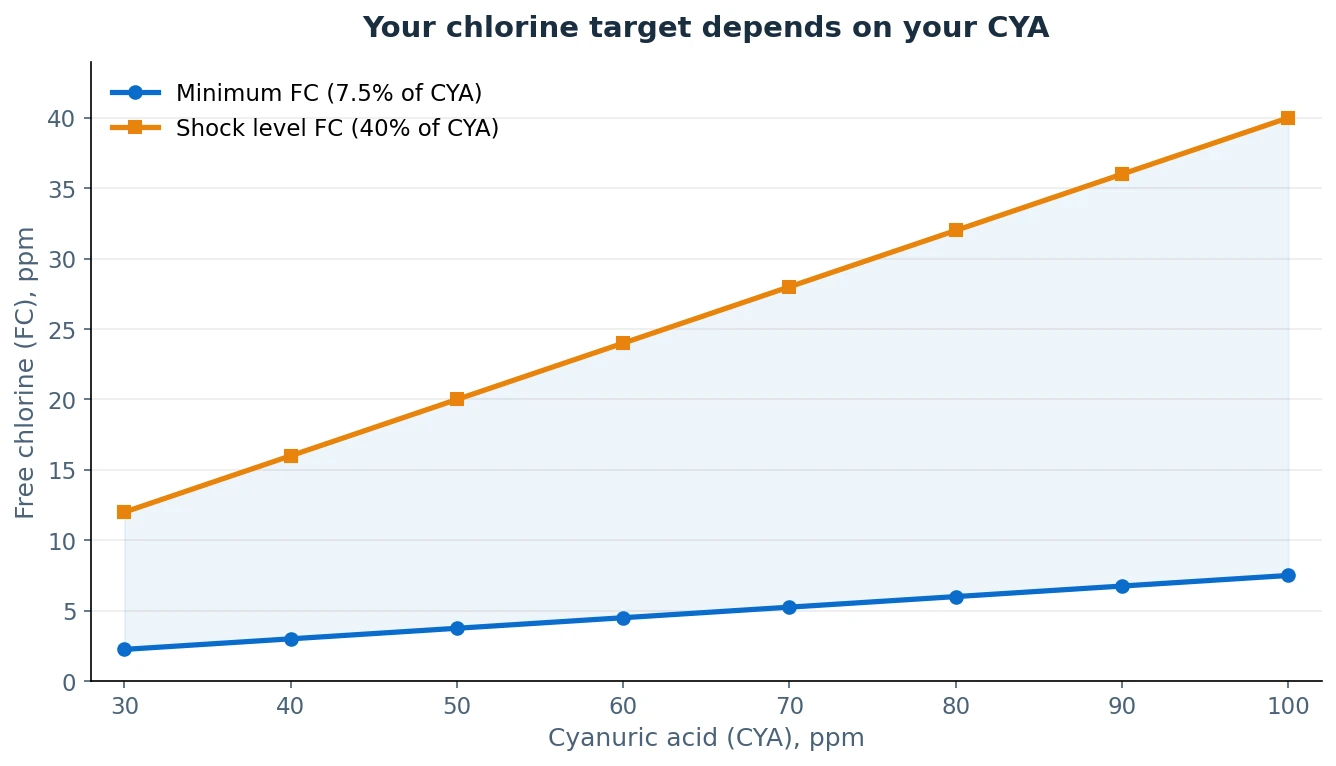
Here's the relationship most pool owners never learn, and it explains an enormous amount of confusion: your minimum effective free chlorine is about 7.5% of your CYA, and shock level is about 40% of it. At CYA 30, that means keeping at least ~2 ppm and shocking at ~12. At CYA 50, it's ~4 and ~20. At CYA 100, the minimum is ~7.5 — so a 'normal' 3 ppm dose is less than half of what the water needs.
Read that last sentence again, because it's the whole ballgame. Two pools can both test at 3 ppm FC, and one is perfectly sanitized while the other is growing algae — the only difference is CYA. This is why 'my chlorine is fine but my pool is green' is almost always a CYA story, and why the so-called chlorine lock isn't a lock at all. It's just this ratio, working exactly as chemistry says it should.
Saltwater pools sit at 70–80 ppm CYA for a reason: the salt cell generates chlorine constantly, so the pool wants a bigger buffer — and the higher CYA is fine because the system maintains FC continuously against it. Same chemistry, different strategy. And if your salt pool's chlorine still won't hold, the diagnosis at pool won't hold chlorine walks through it in order.
One practical consequence: ignore the 'ideal 1–3 ppm' printed on test strip bottles. That range assumes low CYA, and at CYA 80 it's simply wrong — 3 ppm there is below the effective minimum. Always judge your FC against your CYA using the 7.5% rule, not against a number printed for a different pool than yours.
The tablet trap: how CYA climbs while you're not looking
Trichlor tablets and dichlor shock both contain CYA — it's baked into the product. Every tablet you drop in the floater adds stabilizer that never leaves except through splash-out, backwashing, or draining. The chlorine gets consumed doing its job. The CYA accumulates, silently, all season.
The rate is worth knowing: trichlor adds roughly 6 ppm of CYA for every 10 ppm of chlorine it delivers; dichlor adds about 9. It doesn't sound like much per dose — until a full summer of tablets puts you at 150 and your chlorine 'stops working.' It didn't stop. It got weaker one tablet at a time, until normal doses couldn't sanitize anymore.
This is also why the fix has to include changing what you chlorinate with. Draining back to 40 ppm and then going right back to tablets just restarts the clock. Liquid chlorine and cal-hypo add no CYA — the comparison at tablets vs liquid chlorine lays out the tradeoffs honestly, including what each one costs you in other ways.
And here's the part nobody prices in: every unnecessary drain-and-refill costs water, and every month of overstabilized 'mystery problems' costs extra chlorine that can't work properly. Testing CYA monthly is the cheapest habit in pool ownership.
Lowering CYA: the only real method, step by step
Let's get the fantasy out of the way first: there is no chemical, filter media, or gadget that removes CYA, no matter what the bottle claims. Anyone selling you one is selling wishful thinking. CYA leaves one way — with the water.
The method is a partial drain and refill, and the math is beautifully linear: replace 50% of the water, CYA drops by about 50%. Replace a third, it drops by about a third. Size the drain to your number — at CYA 150 targeting 50, that's roughly two-thirds of the water, which most people do in two rounds rather than one.
The protocol, in order: confirm your real number first (diluted test if you're sitting at the 100 max). Drain, refill, then circulate a full day before retesting — fresh water needs time to mix completely, and testing too early gives a falsely low reading that sends you in circles.
Two cautions: don't do one massive drain when two smaller rounds will do — it's easier on the pool and on your water bill — and don't backwash aggressively right after refilling, since that's just throwing away water you just balanced. There's a fuller walkthrough at lowering CYA for when that guide publishes.
Raising CYA — and the monthly habits that keep it in range
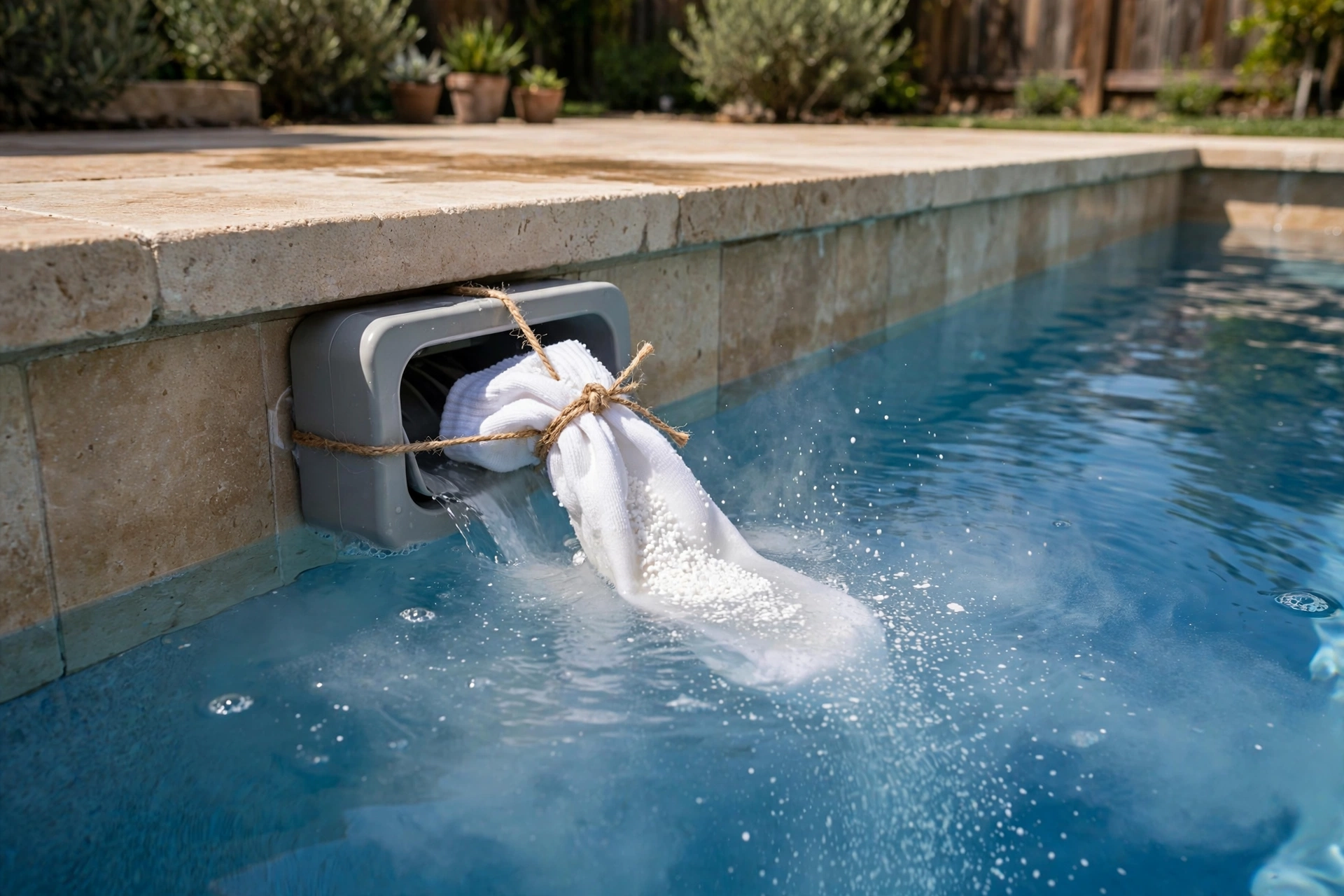
CYA does drop sometimes: fresh fills start at zero, heavy rain dilutes it, and big splash-out weeks chip away at it. Near-zero CYA means sunlight eats your chlorine for breakfast, so this direction matters too. Add granular stabilizer — about 1 lb per 10,000 gallons raises CYA roughly 12 ppm — poured slowly into a sock in the skimmer. It dissolves over days, so don't backwash for a week and don't retest for a week either. Patience is part of the dose.
Use the stabilizer calculator for your exact number rather than guessing — overshooting means a drain, and that's a far more annoying fix than waiting a week. And once you're in range, these habits keep you there:
Test CYA monthly in season — it moves slowly until it doesn't
Keep track of what you add — every tablet and dichlor dose raises CYA
Retest after heavy rain or big top-offs — dilution is real
Keep an unstabilized chlorine source on hand for when CYA is already high
- Ideal: 30–50 ppm for chlorine pools; 70–80 ppm for saltwater.
- Minimum FC ≈ 7.5% of CYA; shock level ≈ 40% of CYA.
- Trichlor: +6 ppm CYA per 10 ppm FC. Dichlor: +9 ppm CYA per 10 ppm FC.
- 1 lb stabilizer per 10,000 gallons ≈ +12 ppm CYA.
- Drain math is linear: replace X% of water → CYA drops ~X%.
- CYA tests max at 100 — dilute and double to see the real number above that.