Liquid Chlorine vs Chlorine Tablets: The CYA Trap
Here is the trade in one breath: tablets (trichlor) are convenient but smuggle in about 6 ppm of CYA for every 10 ppm of chlorine delivered — a full summer of tablets can push CYA past 150 and handcuff your chlorine. Liquid chlorine adds nothing but chlorine. I use tablets for vacations and CYA top-ups while watching the test; liquid is the daily driver.
Tablets feel like the responsible choice — the floater is right there, the pool store recommends them, everybody uses them. And they work fine… until the invisible bill comes due: stabilizer, accumulating dose by dose, until your chlorine mysteriously "stops working." It is the most common slow-motion mistake in the hobby, and the forums are full of people discovering it in August.
This is the most financially consequential comparison on the site, because the tablet trap ends with you draining water. Here is the math — and I suggest you sit down for it.
The CYA math
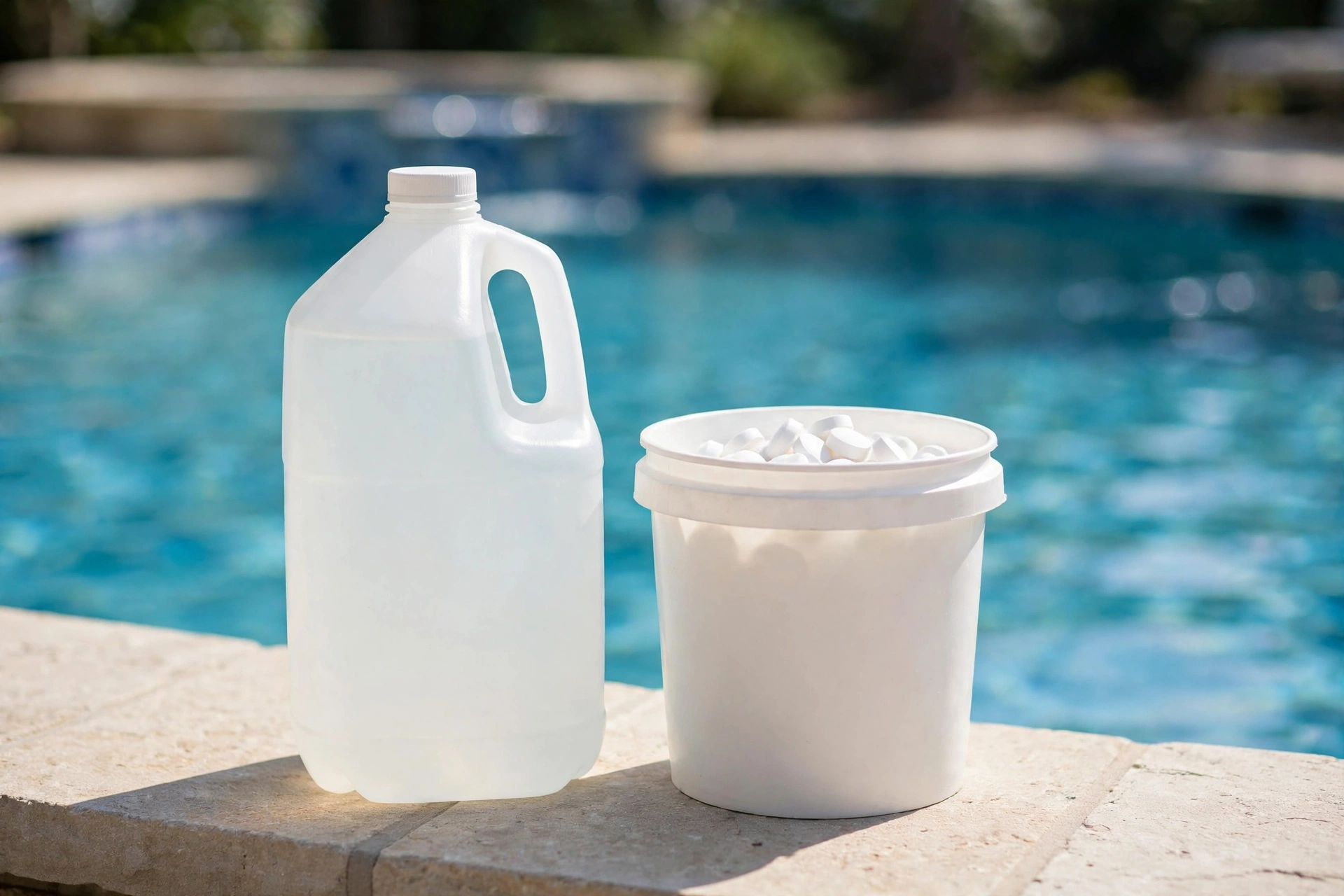
Trichlor is roughly half CYA by weight — let that sink in. Every 10 ppm of FC it delivers adds about 6 ppm CYA. A pool burning 2 ppm FC a day from tablets gains over 8 ppm CYA per week — that is 100+ ppm over a season, stacked on top of wherever you started. Dichlor shock is worse per dose, around 9 ppm CYA per 10 ppm FC.
And CYA never leaves except through water replacement — no chemical removes it, it does not burn off. So tablets are a slow-motion CYA pump, and the endpoint is always the same: you, with a hose, draining water to fix it.
When tablets make sense anyway
Tablets are not the villain — they are a tool with a cost. Vacations: a floater full of tablets keeps chlorine alive while you are gone, and that is a perfect use case. CYA top-ups: if CYA tests low, tablets chlorinate and stabilize at the same time. They are acidic too, which helps if your pH runs high. My rule is not "never tablets" — it is "tablets, plus a CYA test every month."
The liquid chlorine routine
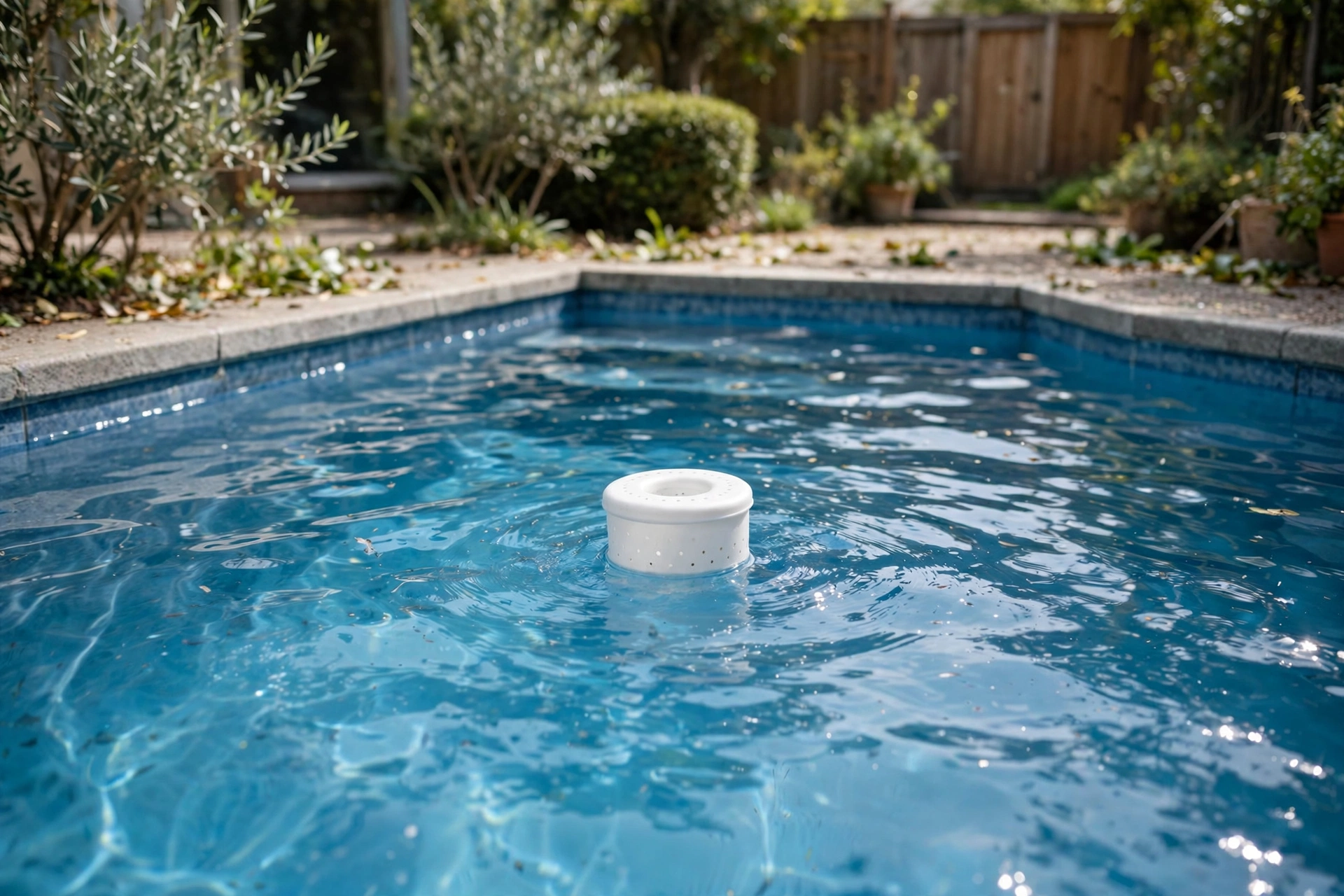
Dose each evening to your FC target — the chlorine calculator makes it exact. No CYA added, no calcium added, pH roughly neutral over time. The cost is a minute a day and hauling jugs. The payoff is that your CYA stays exactly where you put it, season after season.
What I actually recommend to most people: run a hybrid — liquid daily, tablets only for trips. Best of both, none of the trap.
- Trichlor: ~6 ppm CYA per 10 ppm FC delivered.
- Dichlor: ~9 ppm CYA per 10 ppm FC delivered.
- 2 ppm/day from tablets ≈ +8–9 ppm CYA per week.
- Liquid chlorine / bleach: +0 CYA, +0 calcium.