Pool Test Strips vs Test Kit: Why Strips Lose
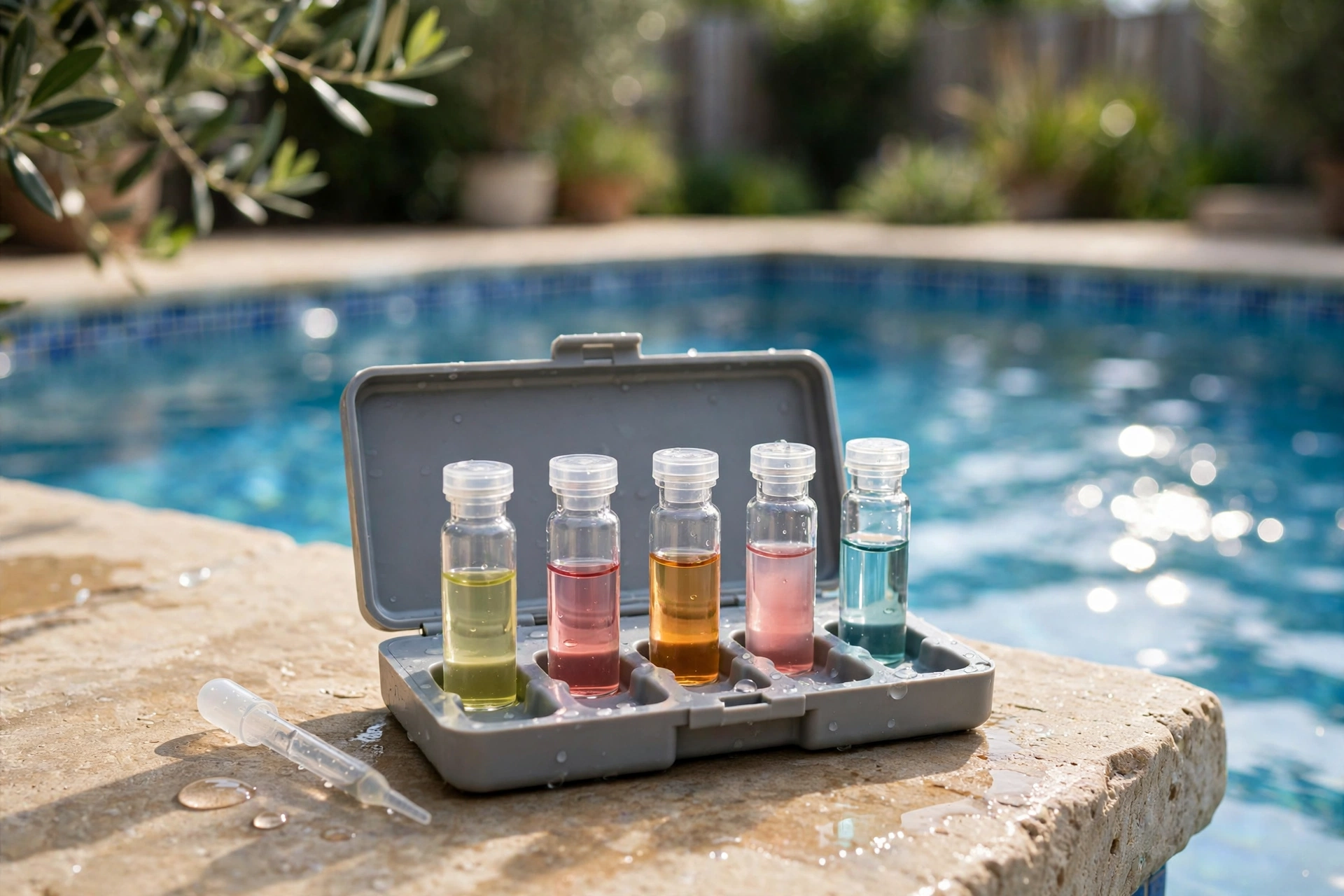
I will be blunt: strips are precise but not accurate. TA can read 40 ppm off, CYA even worse, pH only in coarse steps. A Taylor K-2006 drop kit — the 2006, not the 2005 — tests FC, CC, pH, TA, calcium hardness, and CYA properly. It is the same chemistry as the pool store’s countertop test, and it pays for itself the first time it prevents one bad chemical decision.
Nobody loves the drop kit at first — the strips are so easy, and the little bottles look like homework. But the pattern repeats on forum after forum: months of confusion on strips, one week with a real kit, and suddenly the pool behaves. The strips were not just slightly off; they were confidently wrong, which is worse.
Here are the actual accuracy numbers. They come from a former pool-industry chemist who spent years answering exactly this question on the forums — I have kept his figures because nobody has bettered them.
The accuracy gap, in numbers
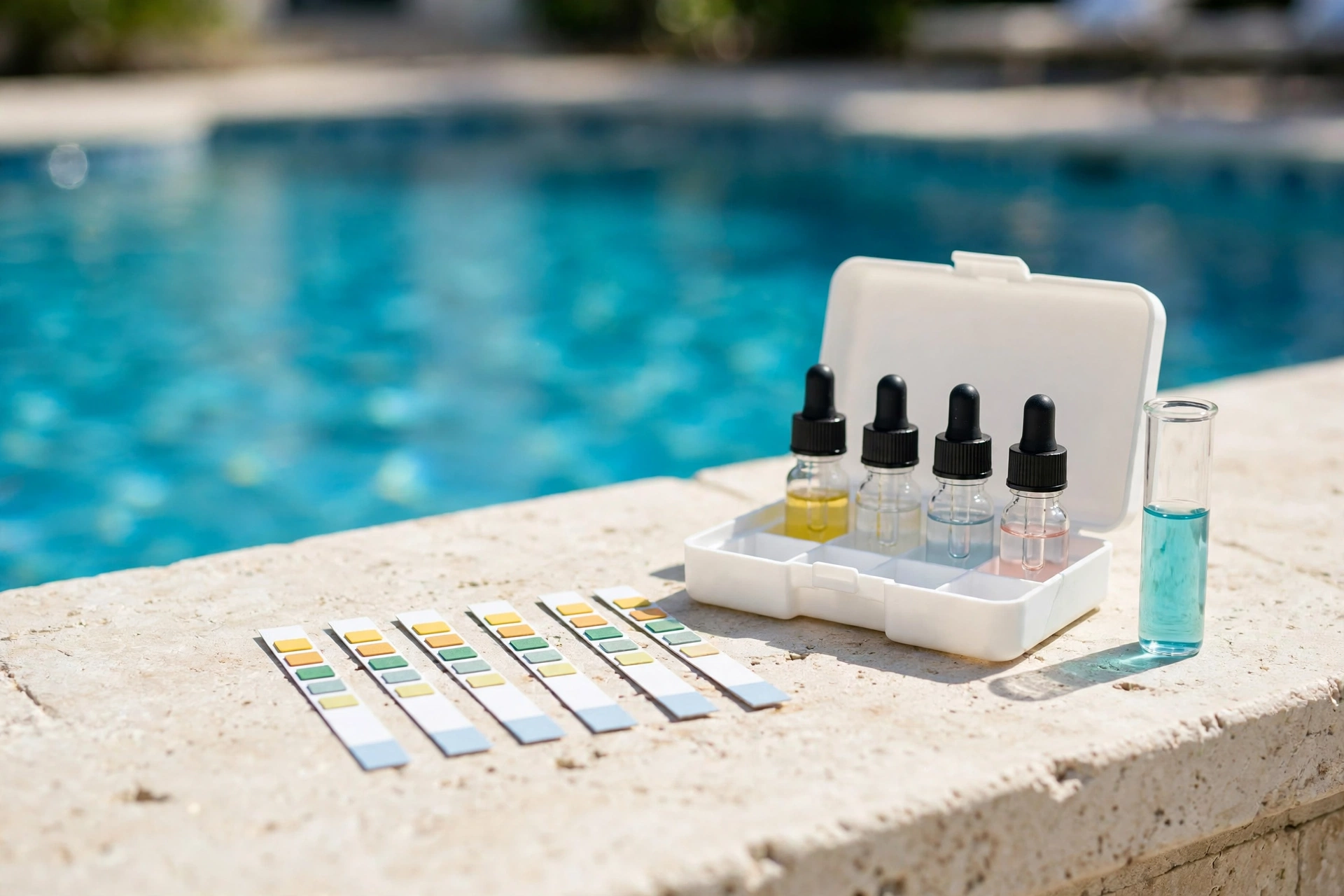
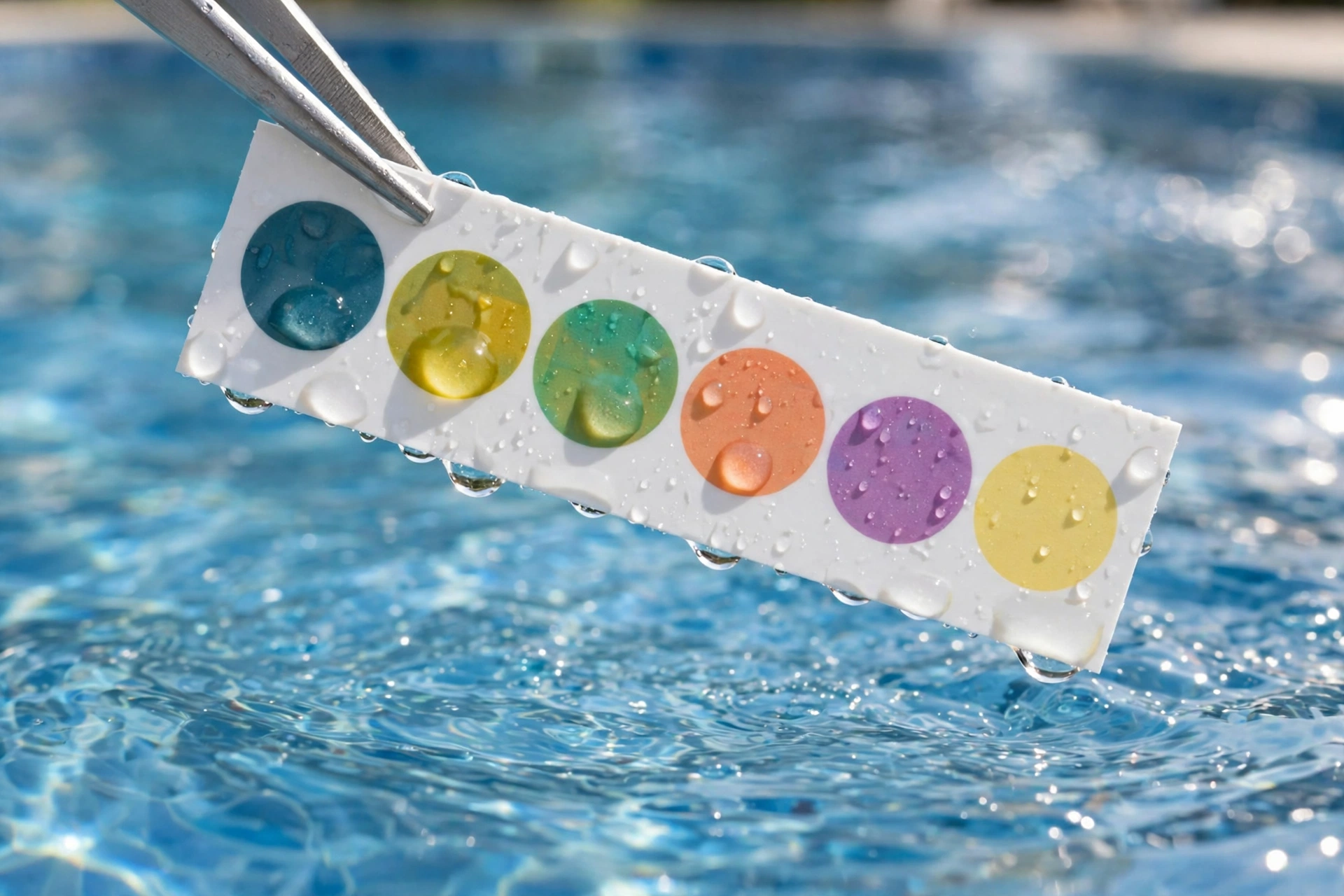
Strips: TA off by up to ±40 ppm, CYA often worse, pH in steps of 6.2 / 6.8 / 7.2 / 7.8 / 8.4 — you cannot even see a 7.5. Taylor K-2006: ±10 ppm on most tests, chlorine down to 0.2–0.5 ppm via FAS-DPD, pH in 0.2 increments — and it tests calcium hardness properly, where strips test total hardness, a number that is useless for pools.
Here is the cruel part: strips are precise. They give you the same wrong answer, repeatably. That is worse than random error, because it builds false confidence — you stop questioning the number.
K-2006, not K-2005 (this matters)
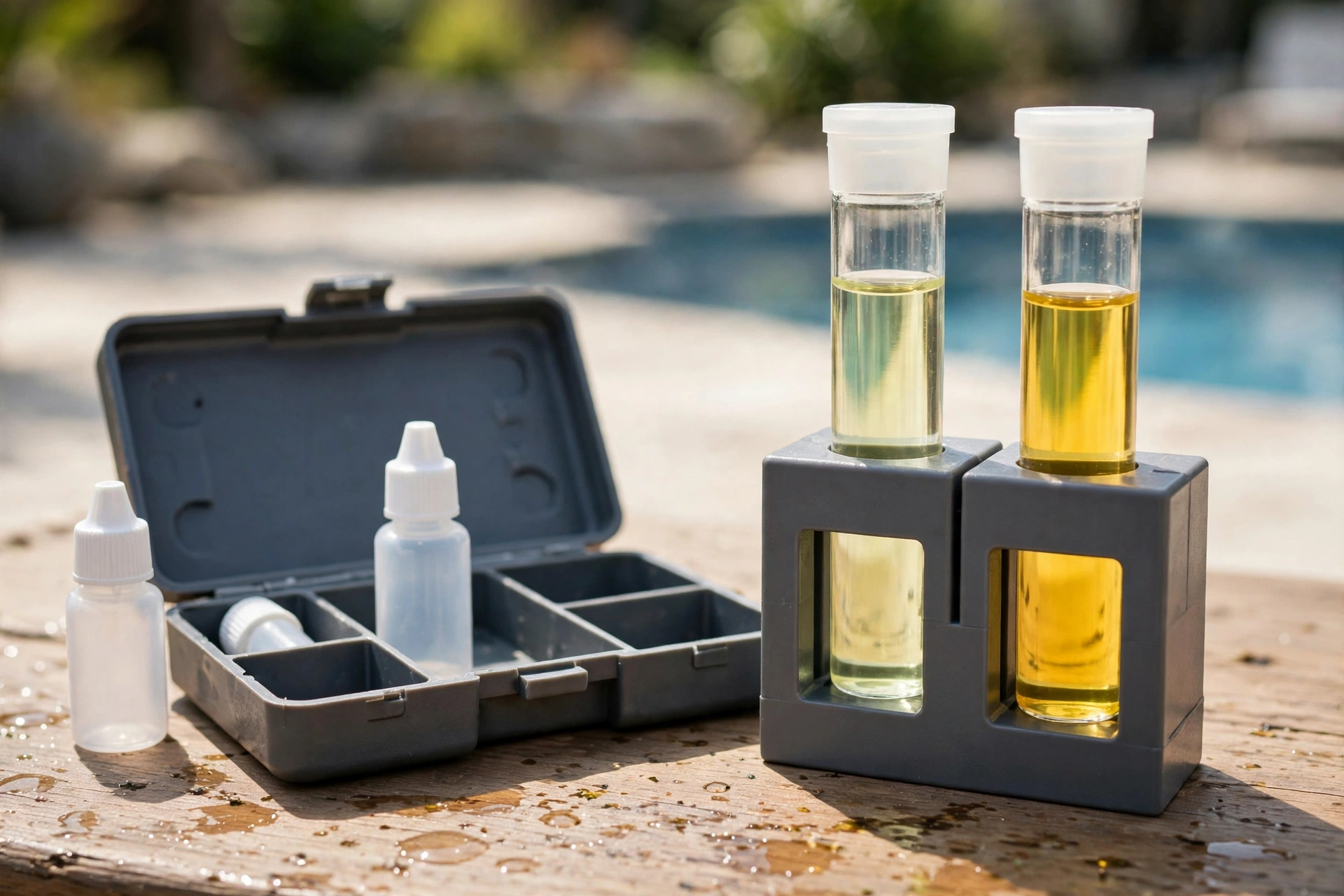
This detail matters more than the brand: the K-2006 uses FAS-DPD for chlorine. You count drops to measure FC and CC separately, down to 0.2 ppm, and it does not bleach out at shock levels. The K-2005 uses DPD color-matching, which bleaches out above ~10 ppm — making it useless during a SLAM, exactly when you need it most. Same brand, very different kit. Get the 2006.
What about digital testers?
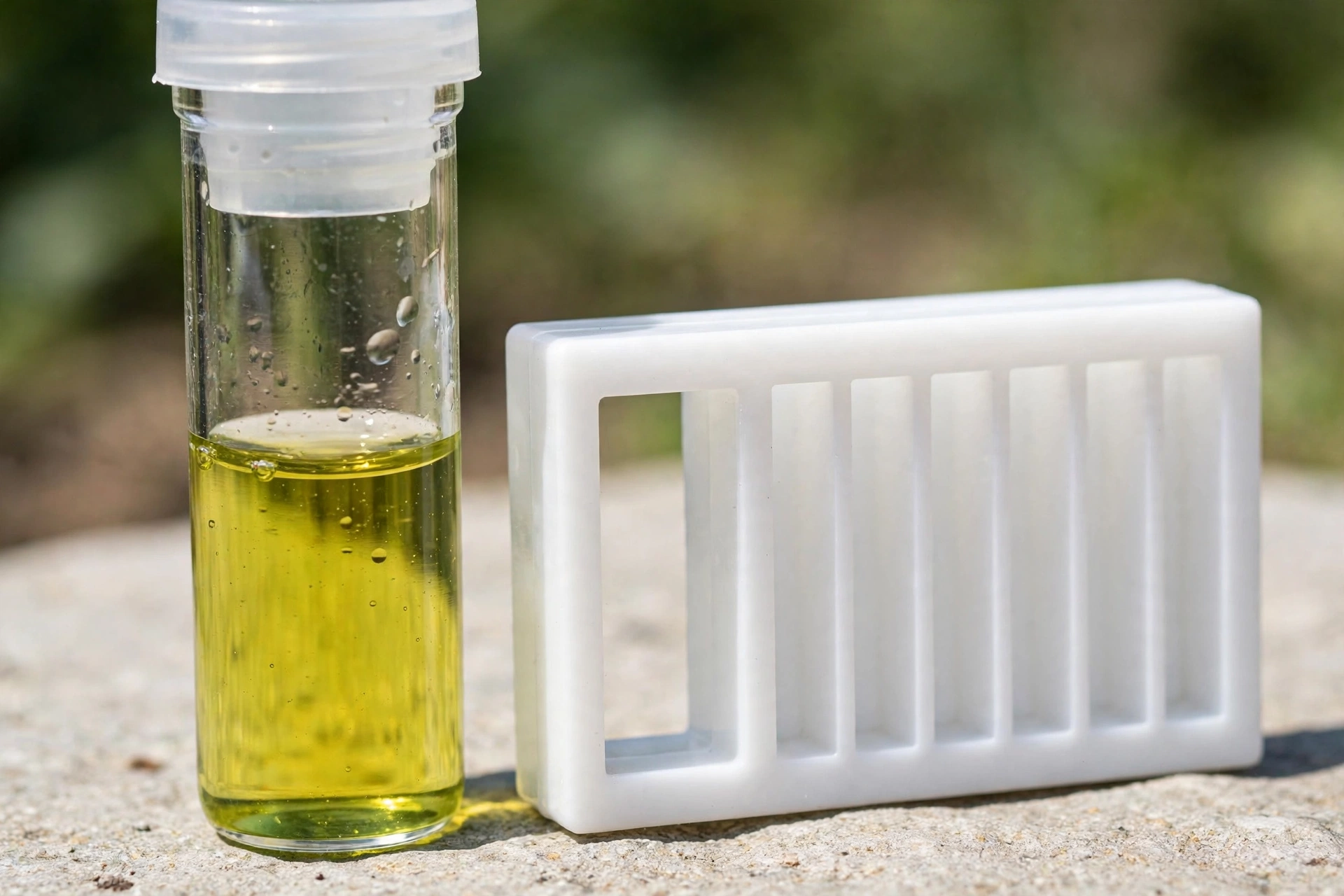
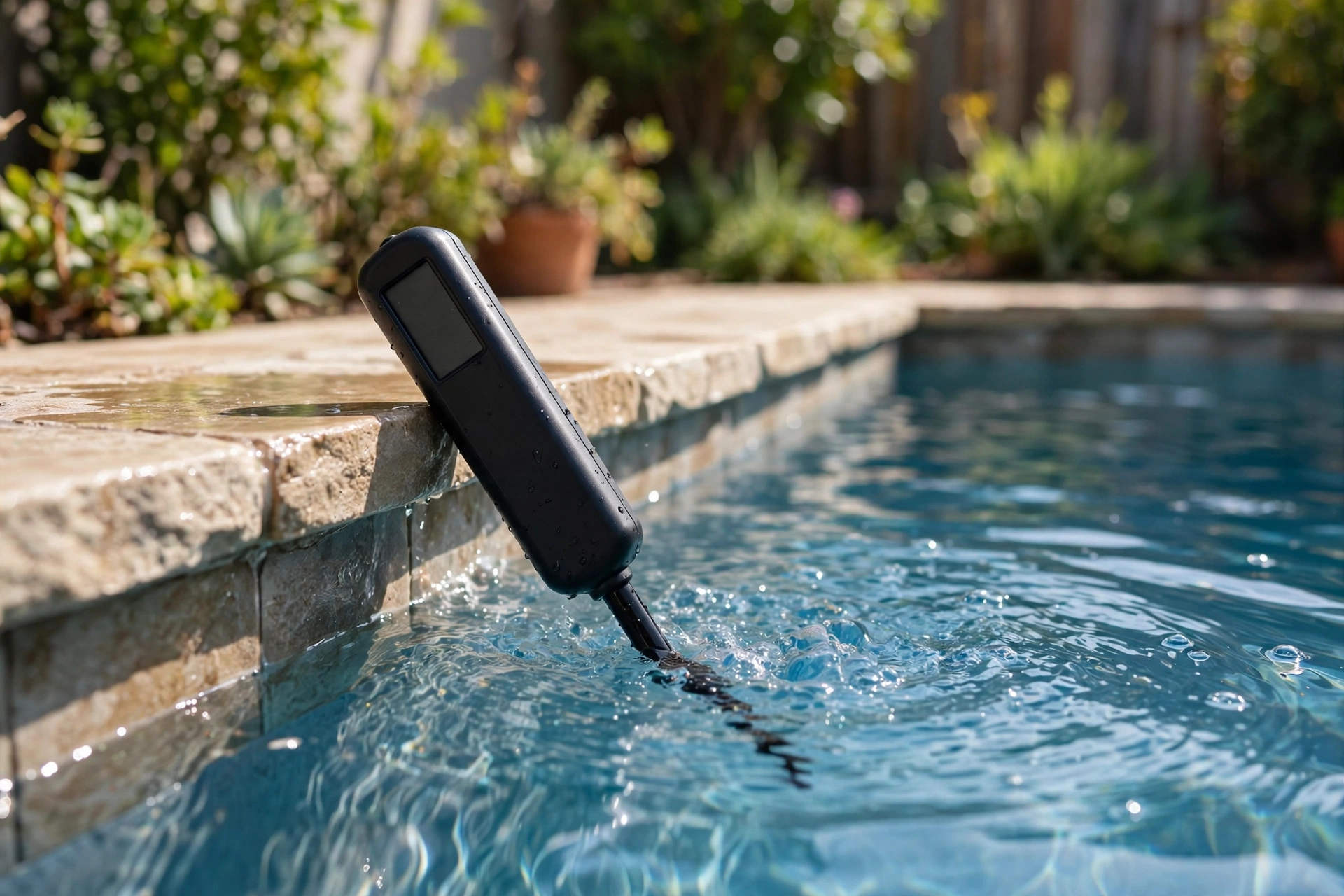
What about digital testers? The cheap ones are not worth it — inconsistent results, and the probes demand calibration solutions, wet storage, and periodic replacement. A decent photometer like the LaMotte ColorQ runs $200+ and does not save you time over drops. Real lab-grade meters run into the thousands. For a homeowner, the drop kit is the price-to-performance king by a mile. It is not close.
The one strip worth owning
One exception, because I am fair: AquaChek salt strips are a genuine titrator in strip form and read salt accurately — handy for saltwater owners between drop tests. For everything else? Drops win. Every time.
- TA accuracy: strips ±40 ppm vs drops ±10 ppm.
- Chlorine: strips bleach out high; FAS-DPD reads to 0.2 ppm at any level.
- pH: strips in 0.6 steps vs drops in 0.2 steps.
- CYA: strips "even worse" than ±40; drops read it properly.
- Strips cannot test calcium hardness at all.