Pool Water Chemistry,
Explained Plainly.
Your pool is cloudy, green, or eating through chlorine — and every guide you find disagrees with the last one. We take a different approach: start from your symptom, find the real cause, and dose exactly with calculators built on your pool's actual gallons. No myths. No upsells. No guessing.
How PoolChemHelp Works
Three steps to crystal-clear water — no chemistry degree needed.
Describe Your Symptom
Cloudy? Green? Chlorine vanishing? Start with what you see — we'll narrow the cause.
Get the Real Diagnosis
No myths or guesswork. We explain what's actually happening in your water chemistry.
Dose Exactly Right
Our calculators use your pool's gallons and test numbers to give exact chemical amounts.
Most Common Pool Problems
The issues pool owners ask about most. Start here.
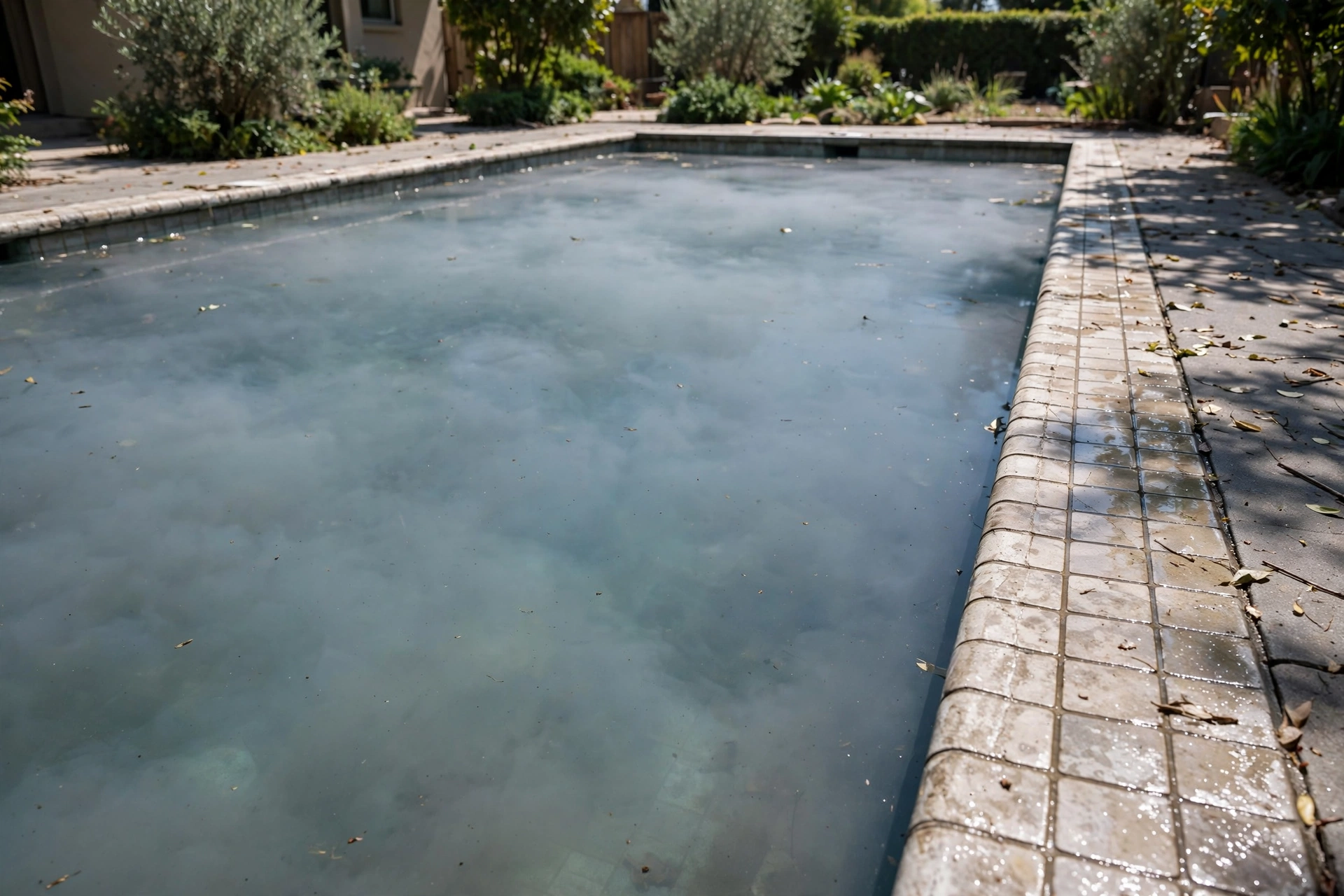
Cloudy Pool Water: What Causes It and How to Fix It
Cloudy pool water has 4 usual causes: dead algae, calcium from shock, filter issues, or bad readings. Tell which is yours — before you buy anything.
Read the full guide →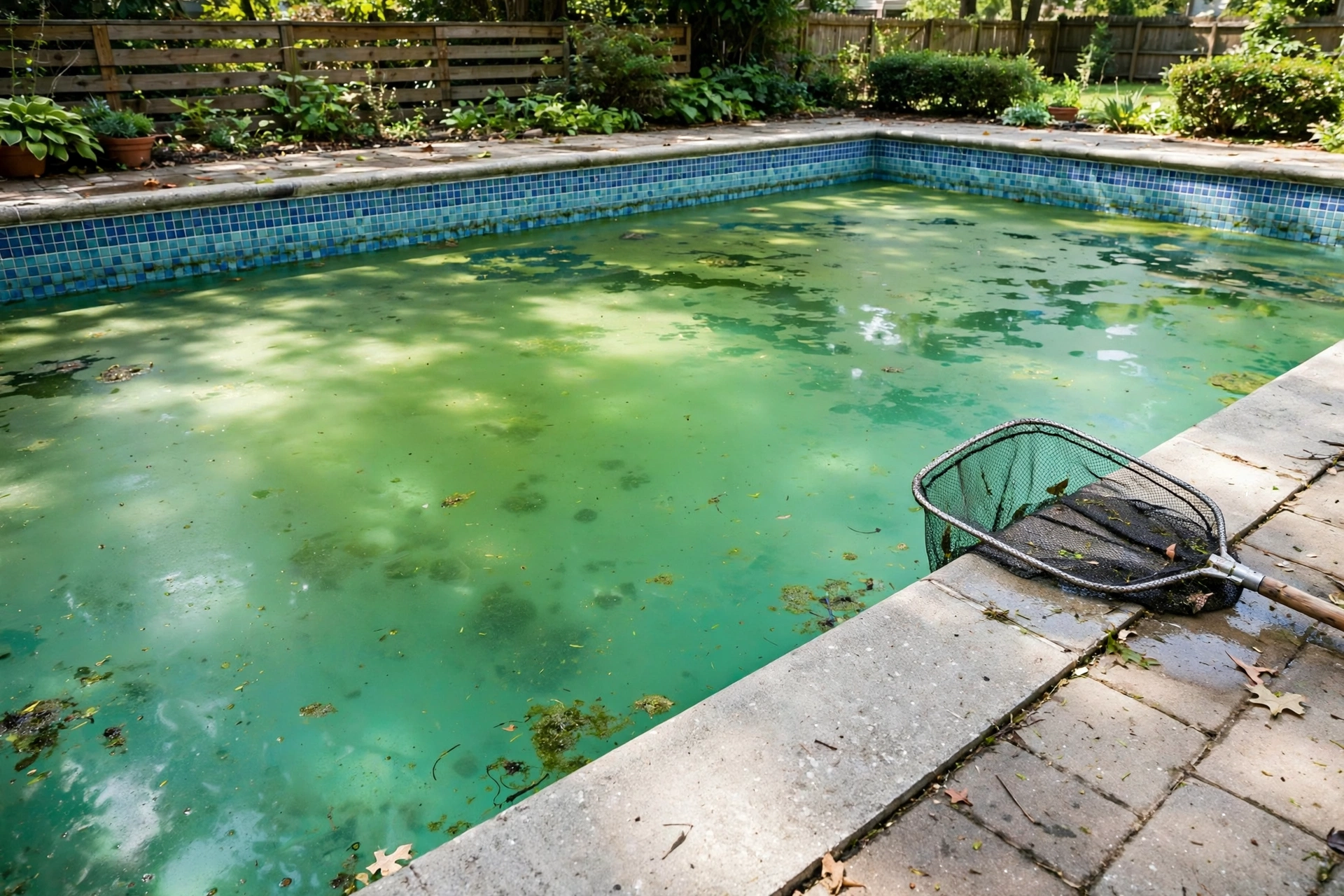
Green Pool Water: How to Fix It (The SLAM Method, Plainly Explained)
Green pool water means live algae. The fix: the SLAM method — shock-level chlorine for your CYA, held until 3 pass conditions. Plain-English walkthrough.
Read the full guide →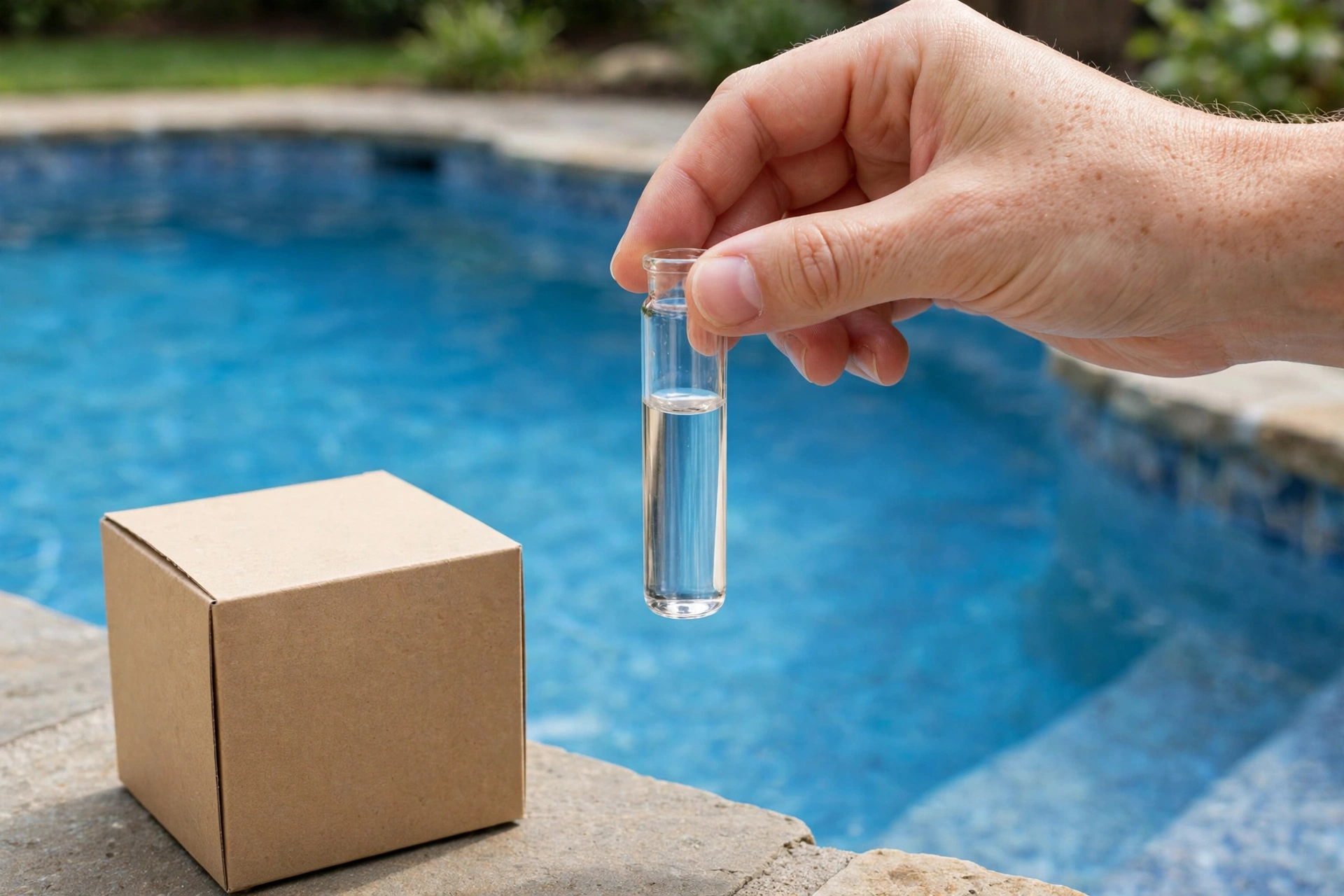
Pool Won’t Hold Chlorine? The Real Reasons (and Fixes)
Chlorine disappears overnight? Causes: algae, CYA too high (or zero), sunlight burn-off, or ammonia. Diagnose yours with this guide.
Read the full guide →Start With What You See
Pick your symptom or tool — every guide is written in plain language.
Free Pool Chemical Calculators
Stop guessing. Enter your pool's gallons and your test-kit numbers — get the exact dose in ounces, pounds, or cups.
Pool Chlorine Calculator: Exact Dose for Your Gallons
How much chlorine does your pool need? Enter gallons, current FC and target FC — get the exact dose in cups or gallons. Works for liquid chlorine and bleach.
Pool Shock Calculator: How Much Shock for Your Pool
How much shock does your pool need? Shock level depends on CYA, not vibes. Enter gallons and CYA — get the exact liquid chlorine or cal-hypo dose.
Pool Salt Calculator: How Much Salt Your Pool Needs
How much pool salt to add? Enter gallons, current ppm and target ppm — get pounds and 40-lb bags. The easiest win on this site.
Pool Volume Calculator: How Many Gallons Is My Pool?
How many gallons is my pool? Enter length, width, and average depth — get gallons and liters instantly. Every chemical dose starts here.
Water Problems
Cloudy, green, algae, stains — diagnose by symptom.
- Milky Blue Pool Water: Causes & How to Clear It
- Pool Calcium Hardness: High vs Low & How to Fix Each
- Rust Stains in Pool: Removal & Prevention
- Blue-Green Copper Stains in Pool: Causes & Removal
- White Flakes in Pool Water: Scale Identification & Fix
- Foamy Pool Water: Causes & How to Get Rid of Foam
- Pool Smells Like Chlorine? It Means the Opposite
- Eyes Burning in the Pool? It Is Not "Too Much Chlorine"
- Dead Algae on Pool Floor: How to Remove It
- Sand in Pool (But No Beach Nearby)? Find the Source
- Pollen in Pool: Yellow Dust vs Mustard Algae
- Calcium Buildup on Pool Tile: Removal Methods
- Pink Slime in Pool: What It Is & How to Remove It
- White Water Mold in Pool: Identification & Removal
- How to Lower Chlorine in Pool: 5 Safe Methods
- Pool Losing Water? Leak vs Evaporation and the Bucket Test
Calculators
Exact doses from your gallons and test numbers.
- Pool Chlorine Calculator: Exact Dose for Your Gallons
- Pool Shock Calculator: How Much Shock for Your Pool
- Pool Salt Calculator: How Much Salt Your Pool Needs
- Pool Volume Calculator: How Many Gallons Is My Pool?
- Pool Chemical Calculator: Dose Anything, Accurately
- Muriatic Acid Dose Calculator: Lower pH Safely
- Pool Baking Soda Calculator: Raise Alkalinity Exactly
- Pool Stabilizer (CYA) Calculator: Dose It Right
- How Much Chlorine to Add to a Pool (by Gallons)
- Pool Gallons Chart: Common Pool Sizes & Volumes
Comparisons
Honest X-vs-Y breakdowns with the real math.
- Free Chlorine vs Total Chlorine (and Combined): What Matters
- Saltwater Pool vs Chlorine Pool: Honest Comparison
- Bromine vs Chlorine for Pools: Which Wins Outdoors?
- Pool Alkalinity vs pH: What Is the Difference (and What to Fix First)
- Liquid Chlorine vs Chlorine Tablets: The CYA Trap
- Pool Test Strips vs Test Kit: Why Strips Lose
- Cal-Hypo vs Dichlor Shock: Pick by What Each Adds
- Saltwater vs Chlorine Pool Cost: 5-Year Honest Math
- Chlorine vs Chloride: Why Pool Owners Confuse Them
Saltwater Pools
Systems, care schedules, and troubleshooting.
- Saltwater Pools, Explained: The Complete Owner Guide
- Salt Chlorine Generator Not Working? Diagnosis Guide
- Pool Salt Cell: Cleaning, Lifespan & Replacement Guide
- Why Salt Pool pH Keeps Rising (and How to Manage It)
- Salt Pool Maintenance Schedule: Daily, Weekly, Monthly
- How to Convert a Pool to Saltwater: Steps & Costs
- Salt Pool Cloudy Water: Causes & Fixes
- Salt System vs UV vs Ozone: What Each Actually Does
- Pool Salinity: What It Is and How to Test It
- Saltwater Above-Ground Pools: What to Know
- How to Shock a Saltwater Pool
How-To & Chemistry
pH, alkalinity, shocking, and the full method.
- How to Lower pH in a Pool (Without Crashing It)
- How to Raise pH in a Pool (and When Not To)
- How to Lower Alkalinity in a Pool: The Acid + Aeration Method
- How to Raise Alkalinity in a Pool (Baking Soda Dosing)
- The SLAM Method: Shock Level and Maintain (Pool Algae Cure)
- Pool Maintenance Schedule: Daily, Weekly, Monthly Checklist
- Ideal Pool Chemical Levels: The Complete Target Chart
- Pool Water Chemistry Basics: The Beginner's Real Guide
- What Is ORP in a Pool? Your Millivolt Reading, Explained
- Pool Algaecide: When It Helps and When It Is a Waste of Money
- Opening Your Pool: the Chemical Order That Actually Works
- How to Winterize a Pool: a Closing Checklist That Works
- What Is Pool Shock? (And How to Shock a Pool Right)
- How Long After Shocking Can You Swim?
- How to Lower Cyanuric Acid (CYA) in Your Pool
- How Often Should You Shock Your Pool?
- Pool Clarifier: When It Helps and When It's a Waste
Start Here
Hubs and the learn-in-order course.
Pool Chemistry FAQ
Quick answers to the questions pool owners ask most.
How do I fix cloudy pool water fast?
Test free chlorine and pH first. Most cloudiness comes from low chlorine or high pH. Shock the pool, run the filter 24 hours, and the water usually clears in 1–2 days.
How much chlorine should I add to my pool?
It depends on your pool volume and current chlorine level. Use our free chlorine calculator — enter your gallons and test results to get the exact dose in ounces.
What is CYA and why does it matter?
CYA (cyanuric acid) is chlorine stabilizer. It shields chlorine from UV sunlight. Too little and chlorine burns off in hours; too much and chlorine stops killing algae effectively.
Is a saltwater pool really chlorine-free?
No. A salt chlorine generator converts dissolved salt into chlorine. Saltwater pools still use chlorine — the generator just makes it on-site instead of you adding it manually.
How often should I test my pool water?
Test chlorine and pH at least 2–3 times per week during swim season. Test alkalinity, CYA, and calcium hardness monthly or after heavy rain or chemical additions.
Never mix different chlorine or chemical types, and never mix chlorine with acid. Wear gloves and eye protection when handling pool chemicals, and treat the current manufacturer and product-label instructions as the final authority — always.