Pool Water Problems: Find Your Symptom, Get the Fix
This is the master index — I built it so you can start from what you see and skip the chemistry lecture. Every link below opens the full diagnosis and fix. The five I get asked about most: cloudy water, green water, black algae, chlorine will not hold, and foam.
My philosophy, and it runs through every guide on this site: start from what you can see, not from a chemistry textbook. Find your symptom, open the guide, fix things in the right order. We diagnose first and dose second — always. That is the whole difference between solving a pool problem and feeding it.
Water clarity problems
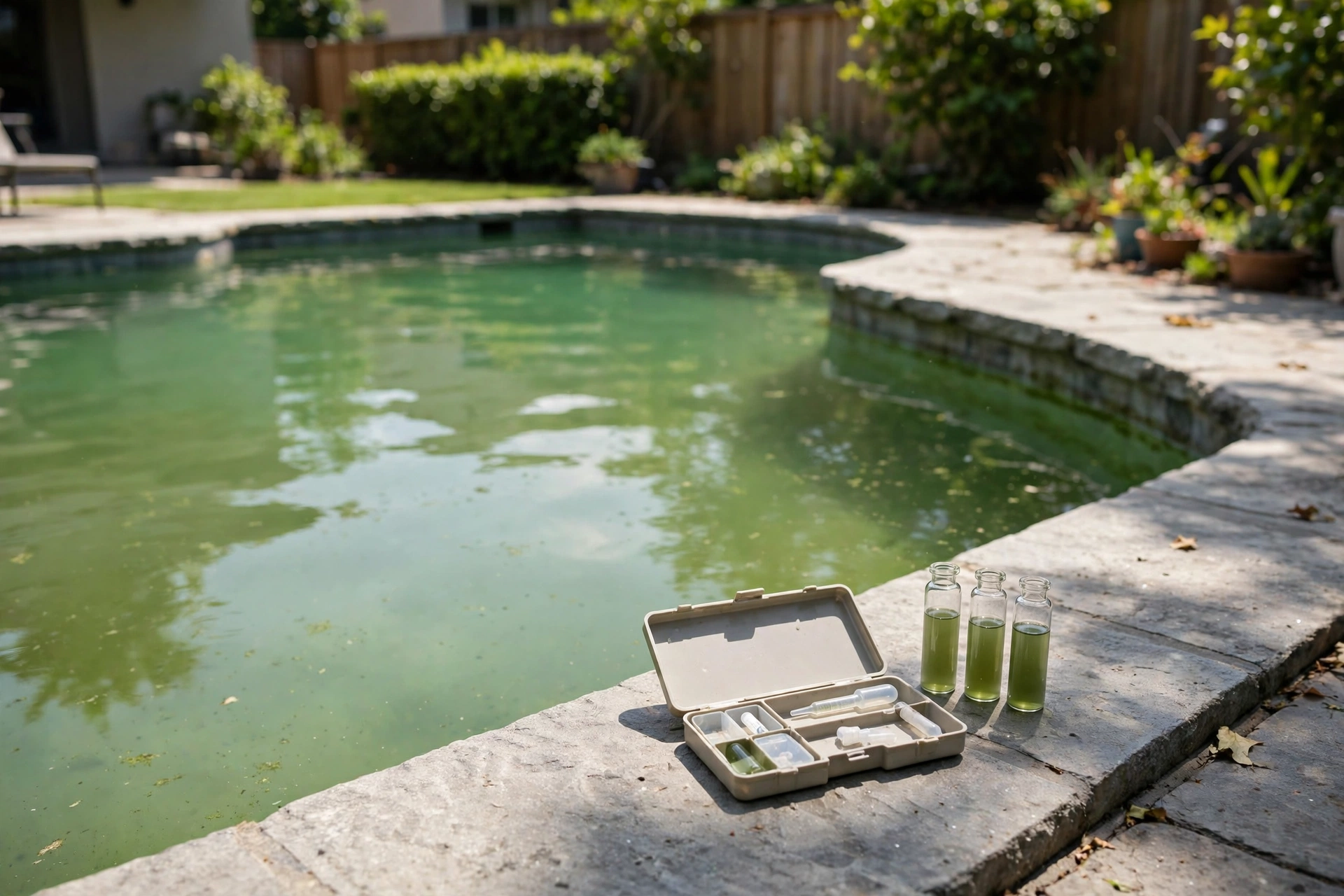
Water that will not clear up? Start here. Cloudy water — the full diagnostic tree. Milky blue water — the pale-blue haze variant. Green water — algae bloom, SLAM protocol. Cloudy after shock — what the shock revealed. Clearing cloudy water fast — the emergency sequence.
Algae, by type
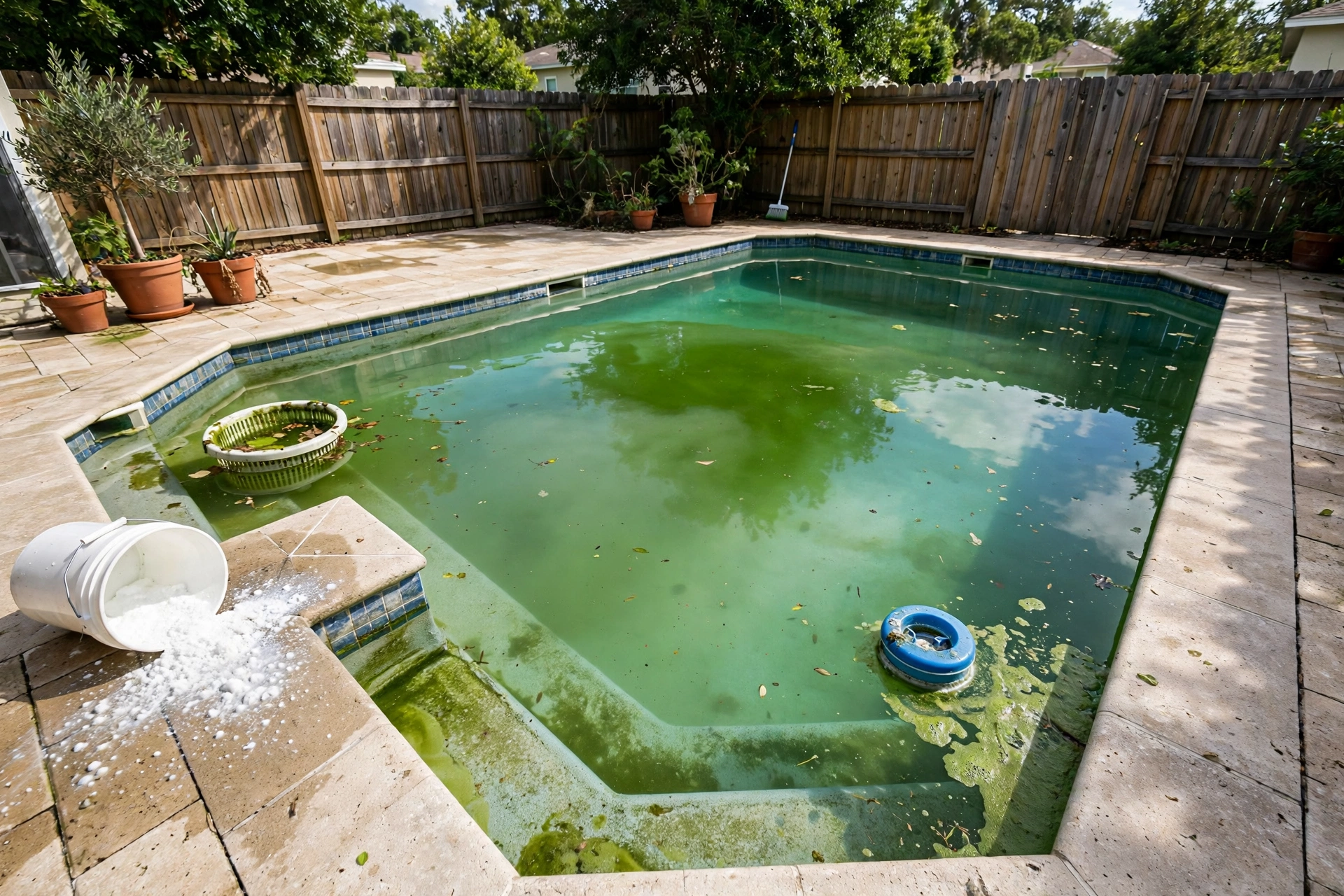
Algae comes in flavors, and the treatment changes with each one — identify yours before you dose. Green algae — the common bloom. Mustard/yellow algae — the dusty kind that brushes away and returns. Yellow algae — identification and treatment. Black algae — the rooted spots that need physical attack. Pink slime — the bathroom-like film in corners. White water mold — the tissue-like strands.
Chlorine & sanitizer problems
If the problem is the chemistry, not the look of the water, this is your section. Chlorine will not hold — our flagship diagnosis. Chlorine lock — the myth, retired. High CYA — the usual culprit behind "not working." Strong chlorine smell — it means chloramines, not too much chlorine. Burning eyes — same cause, same fix.
Balance problems (pH, alkalinity, calcium)
pH and alkalinity trouble rarely announces itself directly — it shows up as cloudy water, stinging eyes, or chlorine that will not behave. High pH and low pH. High alkalinity and low alkalinity. Calcium problems — scaling and etching. TA vs pH — which to fix first.
Surfaces, stains & debris
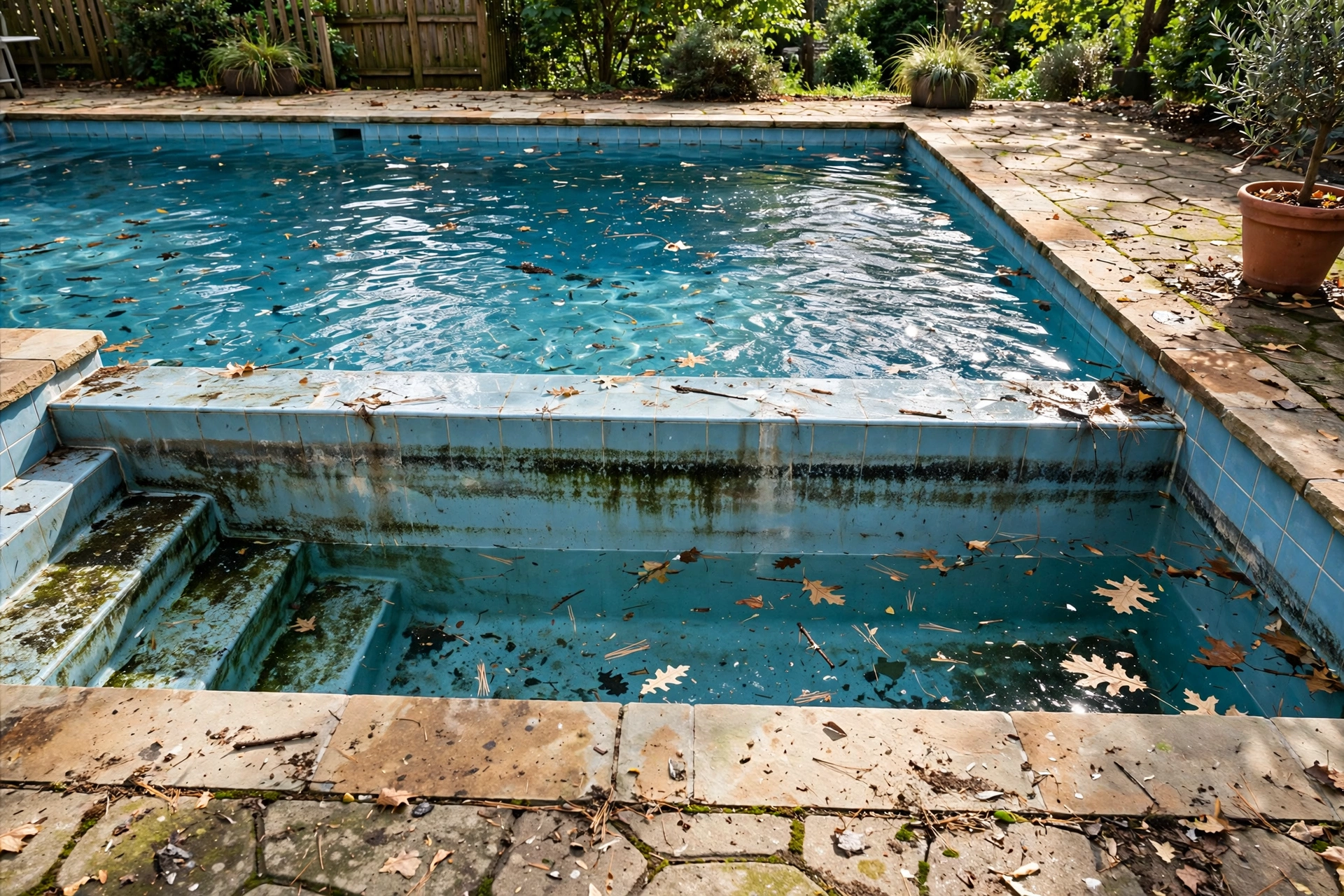
Not everything is a chemistry problem — sometimes you just need to identify the gunk. Rust stains, blue-green copper stains, white flakes and scale, foam, dead algae on the floor, mysterious sand, pollen season, tile calcium line.
Saltwater system problems
Salt pools have their own little failure modes — start here before assuming the cell is dead. SWG not making chlorine, salt cell care, rising pH, cloudy salt pool.