Ideal Pool Chemical Levels: The Complete Target Chart
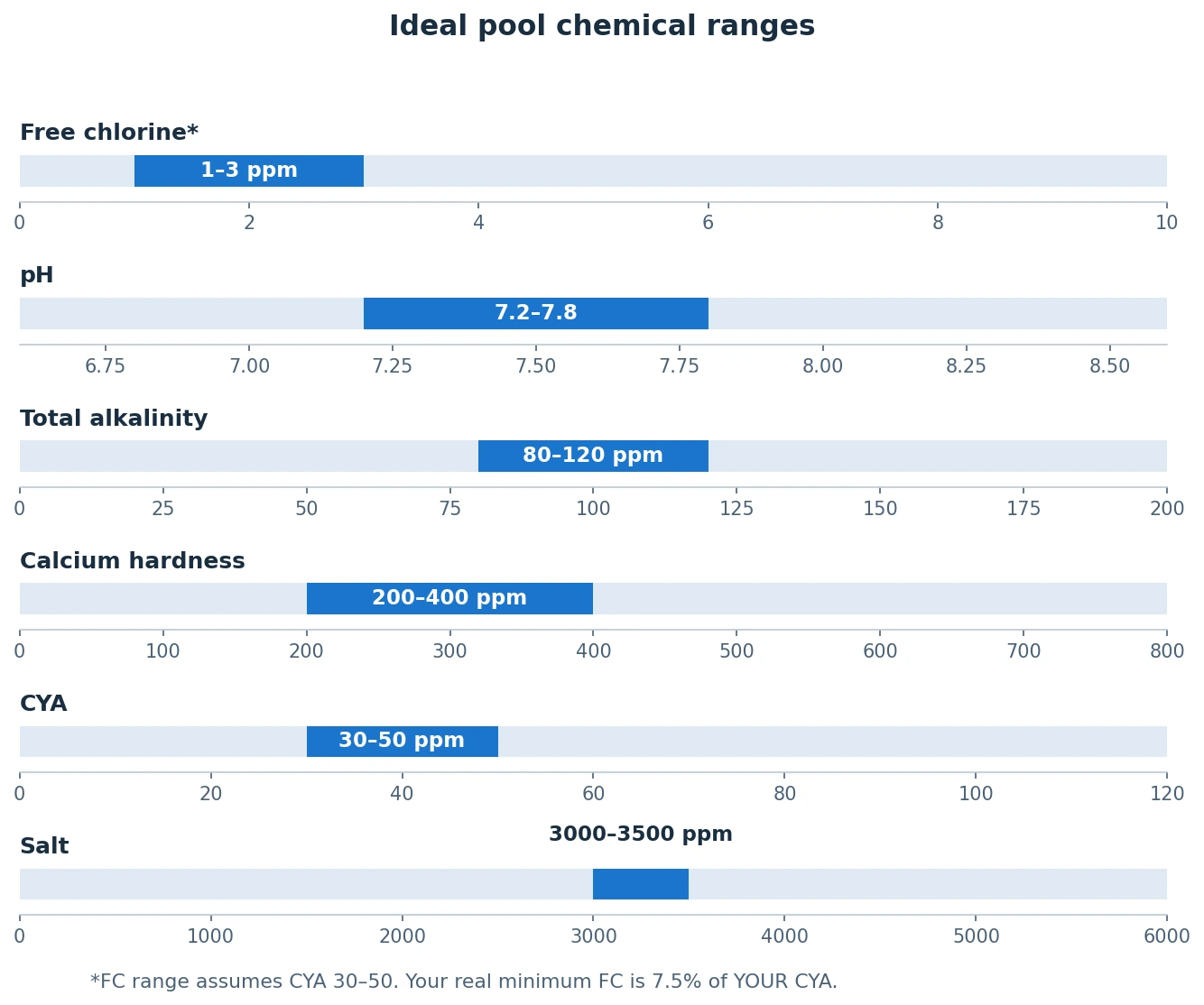
FC: 3–5 ppm at CYA 30–50 (4–6 at CYA 70–80 for salt pools). pH: 7.4–7.6. TA: 80–120 (60–80 for salt). CYA: 30–50 (70–80 salt). Calcium: 200–400 ppm for plaster. Salt: 3000–3500, per your SWG manual. And FC targets always depend on CYA — that’s the most important row on this chart.
Bookmark this page. Every other page on the site points back to these targets — this is the single source of truth. And one rule governs the whole chart: chlorine targets are meaningless without CYA. They’re a pair, always.
The chart
Free chlorine: 3–5 ppm for chlorine pools (CYA 30–50); 4–6 ppm for saltwater (CYA 70–80). Minimum FC is about 7.5% of CYA; target about 11.5% of CYA. pH: 7.4–7.6 ideal, 7.2–7.8 acceptable. Total alkalinity: 80–120 ppm (60–80 for saltwater). CYA: 30–50 ppm (70–80 saltwater). Calcium hardness: 200–400 ppm for plaster/gunite; vinyl and fiberglass can run lower (175–225) since there’s nothing to etch — but very low CH combined with low pH will still corrode equipment.
Combined chlorine: 0.5 ppm or less. Salt: whatever your manufacturer says, usually 3000–3500 ppm.
How to read the FC/CYA pair
At CYA 30: minimum FC around 2, target 3–4. At CYA 50: minimum around 4, target around 6. At CYA 80: minimum around 6, target around 9. See the pattern — higher CYA demands higher FC for the same sanitation. That’s why chlorine "not working" at CYA 100 isn’t a chlorine problem at all.
What to fix first when several are off
Go in this order: TA → pH → FC/CYA → calcium → salt. TA first because it stabilizes pH. pH before chlorine because extreme pH skews every other reading. CYA together with chlorine because they’re a pair. The reasoning lives at alkalinity vs pH.
- FC: 3–5 ppm (CYA 30–50) · 4–6 ppm (salt, CYA 70–80).
- pH: 7.4–7.6. TA: 80–120 (60–80 salt).
- CYA: 30–50 (70–80 salt). CH: 200–400 (plaster).
- CC ≤ 0.5 ppm. Salt 3000–3500 (per manual).