Pool Alkalinity vs pH: What Is the Difference (and What to Fix First)

Quick answer

Here is the one-liner I wish someone had given me on day one: total alkalinity (TA) is the buffer that keeps pH stable; pH is just the reading. Fix TA first (80–120 ppm), then pH (7.4–7.6). Adjusting pH with the buffer wrong is like painting a wall that is still moving.

I see this cycle constantly: a new owner adjusts pH, watches it bounce back in two days, adjusts again, and concludes pool chemistry is black magic. It is not. They are adjusting the reading before fixing the buffer. This page ends that cycle for you.
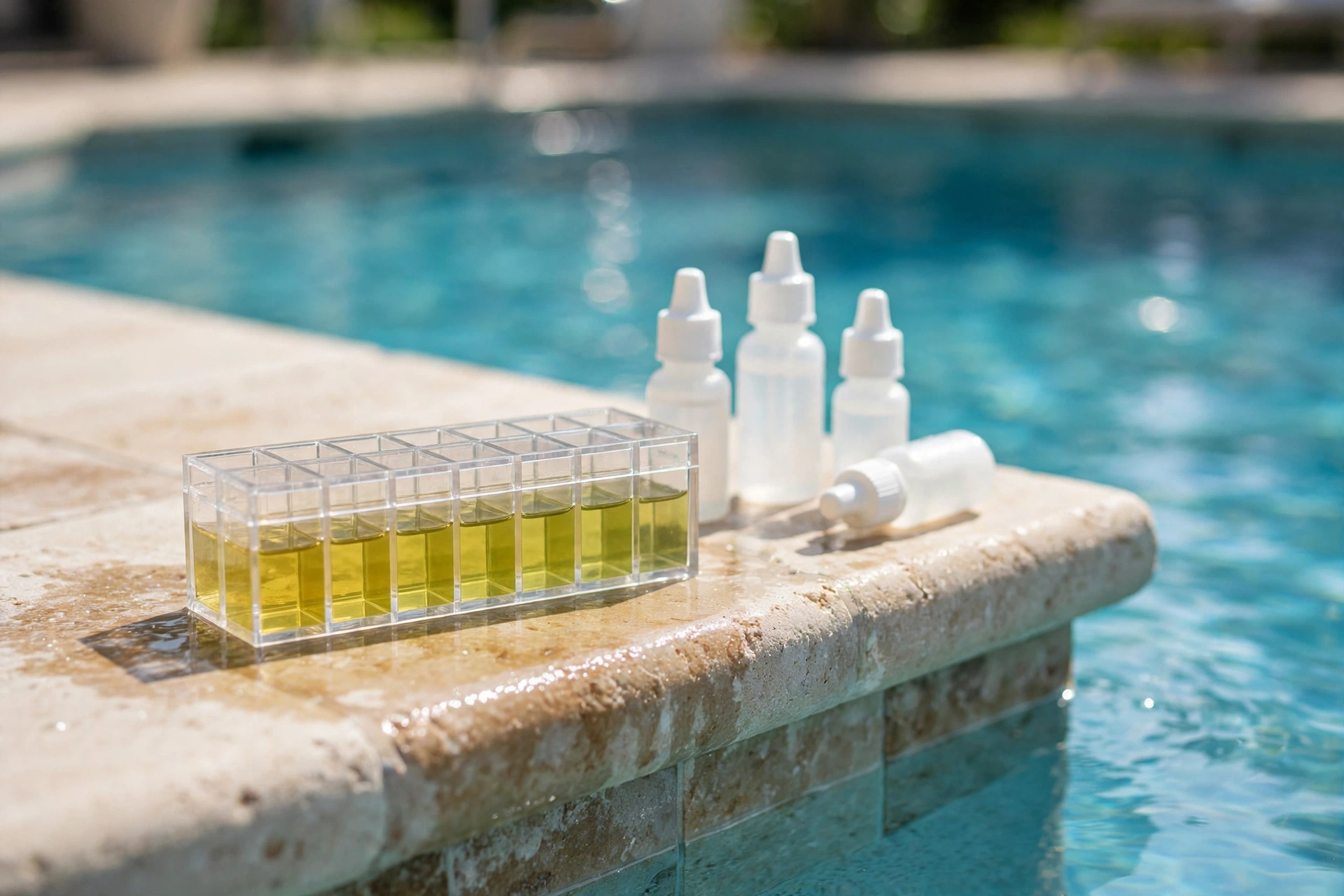
Pool Alkalinity vs pH: What Is the Difference (and What to Fix First)

TA is the buffer, pH is the reading

Think of TA as the shock absorbers and pH as the ride height. With TA in range (80–120 ppm), pH moves slowly and predictably. With TA at 40, every rainstorm or chemical addition swings pH wildly. With TA at 200, pH drifts up constantly and fights you coming back down.

That is why the dosing order is always TA first, then pH, then everything else. That is not tradition — it is chemistry.

How they interact in practice

Your toolkit, plainly: baking soda raises TA a lot and pH a little — that is the low-TA tool. Muriatic acid lowers both pH and TA — the high-readings tool. Soda ash raises pH a lot and TA moderately. And aeration — fountains, splashing, a salt system churning — raises pH without touching TA at all, which is exactly the tool for low pH with high TA.

That last trick is the acid + aeration method: knock pH down with acid (which drags TA down with it), then aerate to float pH back up without raising TA. Repeat until TA lands in range. It feels like cheating the first time it works.
How they interact in practice

The targets

The targets, so you do not have to hunt: TA 80–120 ppm for most pools (60–80 for saltwater, which aerates constantly). pH 7.4–7.6 ideal, 7.2–7.8 acceptable. And if your pH will not stay put no matter what you do — stop adjusting pH and test TA. The answer is almost always hiding there.

TA/pH targets
  • TA: 80–120 ppm (60–80 for saltwater pools).
  • pH: 7.4–7.6 ideal; 7.2–7.8 acceptable.
  • Order: TA first, then pH, then chlorine.
  • Baking soda → TA up. Muriatic acid → pH and TA down. Aeration → pH up only.
Safety warning. Never mix different chlorine products together, and never mix chlorine with acid. Wear gloves and eye protection, add chemicals to water (never water to chemicals), and follow the exact instructions on your product label — the label overrides any calculator. Store chemicals dry, separate, and away from kids and pets.
Common questions about pool alkalinity vs ph: what is the difference (and what to fix first)

Common questions

Should I adjust alkalinity or pH first?
Alkalinity first, always. pH adjustments simply do not hold without the TA buffer in range — you would be building on sand.
Why does my pH keep going back up?
High TA pushes pH up — and constant aeration does the same, especially with a salt system churning away. Get TA into range and the drift calms down.
Can I raise pH without raising alkalinity?
Yes — aerate. Fountains, waterfalls, splashing, or just point your return jets up to break the surface. It drives off CO2, which raises pH with zero TA change. Free and chemical-free.
Can I adjust alkalinity and pH at the same time?
Not cleanly — most chemicals move both. The reliable method is sequential: set TA first (baking soda up, acid down), then nudge pH, then recheck TA. The one exception is the acid-and-aeration method, which lowers TA while bringing pH back up.
Will shocking my pool lower pH and alkalinity?
It can nudge them. Dichlor shock is acidic and drags both down a bit; cal-hypo is basic and pushes pH up slightly. Liquid chlorine is close to neutral. Either way, test after shocking — don't guess.
What happens if pool alkalinity is too high?
High TA (over ~120) constantly drags pH upward, which makes chlorine less effective and invites scale. Bring it down with muriatic acid in small doses, aerate to recover pH, and repeat — it's a patient process, not a single dump.

Last reviewed: September 29, 2026. Dosing figures are estimates from standard pool-industry ratios — always confirm against your product label and a reliable test kit.