Pool Water Chemistry Basics: The Beginner's Real Guide

Quick answer

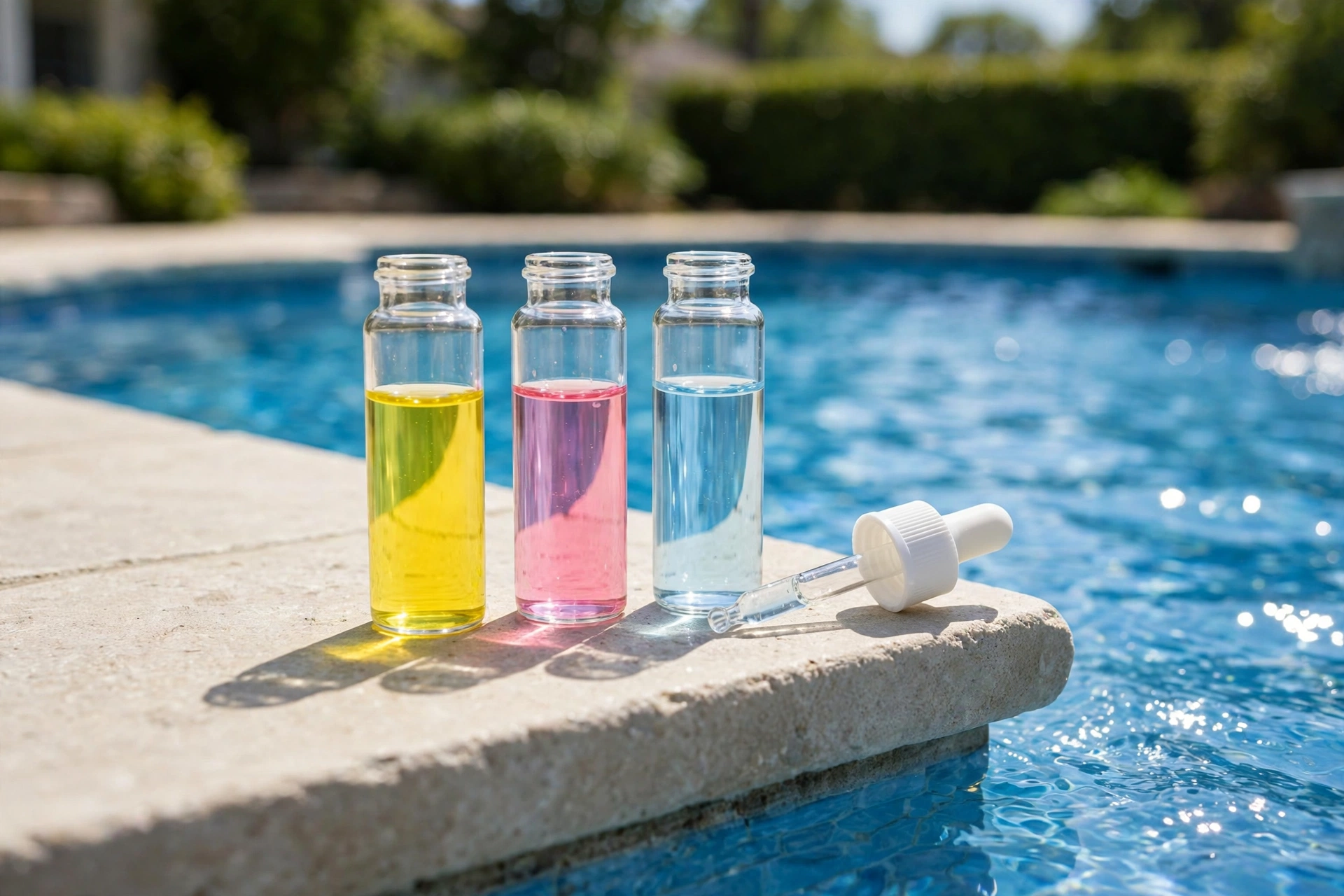
Six things matter: free chlorine (paired with CYA — the master relationship), pH, total alkalinity, calcium hardness, CYA itself, and salt (if you’re saltwater). Learn them in this order: FC/CYA → pH → TA → the rest. Everything else is detail.

Pool chemistry has a reputation for complexity it doesn’t deserve. Six numbers. One master relationship (chlorine/CYA). One golden order (TA → pH → chlorine). And a handful of myths to unlearn. Give me 15 minutes on this page and you’ll have the foundation; every other page on the site builds on it.
Pool Water Chemistry Basics: The Beginner's Real Guide

The six numbers

Free chlorine (FC): the sanitizer — but meaningless without its CYA partner. Cyanuric acid (CYA): chlorine’s sunscreen and its handcuff — shields it from the sun, but too much weakens it. pH: acidity — affects comfort, equipment life, and how well chlorine works. Total alkalinity (TA): pH’s bodyguard — the buffer that keeps it steady. Calcium hardness (CH): plaster’s food — too low etches, too high scales. Salt: saltwater pools only — the raw material your chlorine factory runs on.

The master relationship: FC/CYA

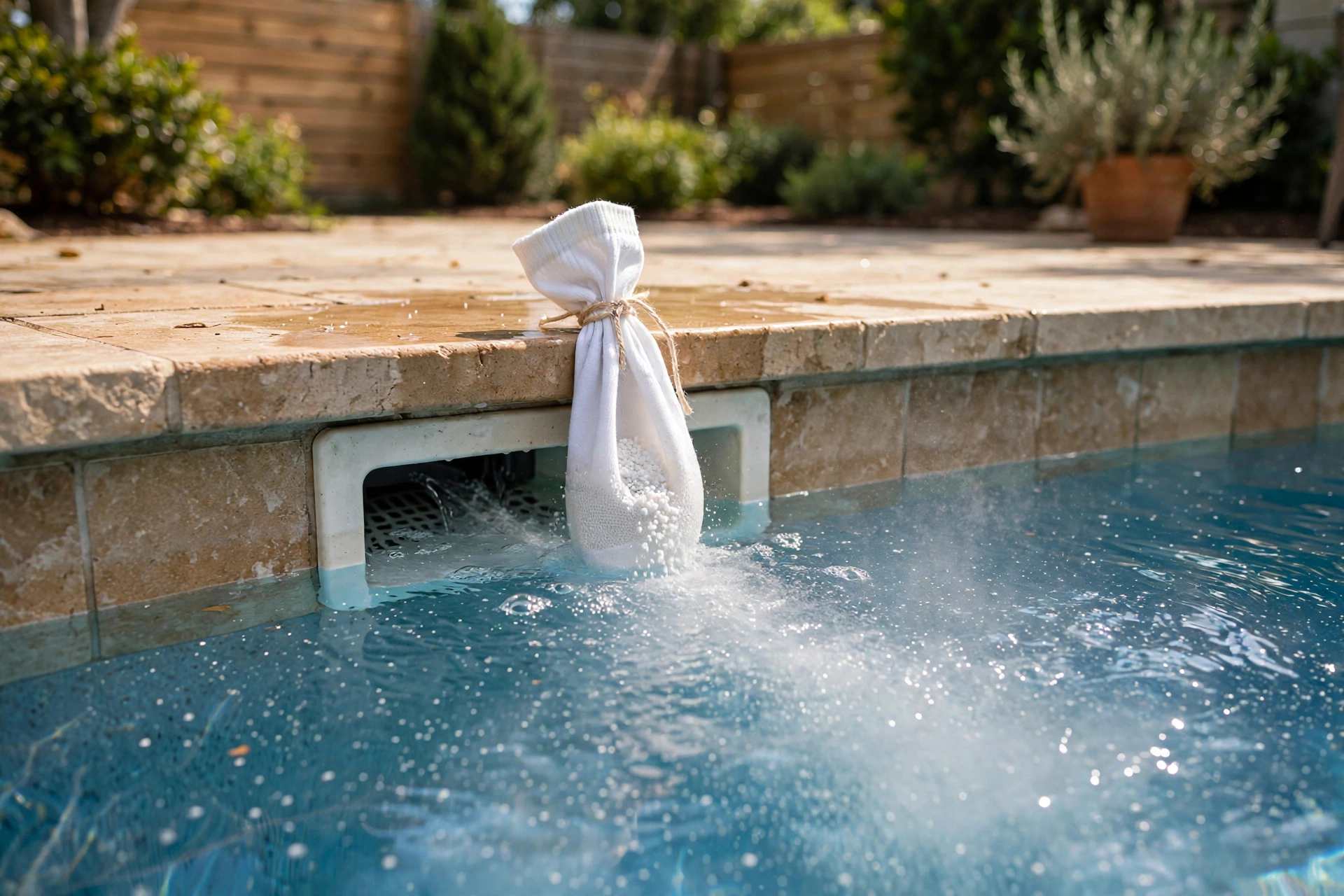
If you learn exactly one thing today, make it this: chlorine’s strength depends on CYA. More CYA means you need more FC for the same sanitizing power. This one relationship explains "chlorine lock," why tablets eventually stop working, and why shock doses have to scale with stabilizer. The full story: what CYA is.
The master relationship: FC/CYA

The golden order

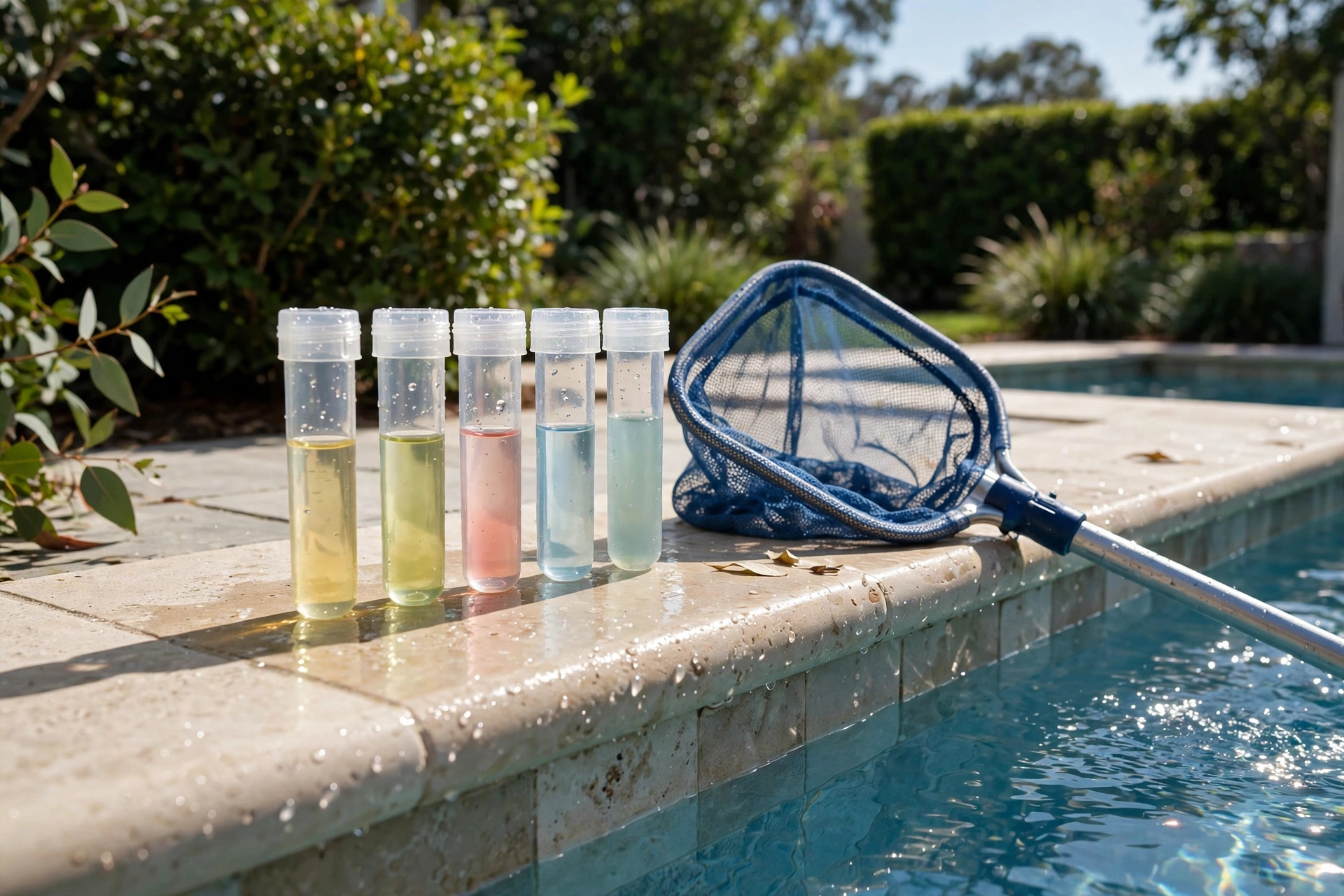
When several things are off at once, fix them in this order: TA → pH → chlorine/CYA → calcium → salt. Each step’s reading depends on the one before it. Adjusting pH before TA is the classic beginner loop — here’s why.
The golden order

Myths to unlearn now

That strong "chlorine smell" means too much chlorine? It means used-up chlorine — chloramines. Test strips are fine for balancing? They’re not — get a drop kit. You must shock weekly on a schedule? Shock when CC or actual problems say so, not by calendar. Saltwater pools are chlorine-free? They literally make chlorine. Algaecide prevents algae? Chlorine prevents algae; algaecide is just backup.
Safety warning. Never mix different chlorine products together, and never mix chlorine with acid. Wear gloves and eye protection, add chemicals to water (never water to chemicals), and follow the exact instructions on your product label — the label overrides any calculator. Store chemicals dry, separate, and away from kids and pets.
Common questions about pool water chemistry basics: the beginner's real guide

Common questions

What chemicals do I need for a pool?
The essentials: a chlorine source (liquid chlorine or plain bleach), muriatic acid, baking soda, and stabilizer (CYA). That’s the core kit — everything else is situational.
How do I learn pool chemistry fast?
Get a good drop test kit (the Taylor K-2006 is the one most guides point to), learn the FC/CYA relationship, and follow the TA → pH → chlorine order. Two weeks of actual testing will teach you more than any article — including this one.
Is pool chemistry hard?
No. Six numbers and an order of operations. The hard part was never the chemistry — it was all the bad advice (strips, pool-store upsells, myths) you have to unlearn first.
What does baking soda do to pool water?
It raises total alkalinity — that’s its whole job — with a small side nudge to pH. It’s not a sanitizer, not a clarifier, and it won’t fix anything except low TA.
What destroys chlorine in a pool?
Sunlight is the big one (that’s what CYA defends against), then organic load — swimmers, leaves, algae — and ammonia. If chlorine vanishes overnight with no sun involved, something in the water is eating it, and that’s a diagnosis, not a dosing problem.
Is chlorinated pool water toxic?
At proper levels, no — it’s drinking-water chemistry at slightly higher doses. Don’t drink the pool, don’t swim at shock levels, and respect the chemicals in their concentrated form. The water itself, balanced, is fine.

Last reviewed: September 29, 2026. Dosing figures are estimates from standard pool-industry ratios — always confirm against your product label and a reliable test kit.