Cloudy Pool Water: What Causes It and How to Fix It
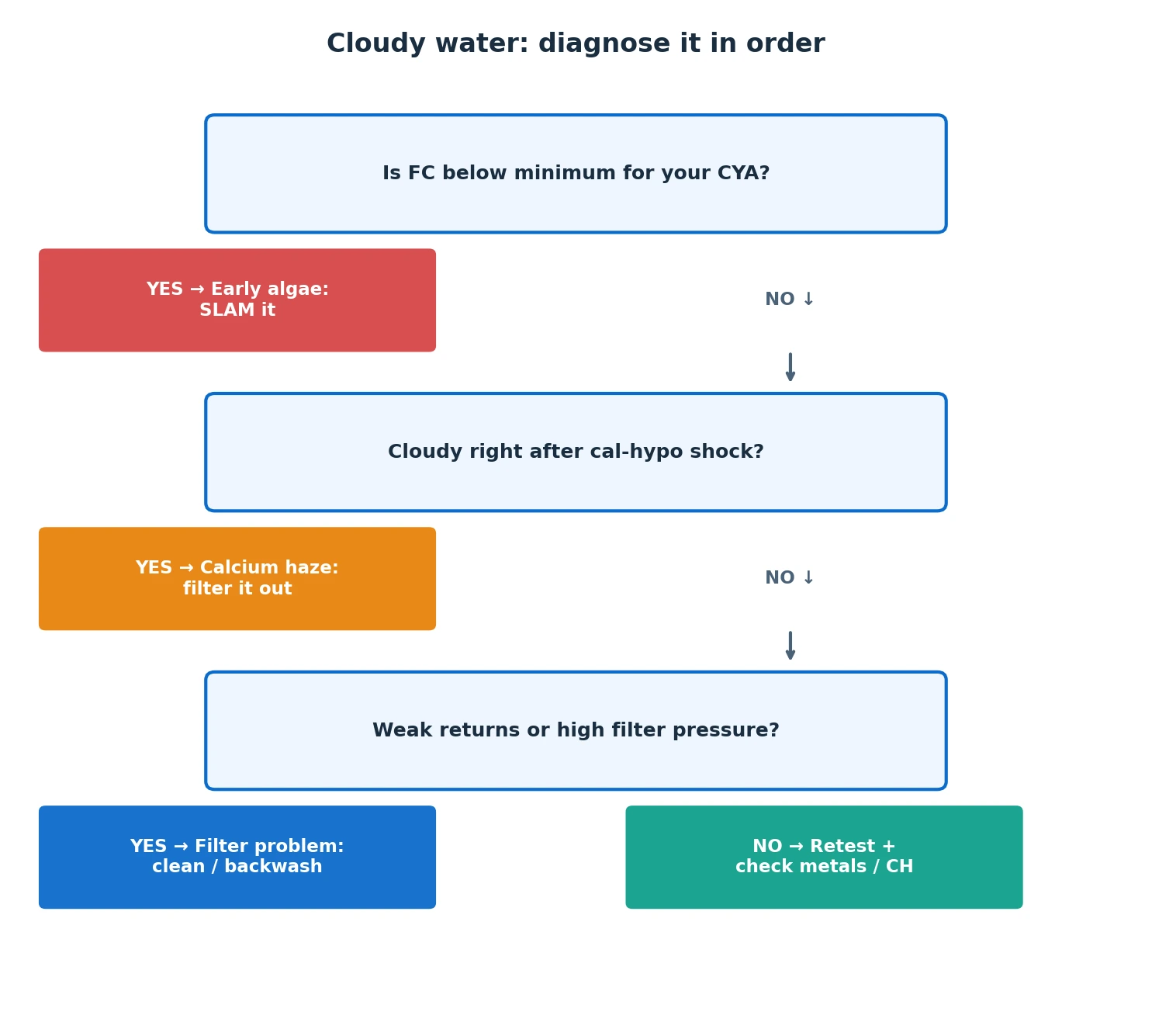
Cloudy water is a symptom, not a diagnosis — and it almost always traces back to one of four things: dead algae, calcium knocked out of solution by cal-hypo shock, a filter that runs without really filtering, or a test that's lying to you. Diagnose first with the table below (takes about a minute), then fix the cause. Clarifier is the last thing you reach for, not the first.
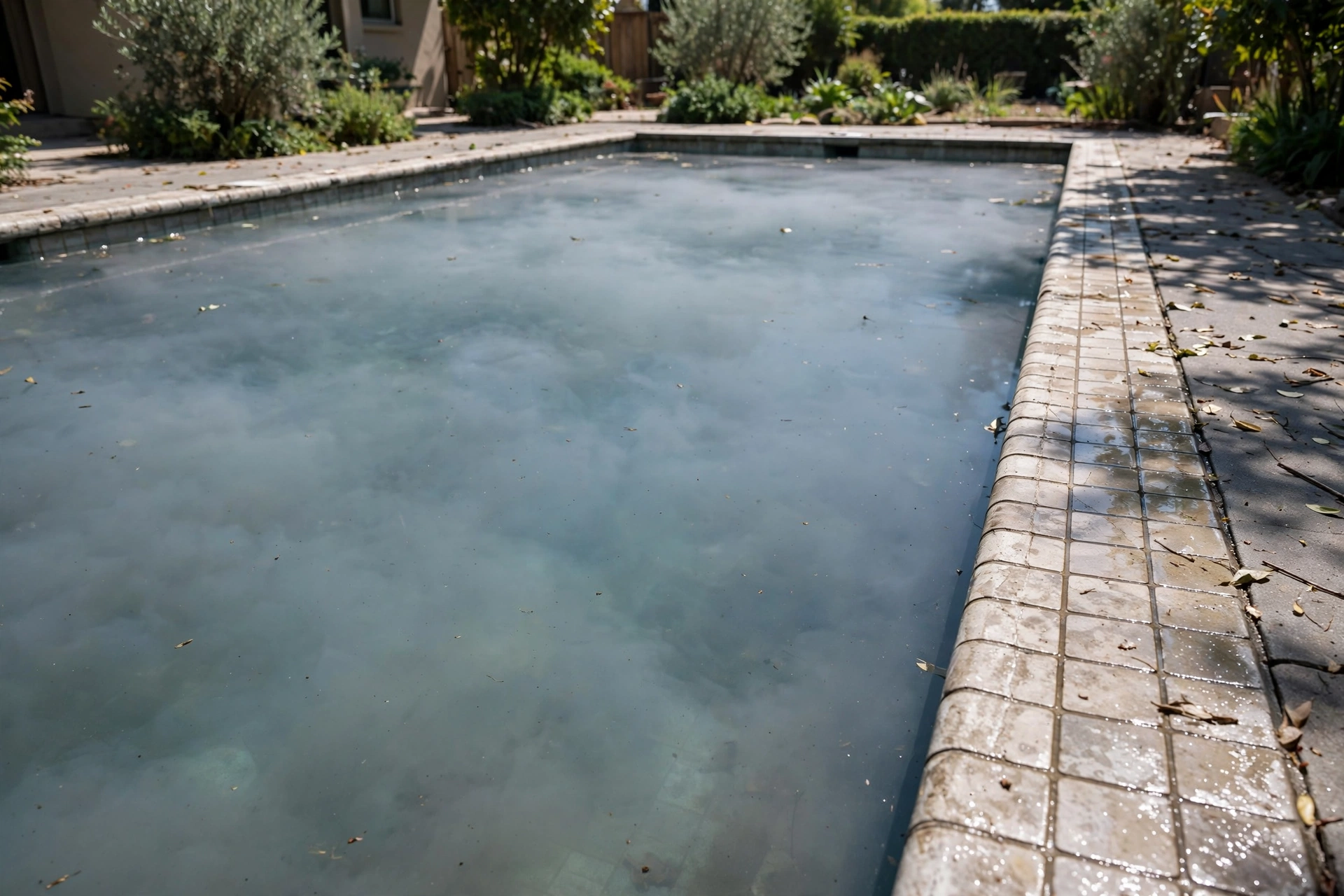
Saturday morning. The kids are already in swimsuits, the sun is out, and your pool looks like someone poured milk into it. You can already picture the pool-store trip: a water sample handed across the counter, a furrowed brow, and three bottles you didn't plan to buy. I've watched this exact scene play out in forum threads more times than I can count, and it rarely ends with clear water — because the bottles treat the cloudiness, not whatever caused it.
What I'd want someone to tell me before I spent a dollar: cloudiness is just tiny particles hanging in the water, and there are only a few places they can come from. Dead algae. Calcium knocked out of solution. A filter that's moving water but catching nothing. Or chemistry that reads 'fine' on a strip and isn't. That's the whole list. Your job isn't to buy something — it's to figure out which one is yours.
One fork in the road before you start: if your pool turned cloudy right after shocking, read that page instead — the timing alone narrows it to two suspects. Everyone else, start with the diagnosis table. It points you at the right section in about sixty seconds.
The 60-second diagnosis table
Don't guess. Find your row, run the test in the third column, and you'll know exactly which section below is yours. Most people land on a row in under a minute.
One caveat on the 'test this first' column: if you're still on test strips, treat every reading as approximate until a drop-based kit confirms it. Strips can read total alkalinity 40 ppm off and CYA even worse — a diagnosis built on strip numbers is a guess wearing a lab coat. See test strips vs a real test kit for why that matters.
| What you're seeing | Most likely cause | Test this first | The fix |
|---|---|---|---|
| Milky haze within a day of shocking | Calcium precipitated by cal-hypo shock | Calcium hardness with a drop kit | Shock with liquid chlorine instead; partial drain if CH is over 400 ppm |
| Haze after an algae episode, or FC near zero | Dead algae the filter hasn't caught yet | Free chlorine and CYA | SLAM: hold shock level for your CYA until clear |
| Fine haze while chemistry looks fine | Filter running but not really filtering | Pressure gauge vs its clean baseline | Longer run time; backwash or clean the filter |
| 'Perfect' strip readings, still cloudy | The test is lying to you | Same water on a drop kit vs the strip | Get a FAS-DPD kit (the Taylor K-2006 is the forum standard) |
| Greenish tint inside the cloudiness | Live algae getting an early start | Free chlorine and CYA | SLAM now — this becomes a green pool within days |
Dead algae: the cause behind most cloudy pools
The most common story goes like this. Chlorine dipped to zero for a day or two — after heavy rain, a pool party, or just a busy week — and algae started growing. You shocked, killed a lot of it, and now you're staring at the corpses. They're too fine for a struggling filter to grab quickly, so they hang in the water as haze.
The tells: the cloudiness followed an algae episode or a stretch where free chlorine read zero, and the water has a dull gray-green cast rather than a bright milky white. If that sounds like your pool, no clarifier will save you — dead algae keeps arriving until the killing is actually finished.
The fix is a proper SLAM: raise free chlorine to shock level for your CYA and hold it there, testing and topping up two or three times a day, until the water is clear and overnight chlorine loss is under 1 ppm. Most dead-algae haze clears in 2–5 days once the level is genuinely held. The people who struggle are the ones who shock once and wait — a single dose that fades by morning kills the weak algae and leaves the rest.
Calcium cloudiness: the morning-after-shock surprise
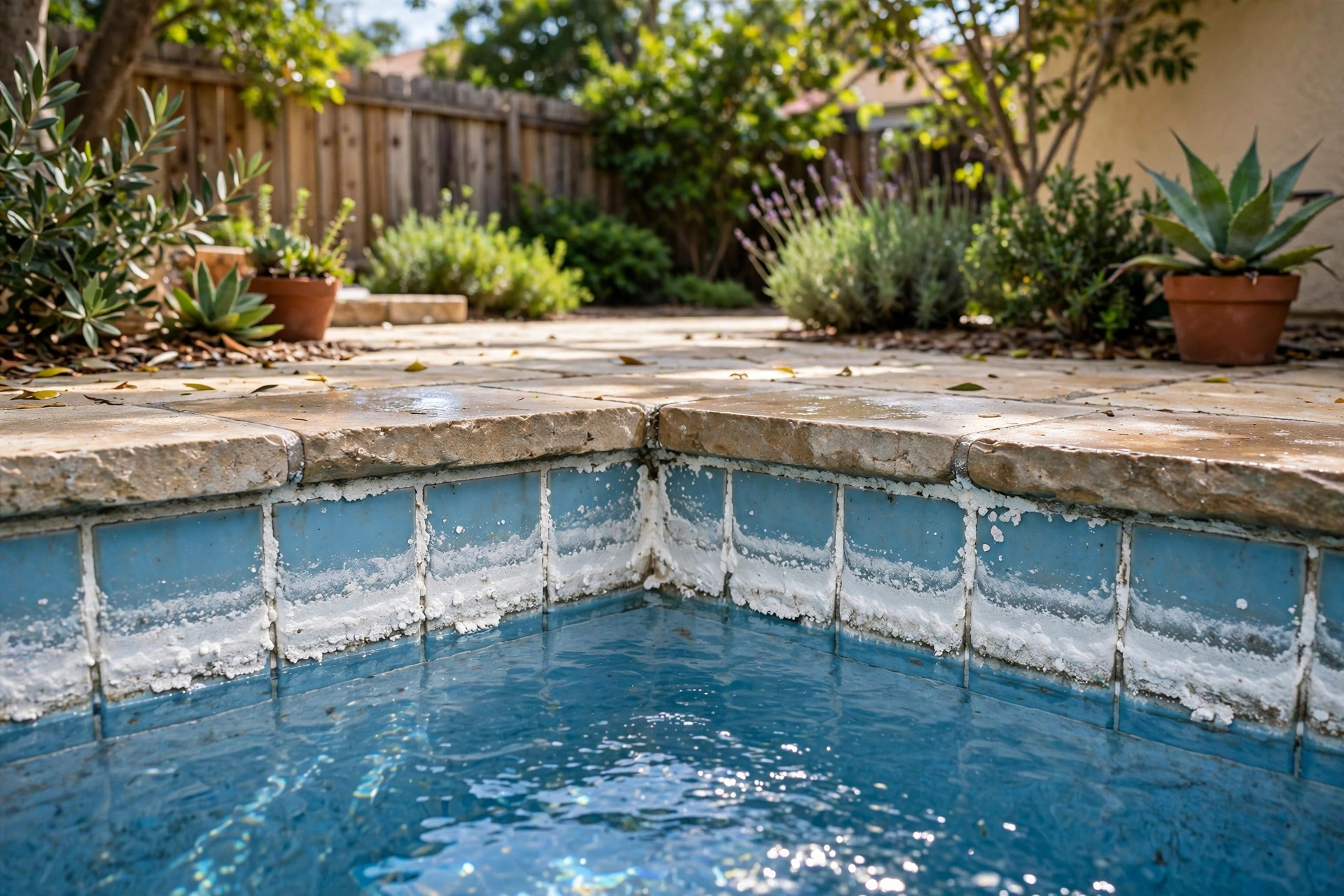
Cal-hypo shock adds calcium along with chlorine — roughly 0.7 ppm of calcium hardness for every 1 ppm of free chlorine it adds. If your CH was already sitting near 400 ppm, that extra calcium can precipitate straight out of solution and turn the pool milky within hours of shocking.
The tell is timing: the water was clear yesterday, you shocked with cal-hypo, now it's milk. Test calcium hardness with a drop kit — strips can't measure CH. If CH is over 400 ppm, switch to liquid chlorine for shocking going forward, since it adds neither calcium nor CYA. And if CH is very high (500 ppm or more), plan a partial drain and refill — dilution is the only thing that removes calcium. No chemical does.
The 10-minute filter audit
When the chemistry checks out and the water doesn't, I look at the filter before I look at another bottle. A filter can run all day and still catch almost nothing. Walk through these five checks — they take ten minutes and resolve a surprising number of 'mystery' cloudy pools.
Run time: is the pump actually running 8 or more hours a day in swim season? Four hours isn't filtering, it's circulating.
Pressure gauge: read it now and compare against the clean baseline — write the baseline on the filter housing with a marker. About 25% over baseline means backwash or clean; a choked filter filters poorly.
Last cleaning: when did you last backwash (sand or DE) or hose off the cartridges? If the answer is 'a while ago,' that's your prime suspect.
DE powder: on a DE filter, was powder added after the last backwash? A DE filter with no powder is an expensive sieve. This gets forgotten constantly.
Skimmer and pump baskets: clogged with leaves, they choke flow to a trickle. Two minutes of emptying, big difference.
Clearing it fast: what actually speeds things up
Whatever the cause, more filtration hours clear water faster — that's just physics. Run the pump around the clock until the water is clear, then drop back to your normal schedule. Watch the pressure gauge while you do it: a dirty filter filters poorly, so backwash sand or DE (or hose the cartridges) the moment pressure climbs. Filter type sets the pace — sand is slowest (think days), cartridge is middling, DE is fastest.
For algae-related cloudiness, one shock dose that drifts back to zero by morning clears nothing. You need shock level for your CYA, held there: test and top up 2–3 times a day, and use the chlorine dose calculator so every top-up is exact instead of guessed. Consistency beats quantity, every time.
Flocculant is the one genuine overnight option: it clumps fine particles into heavy clumps that sink, and you vacuum them straight to waste. Two hard rules. First, you need a multiport valve with a Waste setting — never use floc with a cartridge filter, it gums up the cartridges. Second, never floc a live algae bloom; you'll get a clear pool that turns green again in two days.
What I'd skip: stacking clarifier, shock, algaecide, and floc all at once hoping something works. Pool owners report spending hundreds doing exactly this. Chemicals can work against each other, and an overloaded pool takes longer to clear, not shorter. And don't drain the pool in a panic without knowing your water table — an empty pool in high groundwater can literally pop out of the ground. Partial drains are safe; full drains need caution.
Sand vs cartridge vs DE: which clears haze fastest
Your filter type sets the speed limit on clearing cloudy water, and the differences are bigger than most people expect. DE filters catch the finest particles and usually clear haze fastest; cartridge filters sit in the middle; sand filters are the slowest — which is fine, it just means patience and longer run times.
None of them works at its rating when neglected, though. A DE filter missing its powder after a backwash catches almost nothing, and I've seen that exact mistake behind some truly stubborn 'mystery' cloudy pools. Match your expectations to your filter, keep it clean, and give it the hours it needs.
| Filter type | Catches down to | Cleaning | Honest take for cloudy water |
|---|---|---|---|
| Sand | ~20–40 microns | Backwash via multiport valve | Cheapest and simplest; slowest on fine haze — run it longer |
| Cartridge | ~10–15 microns | Remove and hose off cartridges | Solid middle ground; no backwashing, but cartridges wear out |
| DE | ~3–5 microns | Backwash, then recharge DE powder | Fastest clearing; most hands-on maintenance |
- Sand filters catch particles down to ~20–40 microns; cartridge ~10–15; DE ~3–5 (with powder in it).
- Dead-algae cloudiness typically clears in 2–5 days of properly held chlorination plus filtration.
- Calcium hardness over 400 ppm plus cal-hypo shock is the classic milk-pool recipe.
- Backwash or clean when pressure reads ~25% above the filter's clean baseline.
- Can't see the bottom clearly? Stay out — that's a drowning-safety issue, not just a chemistry one.