Pool Cloudy After Shock? Here Is What Happened
Cloudiness after shocking is usually one of three things: dead algae (good news — the shock worked, now filter it out), calcium precipitating from cal-hypo shock (bad news — your calcium was already high), or oxidized metals. Dead algae clears with filtration in a few days; calcium cloudiness needs the pH lowered and no more cal-hypo.
You did the right thing — you shocked — and the pool rewarded you by turning milky. I know, it's maddening. But here's the silver lining: this is actually diagnostic. When the cloudiness appeared tells you a lot about what it is.
There are three usual suspects, and they need three different responses. Picking the wrong one wastes days, so diagnose first — that's what this page is for. If the pool was already cloudy before you shocked, start with the general cloudy-water guide instead.
Reason 1: Dead algae (the good kind of cloudy)
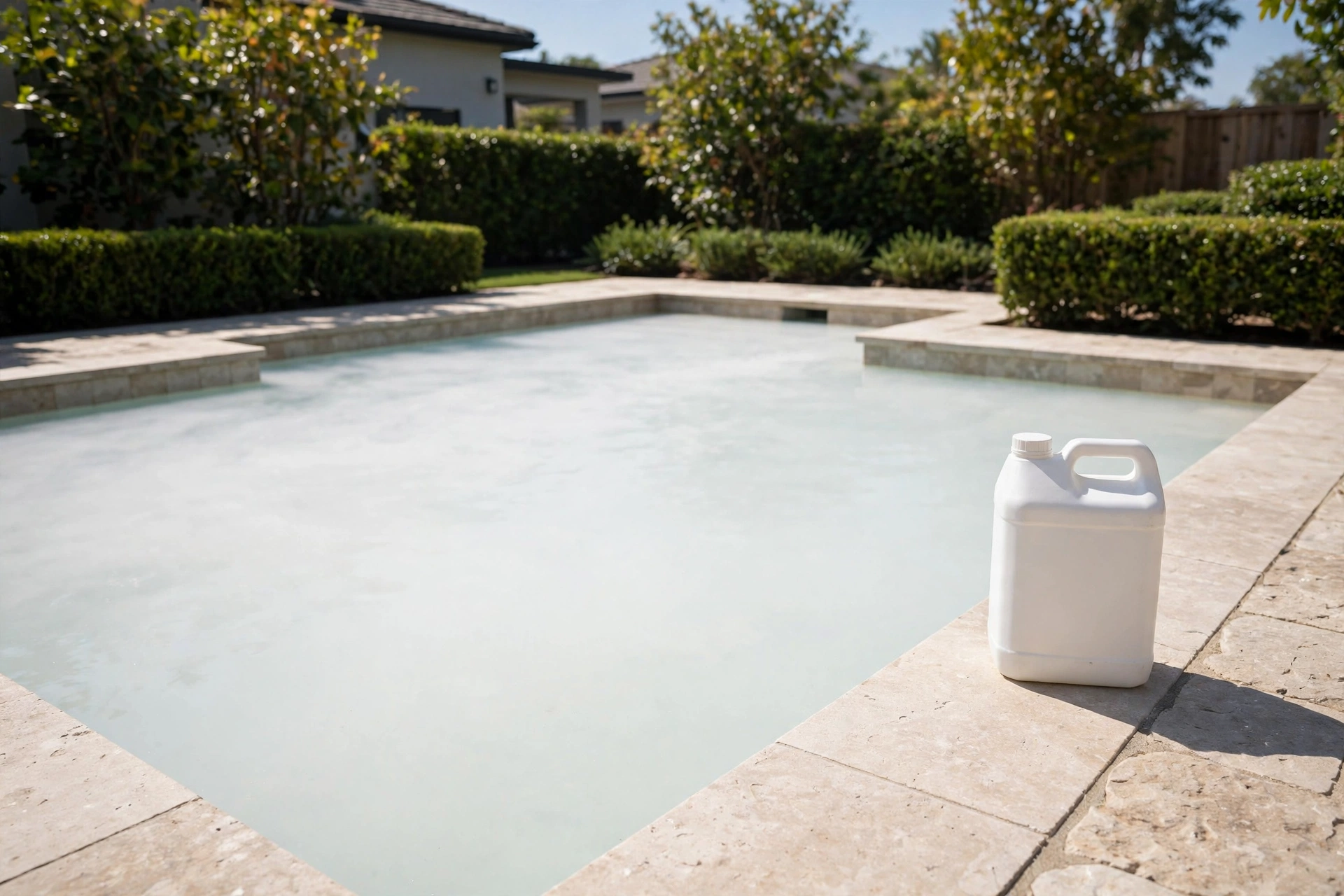
Shock kills algae, and dead algae is a fine white/gray particulate that makes water look milky. This is the shock working exactly as intended — congratulations, sort of. It clears as the filter catches the particles, usually 2–5 days with the pump running long hours.
Help it along: run the pump 24/7 until clear, backwash or clean the filter when pressure rises, and brush the walls so nothing settles and re-seeds. Don't add clarifier yet — give filtration a chance first. Your filter is already doing the job; let it.
Reason 2: Calcium precipitation from cal-hypo
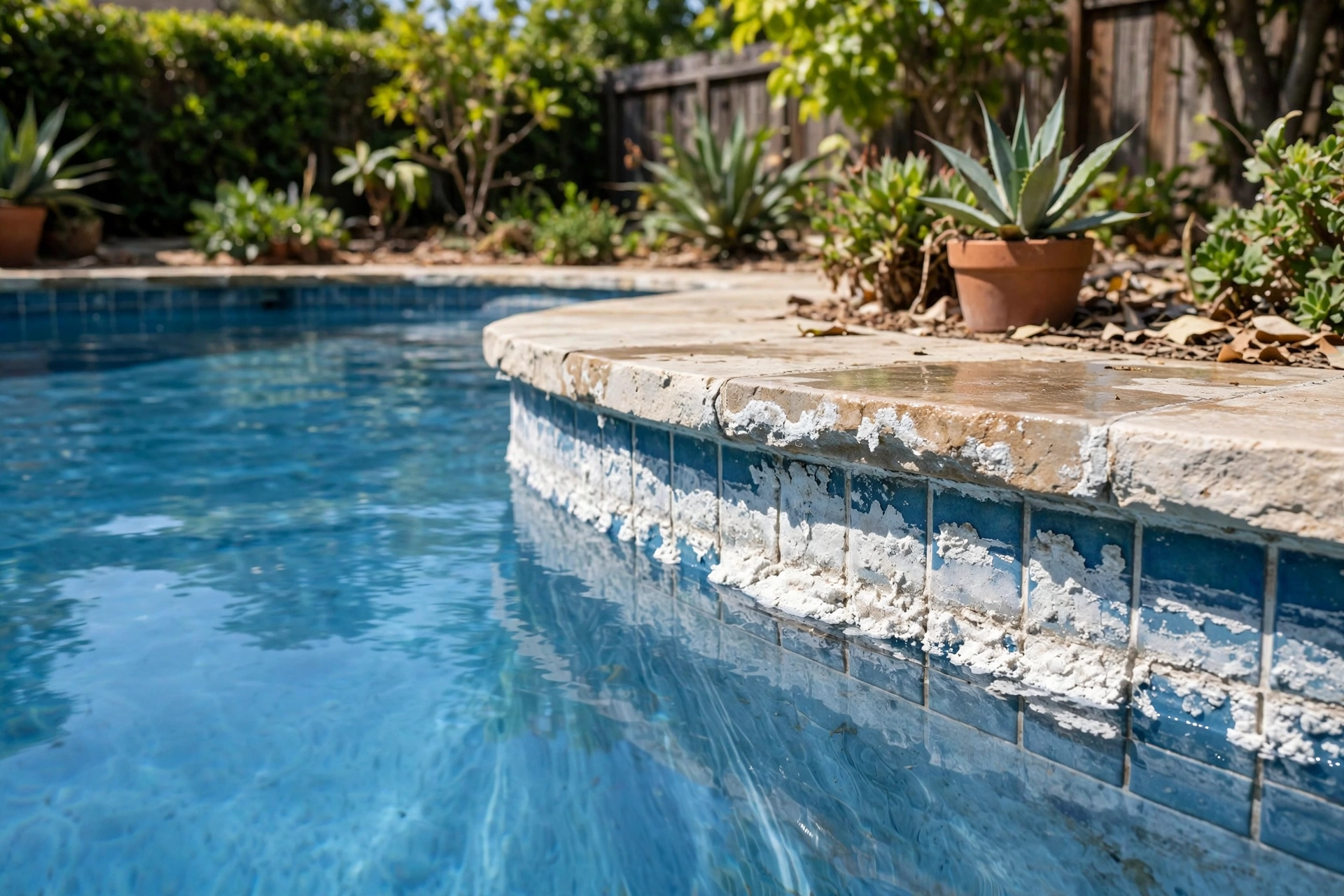
Cal-hypo shock is calcium hypochlorite — it adds calcium with every dose. If your calcium hardness was already 400+ ppm, or pH was high, the fresh calcium can precipitate straight out as a white cloud. The pattern I see in forum threads is blunt: high CH plus high pH plus cal-hypo equals milk.
The fix: stop using cal-hypo (switch to liquid chlorine for shocking), bring pH down into the 7s, and let the filter work. If CH is extremely high, a partial drain is the real fix — and I mean the only real fix, because no chemical removes calcium. Only water replacement does.
Reason 3: Metals oxidizing
Iron or copper in the water oxidizes the moment chlorine hits it — iron goes yellow/brown, copper goes green/teal. If your "cloudy" has a tint to it, or the pool has a heater, copper plumbing, or well fill water, suspect metals before anything else.
Here's what makes metals tricky: they don't filter out, and shock doesn't fix them. You need a metal sequestrant and, for well water, pre-filtering your fill water. Test for metals before treating — the treatment is completely different from algae treatment.
- White/gray, appeared 12–48h after shocking a green pool → dead algae.
- White, appeared within hours of cal-hypo shock, CH 400+ → calcium.
- Yellow/brown or green tint right after chlorine → metals.