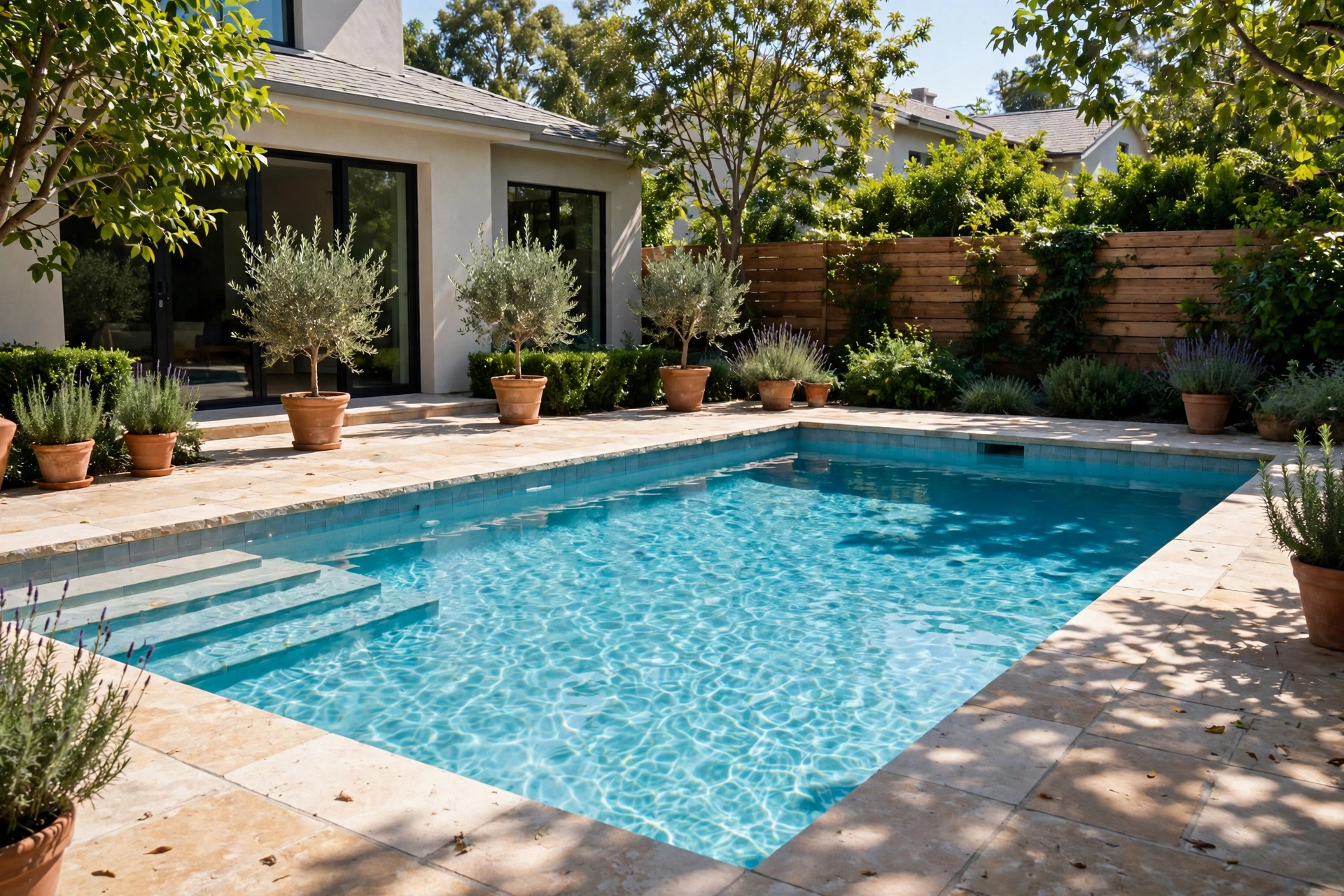
How to Lower pH in a Pool (Without Crashing It)
I’ll give it to you straight: muriatic acid, dosed with the acid calculator — about 16 oz of 31.45% per 10,000 gallons drops pH roughly 0.2. Add half the dose, wait 4 hours with the pump running, retest, and only then add the rest. If pH keeps bouncing back up, high TA is the real problem — fix it with the acid + aeration method.
High pH — anything above 7.8 — makes your chlorine lazy, invites scale, and stings eyes. Lowering it is the easy part: acid, dosed right. The whole skill is not overshooting, because pH is logarithmic and your gut is linear. Your gut will lie to you here. The calculator won’t.
Pool chemical dose calculator
Estimate from standard pool-industry dosing ratios. Add two-thirds, retest after circulation, then top up. Never mix chlorine products together. Your product label has the final say.
The dosing discipline
Calculate the full dose, then add half. Circulate for 4 hours. Retest. Top up only if you still need to. It feels painfully slow the first time — then it becomes habit, because the alternative (pH 6.8, and now you’re raising it back up) costs way more time and chemicals than a retest ever will.
Follow your product label’s dilution instructions — whatever it says, that’s the procedure. Pour slowly in front of a return jet with the pump running. Gloves and eye protection, every time. And never, ever mix acid and chlorine.
When pH will not stay down
If pH bounces back to 8.0 within days of every acid dose, your dosing isn’t the problem. High total alkalinity is buffering it right back up — or constant aeration from a salt cell or water features is doing it. Lower TA into range with the acid + aeration cycle, and pH will finally stay where you put it.
Stop fighting the symptom. Fix the buffer.
Muriatic vs dry acid
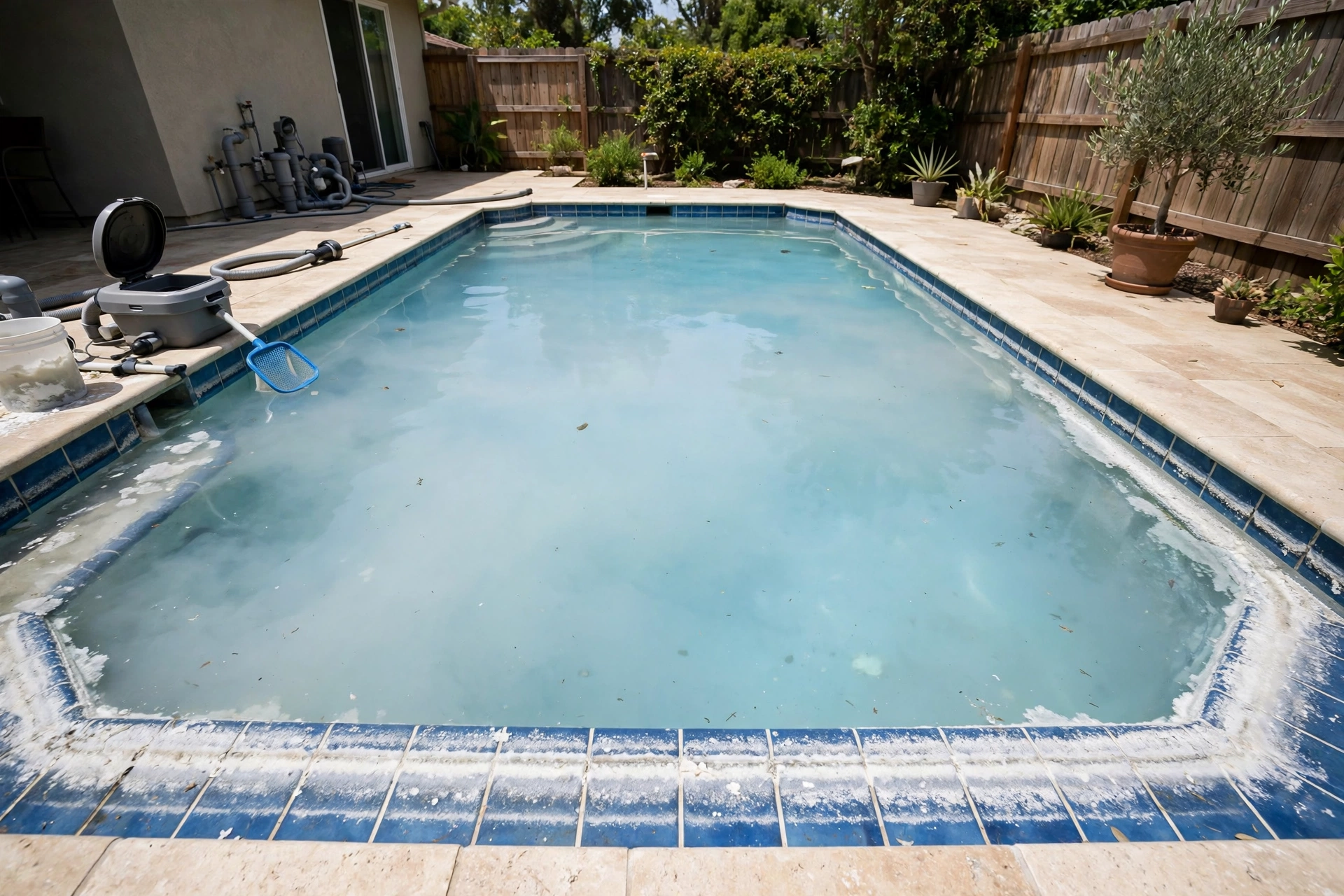
Muriatic acid (liquid): cheapest, fastest, fumes — it’s the standard for a reason. Dry acid (sodium bisulfate): granular, no fumes, easier to store; use about 1.3x the weight for the same effect. Both lower TA along with pH. Pick based on which one you’d rather handle — the chemistry result is the same.
- ~16 oz 31.45% muriatic acid / 10k gal ≈ −0.2 pH (estimate).
- Half dose → 4h circulation → retest → top up.
- pH target: 7.4–7.6 (7.2–7.8 acceptable).
- Rebounding pH = high TA or aeration. Fix the cause.