Foamy Pool Water: Causes & How to Get Rid of Foam

Quick answer

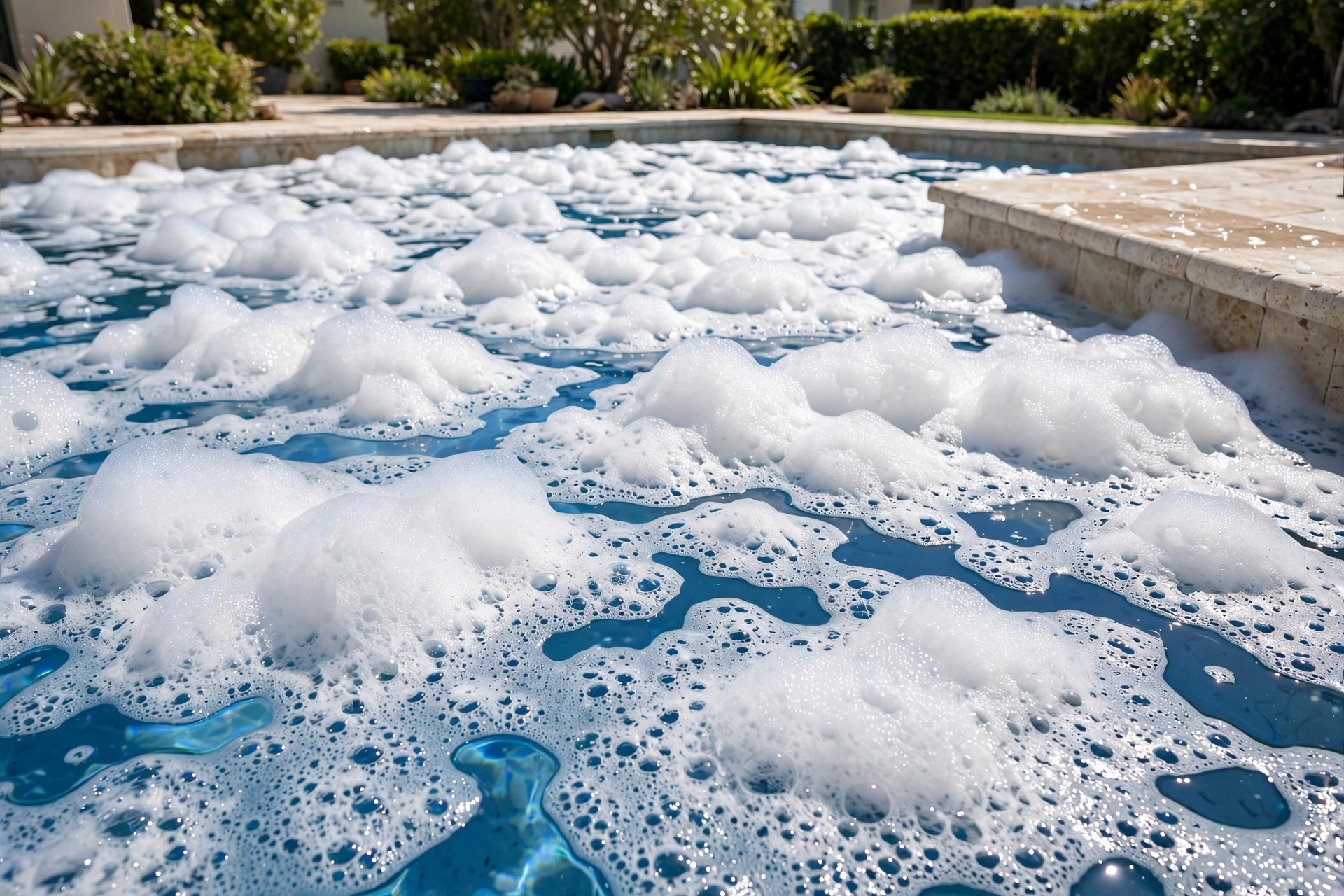
Pool foam is almost always surfactants — something soapy got in the water. The usual culprits: too much algaecide (especially quat-based types), "splashless" or scented bleach used as chlorine (only plain bleach ever goes in a pool), sunscreen and lotions, or detergent on swimwear. Stop the source, skim, run the filter — foam fades as the surfactant breaks down and dilutes. Defoamer is a band-aid for tonight, not a fix.

If foam is still sitting there after the jets stop, something is in your water that should not be. The good news: foam is cosmetic, and once you list what went into the pool recently, the cause is usually obvious. Let us find it.
Foamy Pool Water: Causes & How to Get Rid of Foam

The usual suspects, in order

Algaecide overdose — the number-one cause, and I see this one constantly. Quat-based algaecides foam by nature; owners double the dose "to be sure" and end up with a bubble bath. Wrong bleach — "splashless" or scented bleach is full of surfactants; only plain, unscented bleach ever goes in a pool. Bather load — one party's worth of sunscreen, lotion, and laundry detergent. And cheap clarifiers or "pool miracle" products with mystery ingredients.

The rare mechanical cause: an air leak on the pump's suction side can whip air into fine bubbles that look like foam at the returns. Here is how you tell the difference — that "foam" vanishes within seconds of the pump stopping, while chemical foam hangs around.
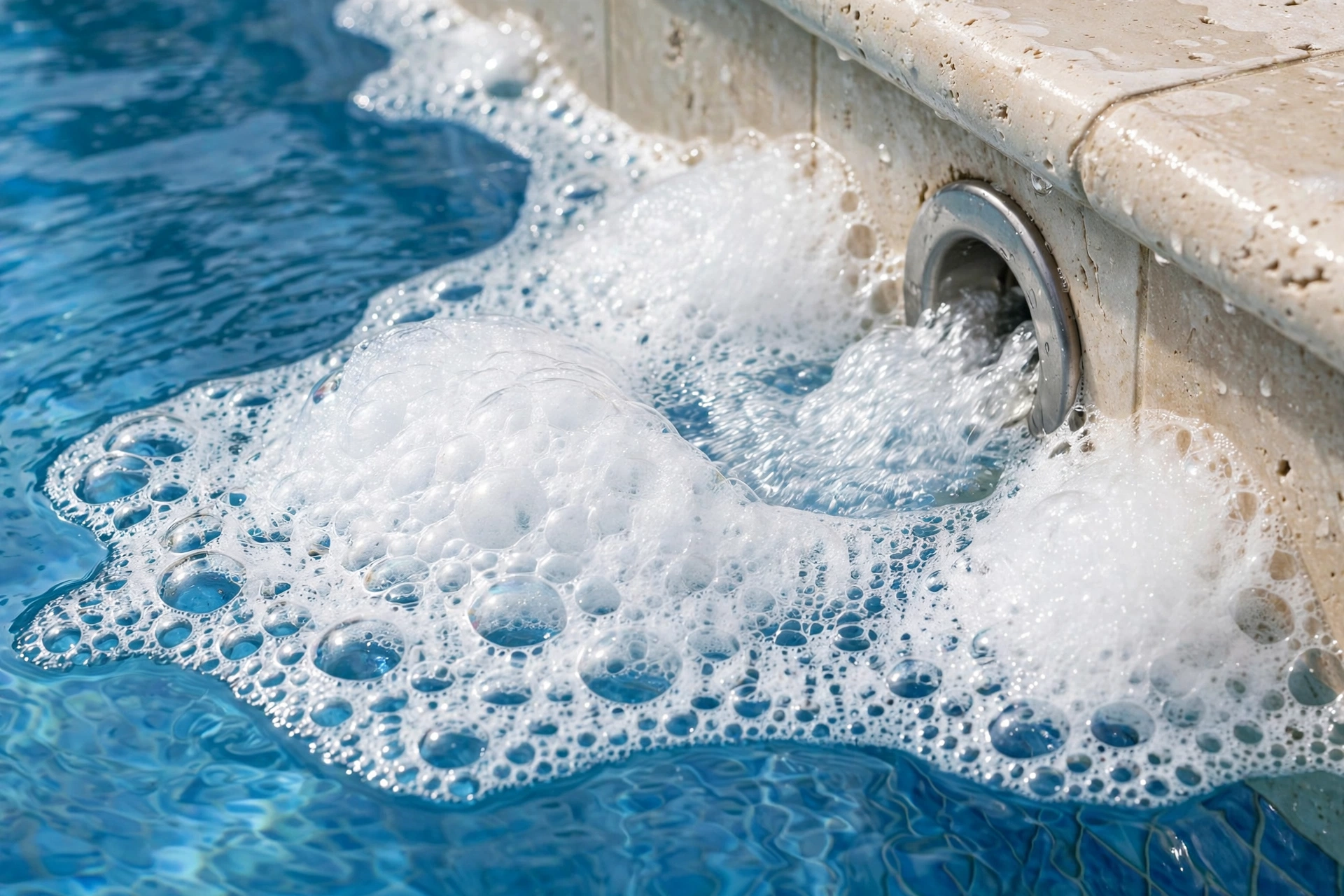
White foam bubbles at pool edge near return jet
Foam at the returns — usually algaecide overdose or low calcium
The usual suspects, in order

The fix

Stop adding whatever is foaming. Skim the surface. Run the filter nonstop — surfactants break down and dilute over a few days. For heavy cases, a partial drain and refill is the fastest reset. Enzyme products can help digest organic oils and lotions. Defoamer drops will clear it for a party tonight, but find the source if you want a real fix.
Common questions about foamy pool water: causes & how to get rid of foam

Common questions

Is pool foam dangerous?
Usually not — it is cosmetic. But it is telling you there are excess chemicals or organics in the water, worth addressing. And a heavy algaecide overdose can irritate skin, so do not just shrug it off.
How do I prevent pool foam?
Dose algaecide per the label — or skip it entirely, since proper chlorine prevents algae on its own. Use only plain bleach. And ask heavy-lotion swimmers for a quick rinse before they get in.
How do I fix foamy pool water?
Find the cause first: quat-based algaecide is the #1 culprit — that foam fades on its own in a few days. For persistent foam from lotions or detergents, a pool defoamer knocks it down fast, and a partial drain removes the source.
Will pool foam go away on its own?
Algaecide foam usually does, within a few days of circulation. Foam from sunscreen, lotions, or laundry detergent in swimsuits tends to stick around — that needs defoamer or dilution.
How do I get rid of algaecide foam?
Wait it out with the pump running — quat algaecide foam breaks down in a few days. Next time, use polyquat 60 instead; it's non-foaming. A defoamer speeds things up if you've got swimmers coming.
What actually causes foam on pool water?
Dissolved organics — algaecides (especially quat formulas), sunscreen, body lotion, shampoo, and detergent residue from suits. Basically anything that lowers water's surface tension. The foam is a symptom of stuff in the water, not a chemistry emergency.

Last reviewed: September 29, 2026. Dosing figures are estimates from standard pool-industry ratios — always confirm against your product label and a reliable test kit.