Milky Blue Pool Water: Causes & How to Clear It
Milky blue water is almost always one of two things: calcium falling out of solution (pH too high plus calcium too high) or dead algae floating around after a shock. I sort it with two test readings — pH and calcium hardness. pH 8+ with CH 400+? That is calcium: bring the pH down and keep the filter running. Showed up right after you shocked a green pool? That is dead algae: just keep filtering and it clears.
Here is the thing about milky blue water — your pool still looks blue, you just cannot see the bottom. It is the pale, hazy cousin of green, and it has two completely different causes. The good news: a test kit settles the question in about two minutes, and neither cause is a disaster.
Do not mix this up with general cloudy water (which has a longer list of suspects) or cloudiness right after shocking — though honestly, they overlap quite a bit.
Cause 1: calcium precipitation
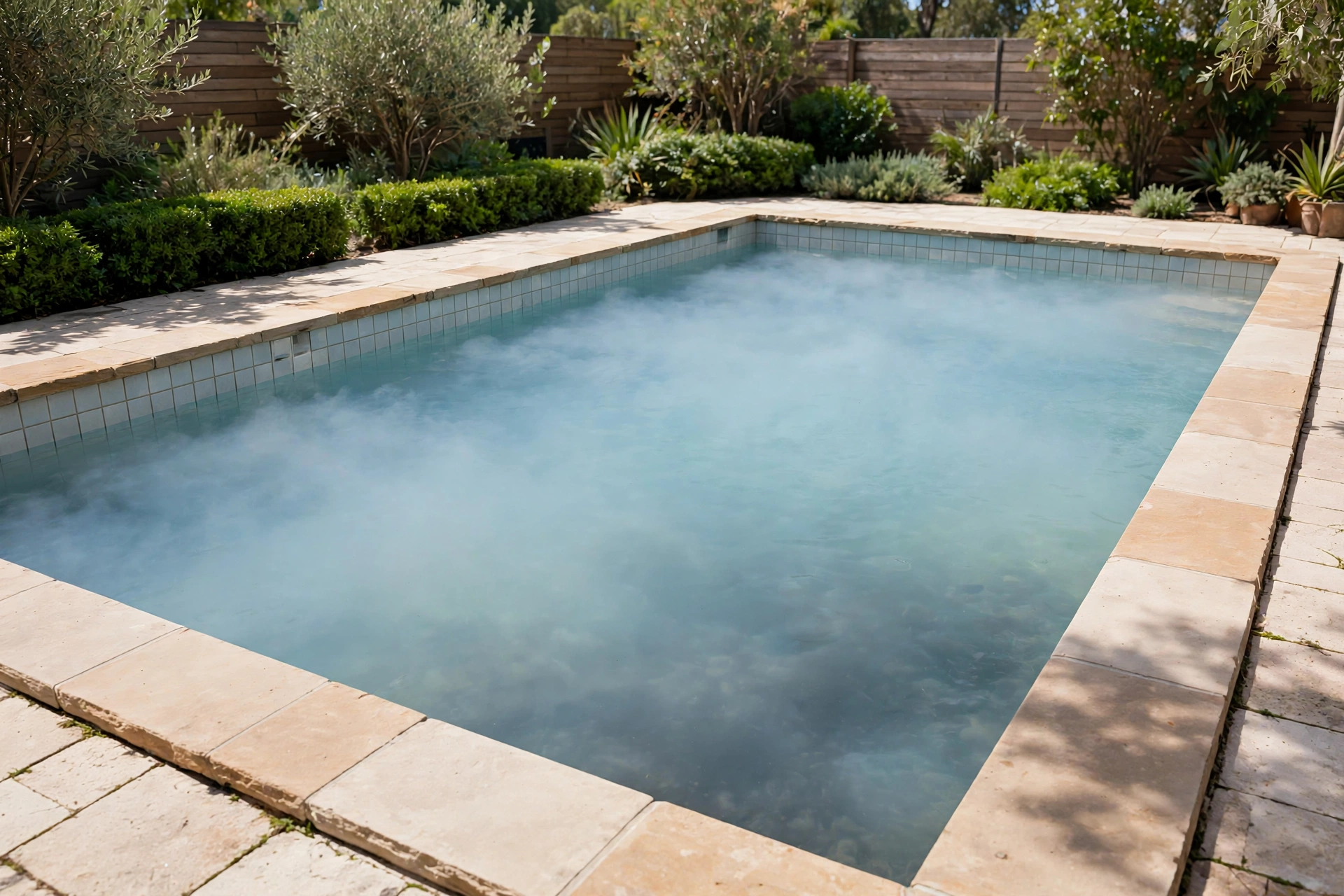
When pH climbs too high in water that already carries a lot of calcium, calcium carbonate drops out as a fine white haze — and your water turns milky blue. The classic setup: CH 400+, pH 8.0+, often right after a cal-hypo shock (which dumps in even more calcium) or in hard-water regions where the fill water was already loaded.
Here is what I would do: pull pH down into the 7s with muriatic acid (the acid calculator does the math), run the filter 24/7, and stop adding calcium to the water. If CH is way up there (500+), a partial drain to dilute is the honest fix — more on that in the calcium hardness guide.
Cause 2: dead algae in suspension
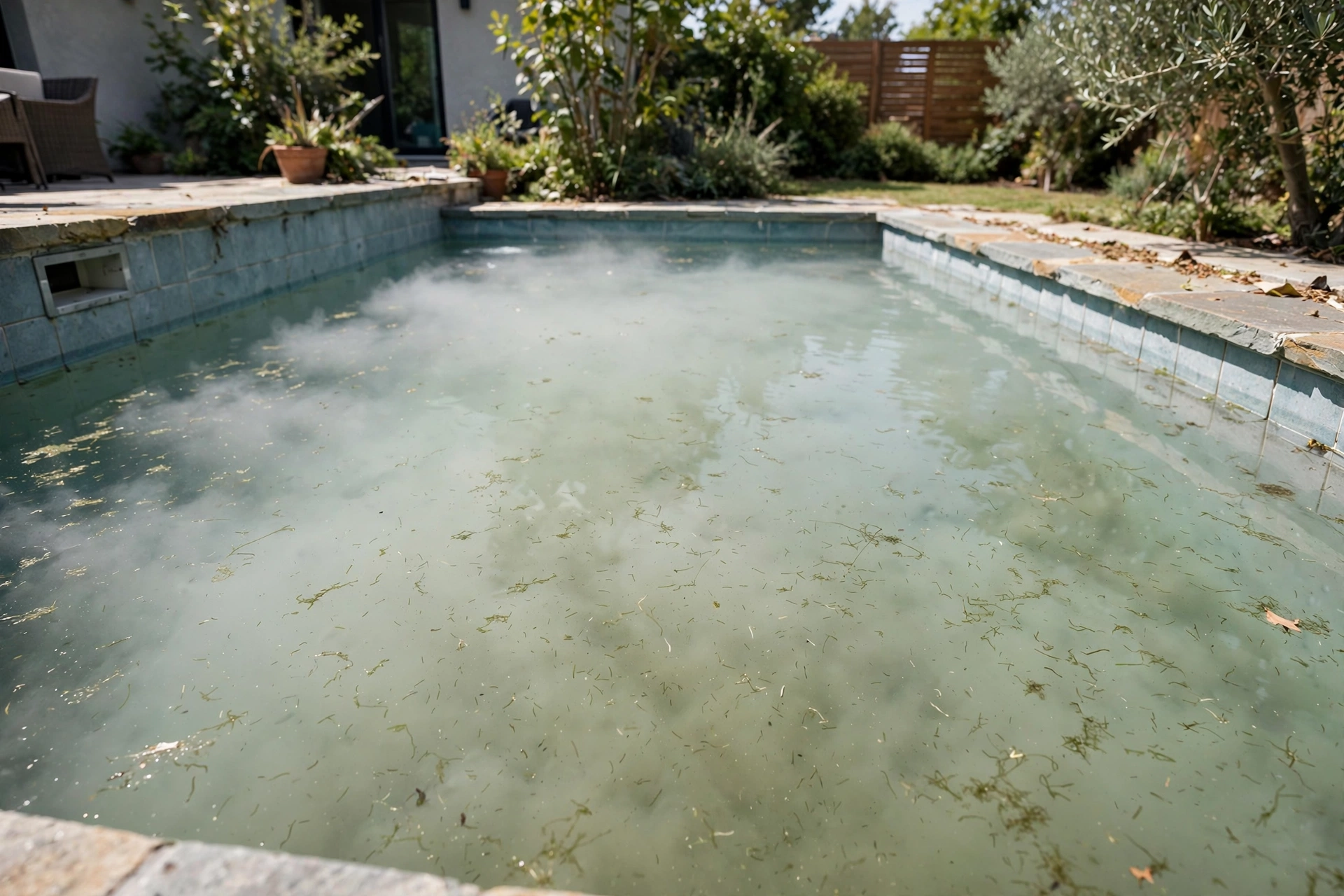
Killed an algae bloom recently? Millions of dead algae cells can hang in the water as a pale haze — usually a milky blue-green. This is completely normal mid-SLAM: green fades to teal, teal to milky blue, milky blue to clear. Hold chlorine at shock level, keep the filter running, clean it often. It clears on its own — clarifier is optional, not required.
How to tell which
Test pH and CH. High pH plus high CH means calcium. Showed up during or after shocking a green pool while FC is holding? Dead algae. Both can be true at once (it happens) — then fix pH first and let the filter handle the rest.