Pool Calcium Hardness: High vs Low & How to Fix Each
Here is my short version: plaster pools want 200–400 ppm. Over 400, you get scale, milky water, and rough surfaces — and the only real fix is draining some water, because no chemical removes dissolved calcium. Under 150 in a plaster pool, the water starts etching and pitting the surface over time — that one you fix by adding calcium chloride.
Calcium hardness is the parameter everyone ignores until it gets expensive. It moves slowly, it moves in one direction depending on your water source, and the fix is completely different depending on which way yours went. Let me walk you through both.
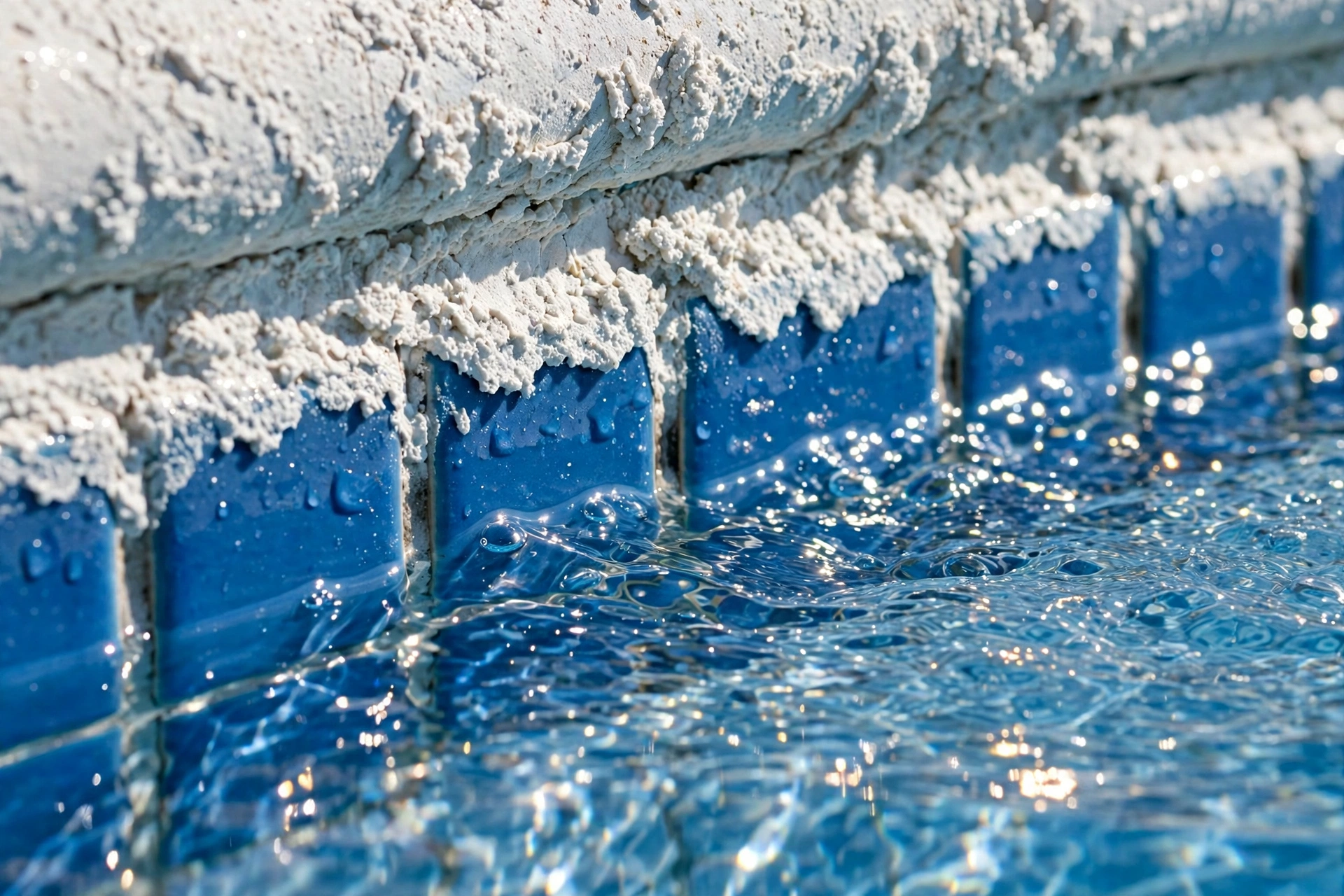
High calcium: scale and milk
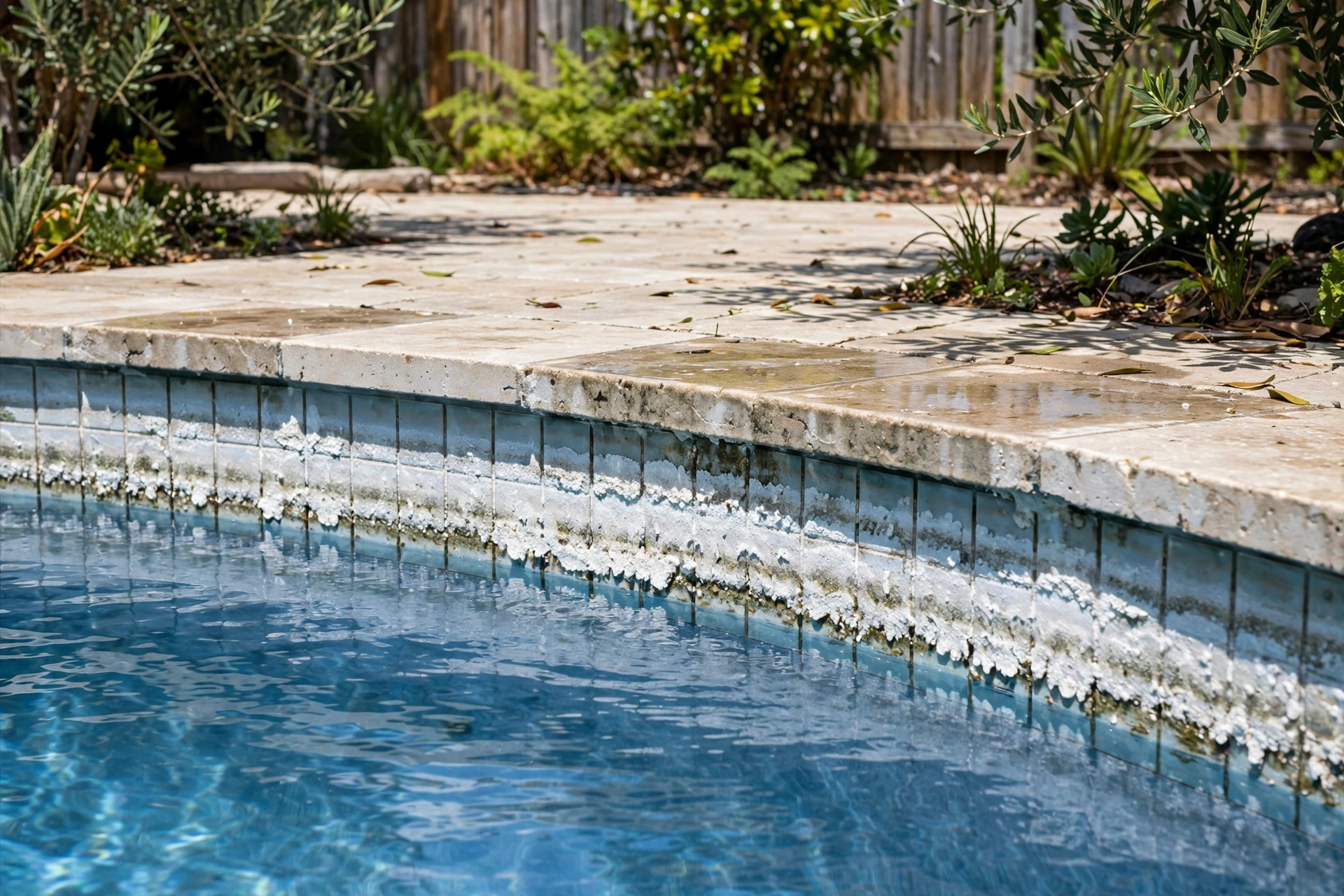
What you will see: white scale on tile and surfaces, milky water especially after a cal-hypo shock, rough plaster, and clogged-up salt cells and heaters. It is most common where the fill water is hard, or in pools that have been shocked with cal-hypo for years — every dose adds calcium.
The fix is a partial drain and refill with softer water. I will be straight with you: nothing you pour in removes dissolved calcium. Sequestrants can keep it dissolved (managing the symptoms) but the number on your test does not budge. And stop feeding the problem — switch your shock to liquid chlorine.
Low calcium: etching
Low calcium is sneaky because you see nothing at first. Then, over a season or two, the plaster turns rough, pits, and loses its smooth finish. (Vinyl and fiberglass pools do not need calcium for their surfaces — but very low CH combined with low pH will still chew on metal equipment.)
Fix it with calcium chloride, dosed from the chemical calculator — roughly 1.25 lb per 10,000 gallons raises CH about 10 ppm. Pre-dissolve it in a bucket first. Fair warning: it gets hot as it dissolves, which is normal, not a problem. Add it with the pump running.
Testing it right
Quick heads-up: test strips cannot measure calcium hardness — they read total hardness, which is a useless number for this. You want the Taylor K-2006 drop test, which does CH properly. Test monthly; calcium moves slowly, so monthly is plenty.
- Plaster/gunite: 200–400 ppm.
- Vinyl/fiberglass: 175–225 ppm is plenty.
- High CH fix: partial drain. No chemical removes calcium.
- Low CH fix: calcium chloride, 1.25 lb/10k gal ≈ +10 ppm.