Burning, red eyes come from chloramines (used-up chlorine) and pH outside 7.2–7.8 — not from high free chlorine. Test CC and pH first: shock if CC is high, adjust pH if it is off. Your eyes sit around pH 7.4, which is exactly why that is the target.
"Too much chlorine" gets blamed for every red eye at every pool party, and it is almost never the cause. Properly chlorinated water at the right pH feels like nothing at all. When eyes burn, the water is telling you something specific — it is worth listening.
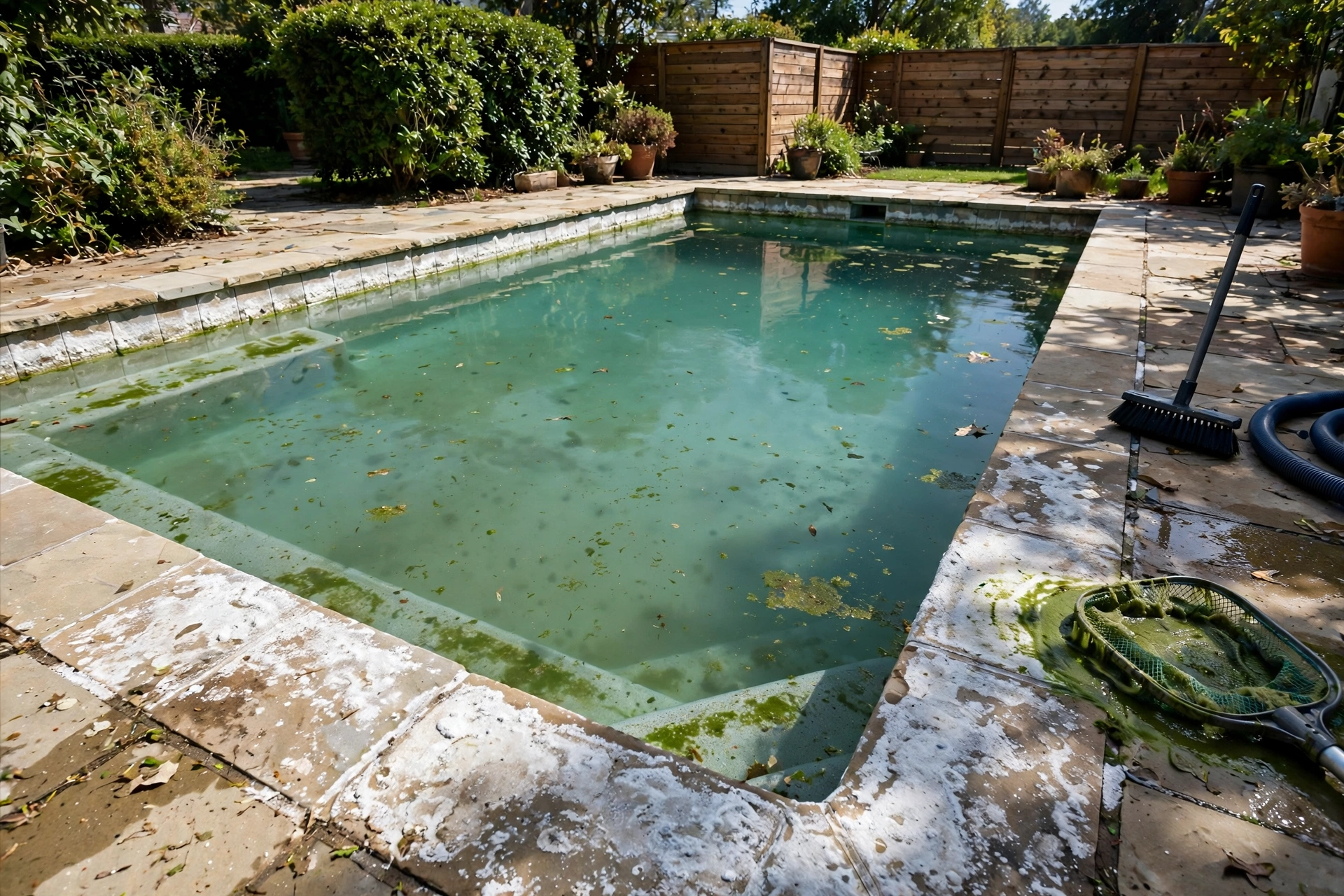
Combined chlorine irritates eyes and airways — the same chloramines behind the chlorine smell. The pattern is unmistakable: heavy bather load plus FC running too low, and suddenly every kid at the party has red eyes. Fix it by shocking to breakpoint, then keeping FC right for your CYA going forward.
Cause 2: pH out of range
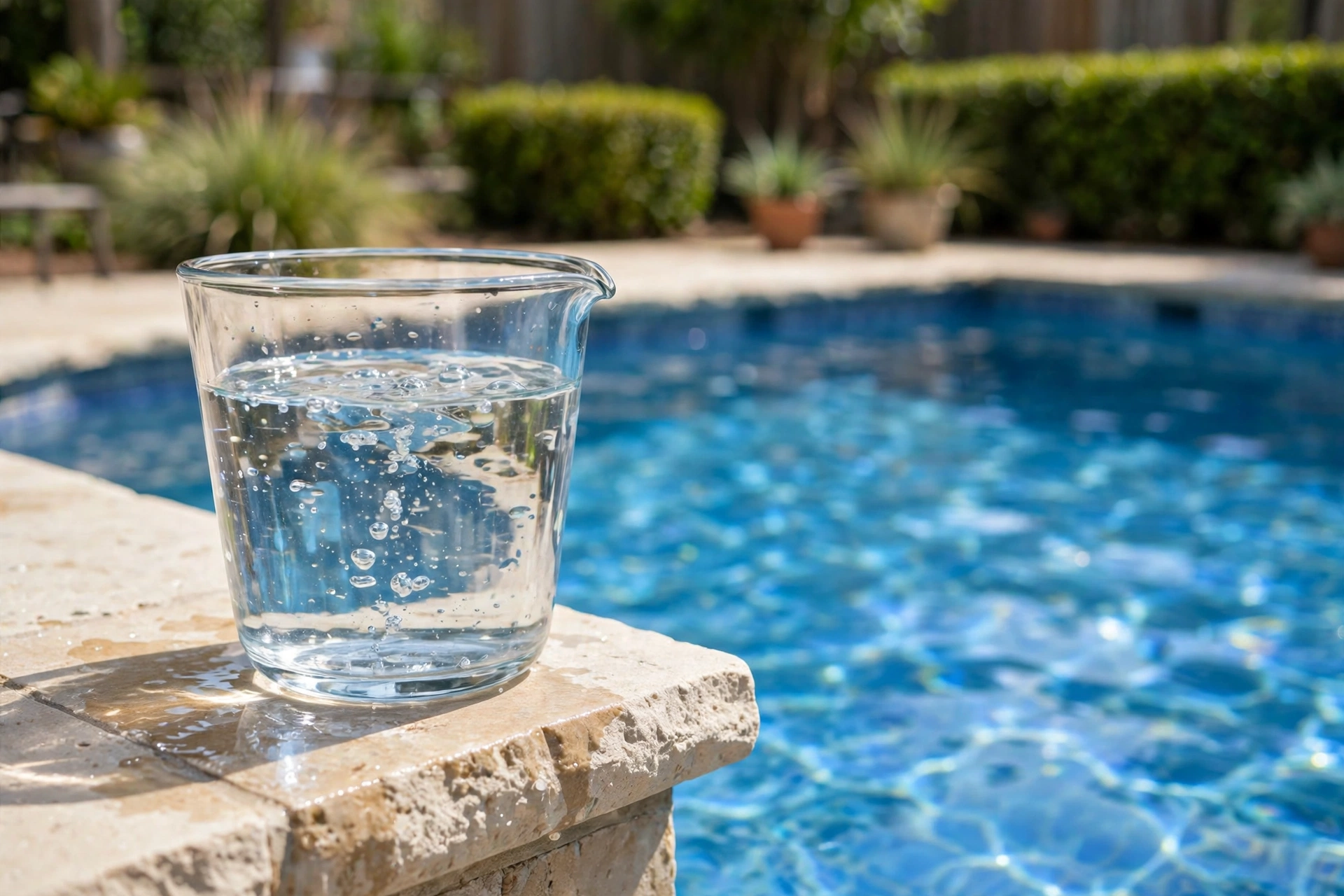
Human tears sit around pH 7.4 — that is why pool pH target is 7.2–7.8 (ideally 7.4–7.6). Water at pH 8.2 or 6.8 stings on contact no matter what the chlorine is doing. Test and adjust: lowering or raising pH as needed.
What about "sensitive" swimmers
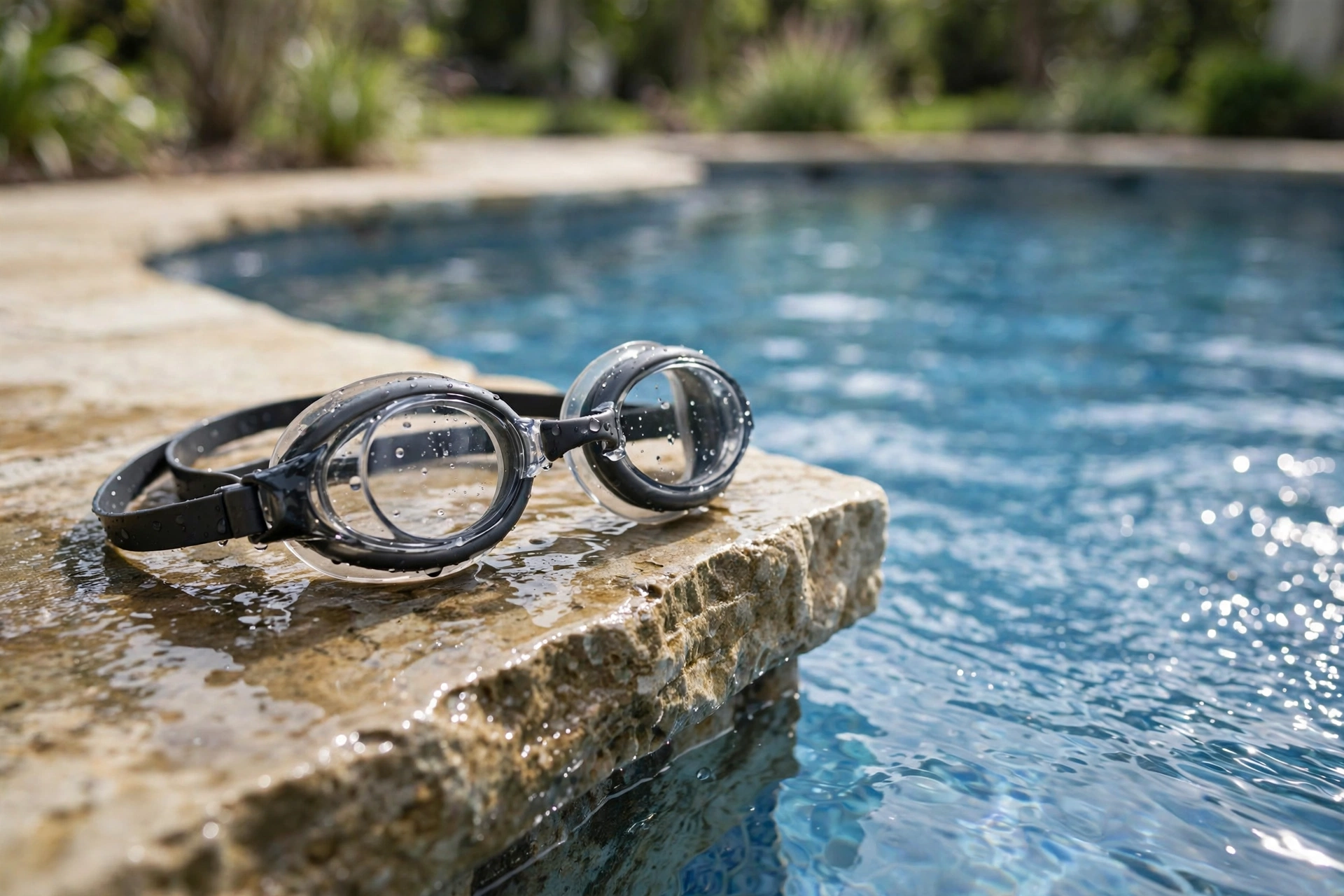
Some people genuinely are more sensitive, and swim goggles solve most of that. But if everyone's eyes are burning, it is the water, not the swimmers — test CC and pH before you buy goggles for the whole family.
Safety warning. Never mix different chlorine products together, and never mix chlorine with acid. Wear gloves and eye protection, add chemicals to water (never water to chemicals), and follow the exact instructions on your product label — the label overrides any calculator. Store chemicals dry, separate, and away from kids and pets.
Common questions
Can high chlorine burn your eyes?
Very high FC (shock level and up) can irritate, sure. But the typical complaints at normal FC levels are chloramines or pH. Test before you assume — the test takes a minute.
Why do my eyes burn in pools but not the ocean?
The ocean has no chloramines and dilutes everything massively. Pools concentrate bather waste in a small volume — that concentrated soup is what your eyes are feeling.
What should I do if my eyes burn after swimming?
Rinse with clean fresh water and don't rub — the irritation usually fades within the hour. If burning persists for hours or your vision stays blurry, get checked rather than toughing it out.
How long does chlorine eye burn last?
Usually minutes to under an hour once you're out of the water. If it's still burning the next morning, that's not normal pool irritation — see someone about it.
Can chlorine damage your eyes long term?
Normal recreational swimming, no — the irritation is temporary. But chronically swimming in a poorly kept pool (wild pH, heavy chloramines) keeps irritating them, which is one more reason to keep the water right. Goggles solve it either way.
Last reviewed: September 29, 2026. Dosing figures are estimates from standard pool-industry ratios — always confirm against your product label and a reliable test kit.