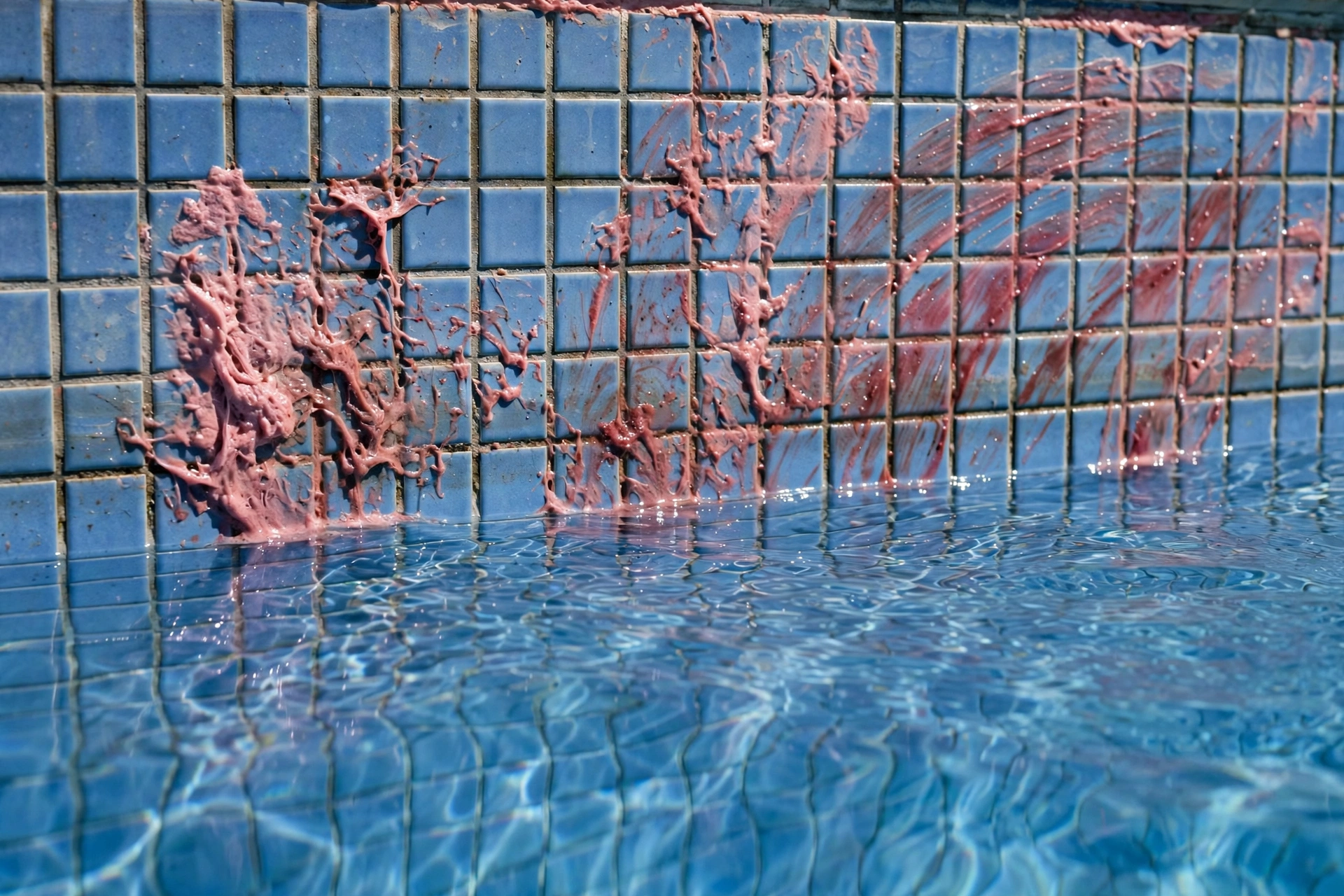
Pink slime is bacteria (often Methylobacterium), not algae — a pinkish film that sets up in corners, behind ladders, and in light niches where circulation is weakest. Brush it off physically, shock to breakpoint, and fix the circulation dead spots. As a biofilm it resists chlorine, so the brushing matters more than the dosing.
Pink slime looks like someone wiped strawberry yogurt on your pool corners. I know — not appetizing. It is not algae, it is bacteria, and it behaves differently: it sets up camp in the exact spots your chlorine reaches least.
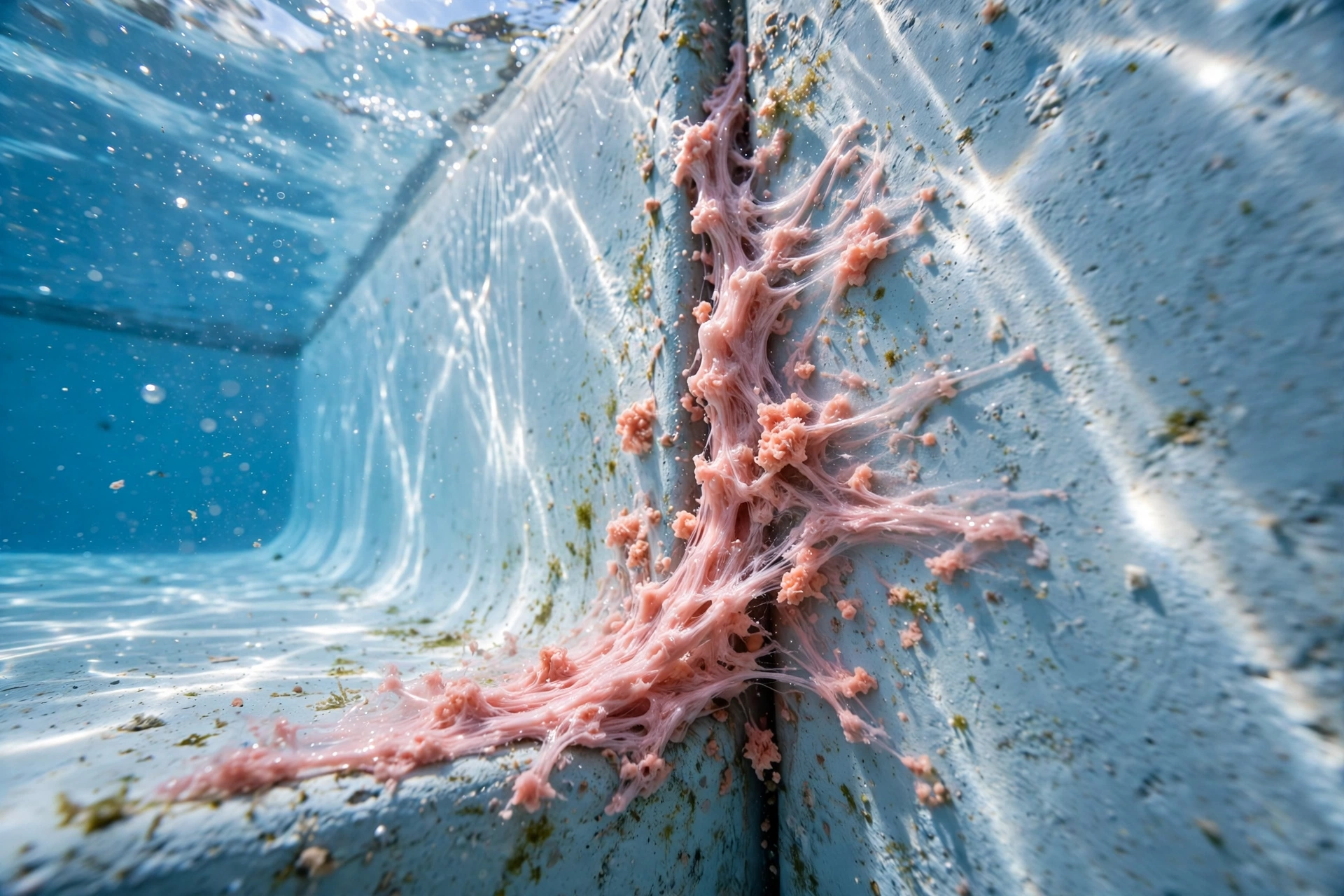
Behind ladders, inside light niches, under skimmer weirs, in corners — every pink slime colony sits in a circulation dead zone. The bacteria builds a protective biofilm that chlorine penetrates poorly, so it survives happily in water that is otherwise sanitized. The pattern is the diagnosis: pink plus hidden spots equals biofilm bacteria.
Pink slime loves seams and corners with poor circulation
Removal
Brush everything aggressively — physical removal beats biofilm better than any chemical. Pull the ladders and clean behind them; open up light niches if you are comfortable doing that (power off first). Then shock to breakpoint to kill what the brushing exposed. And fix the circulation: aim a return jet at the problem corner, run the pump longer.
Fair warning: it will keep coming back to the same spots until the dead zone itself is fixed. Chemistry alone does not win this one — water movement does.
Safety warning. Never mix different chlorine products together, and never mix chlorine with acid. Wear gloves and eye protection, add chemicals to water (never water to chemicals), and follow the exact instructions on your product label — the label overrides any calculator. Store chemicals dry, separate, and away from kids and pets.
Common questions
Is pink slime harmful?
Generally not to healthy swimmers — but it is a billboard advertising poor circulation and biofilm, so it is worth fixing properly rather than ignoring.
Will algaecide kill pink slime?
Poorly. It is bacteria, not algae, and the biofilm shields it. Brushing plus chlorine plus circulation is the actual cure.
How do I get rid of pink slime?
Brush every trace of it off the surfaces — pink slime is a biofilm and brushing is non-negotiable — then hold chlorine at shock level for your CYA until it's gone. Don't forget the filter and skimmer; biofilm hides in both.
Will shock get rid of biofilm?
Not alone. Biofilm's slimy layer shields the bacteria underneath from normal chlorine. You have to brush it open first, then sustained shock-level FC finishes it. Shock without brushing just wastes chlorine.
Is pink mold in a pool toxic?
Pink slime (Methylobacterium) isn't considered dangerous to healthy swimmers — it's ugly, not a health emergency. That said, don't drink pool water, and clear it anyway: where biofilm thrives, real algae follows.
Why is there pink slime in my filter?
Because filters are dark, wet, and full of trapped organics — biofilm paradise. Clean or backwash the filter as part of treatment, and check it again a week later. Treating the pool while ignoring the filter is why pink slime 'keeps coming back.'
Last reviewed: September 29, 2026. Dosing figures are estimates from standard pool-industry ratios — always confirm against your product label and a reliable test kit.