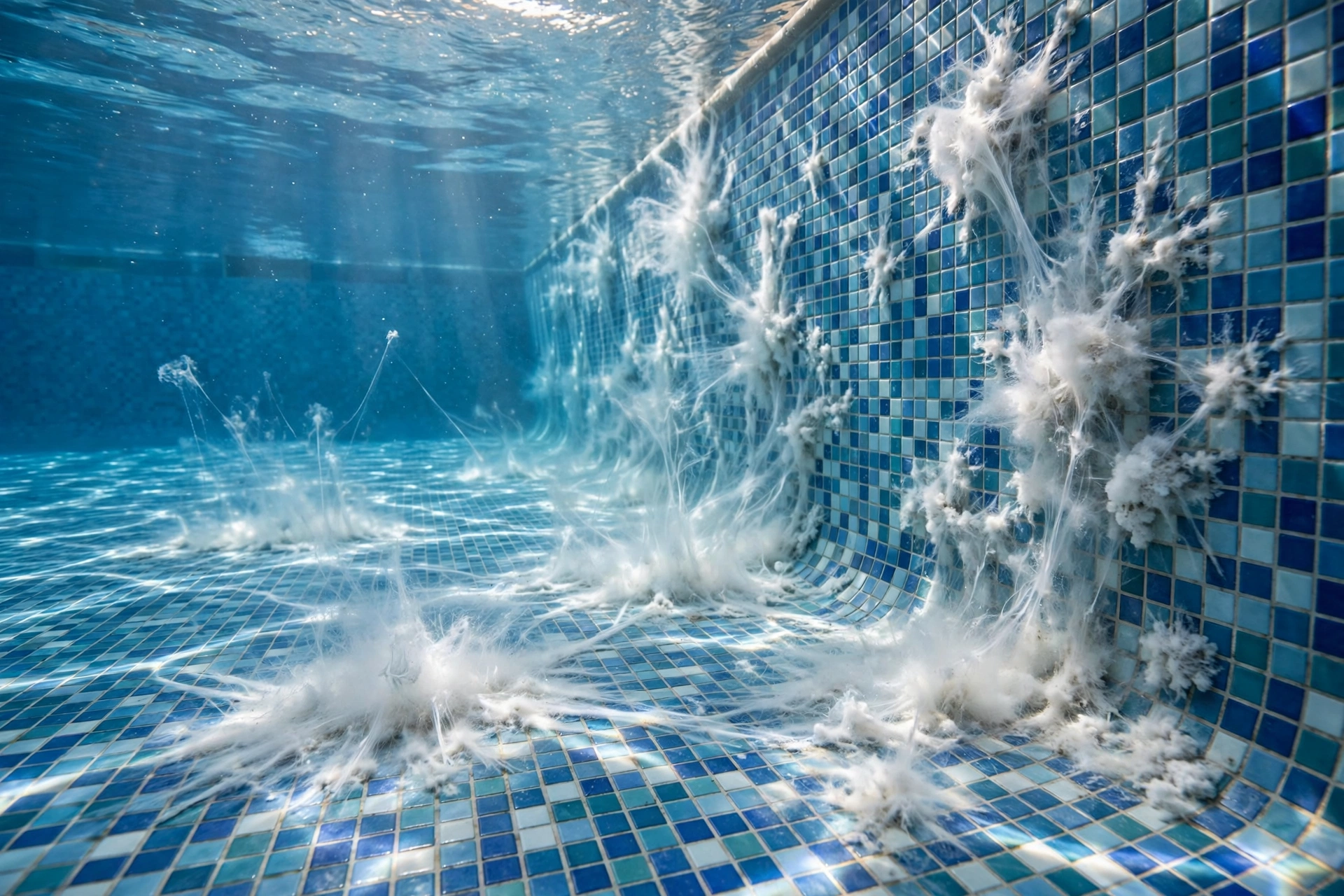
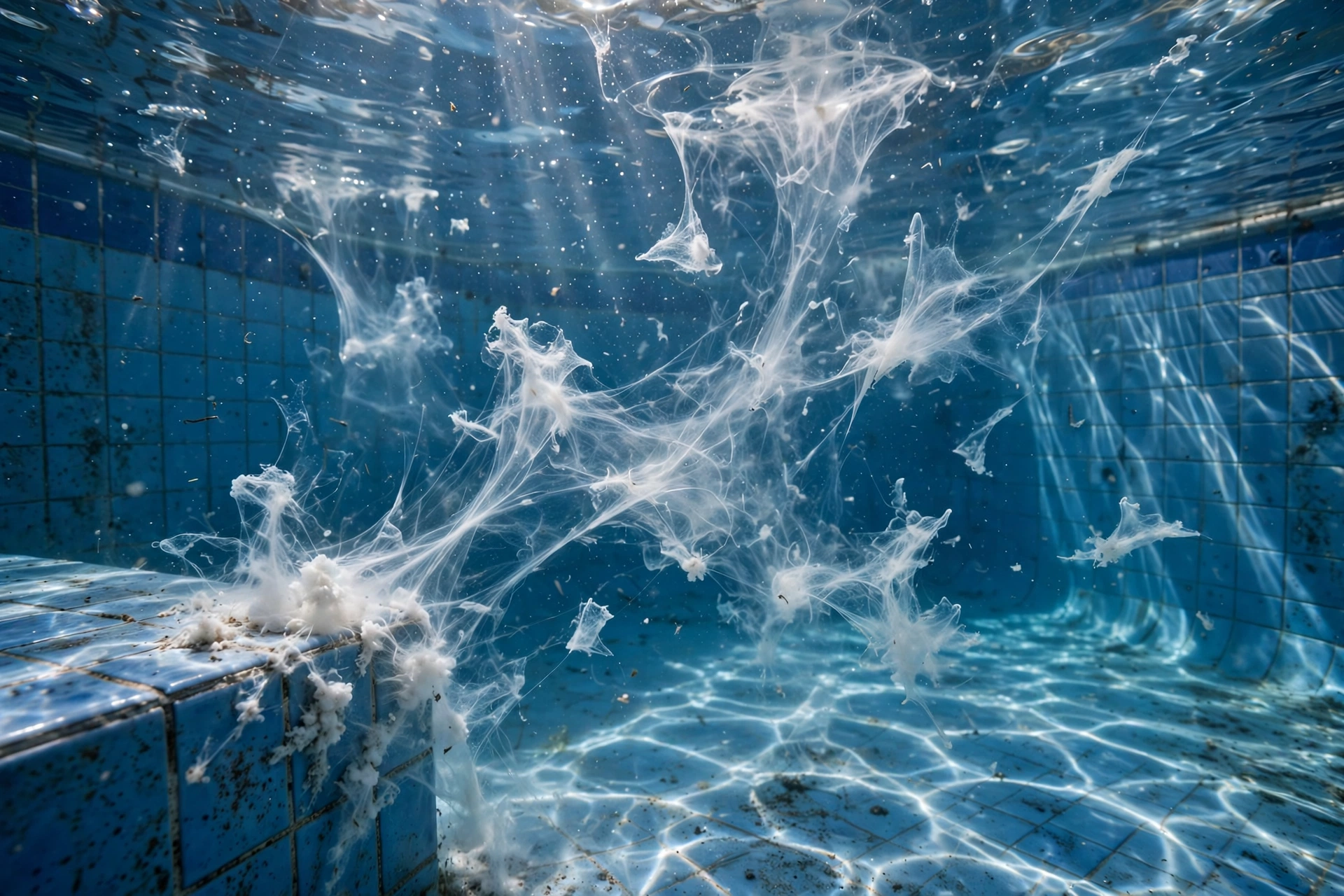
White water mold looks like shredded tissue floating in the water or clogging the filter. Here is the plan: shock to breakpoint, brush every surface, and deep-clean the filter — it harbors in the filter media, and skipping that step means it comes back. It thrives wherever chlorine lapsed, often after vacations or winter.
White water mold is the pool problem that looks the most alarming and is actually the most straightforward. White, translucent, tissue-like material drifting in the water or coating the filter — it is a fungus-like organism, not algae, and it surrenders to the same discipline as everything else: chlorine, brushing, and a clean filter.
Think tissue paper: white to greyish, floating freely or clinging in strands. It usually shows up when opening the pool or after a vacation — it grows wherever chlorine lapsed. Check your filter, too: mold colonies love filter media, and a moldy filter re-seeds the pool continuously. If you treat the water but not the filter, you have treated half the problem.
White water mold: tissue-like strands drifting in the water
Removal
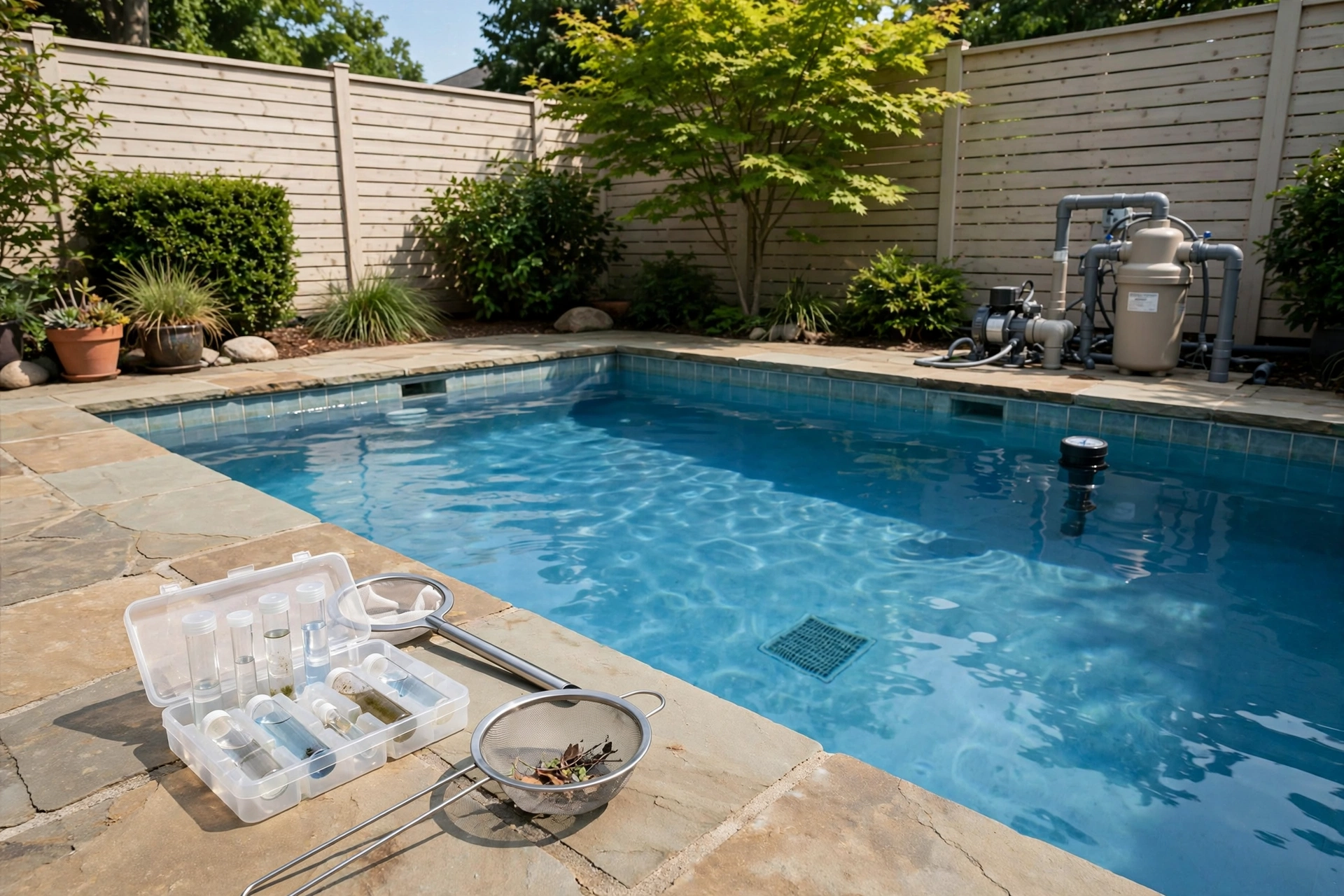
Net out everything you can reach. Brush every surface — walls, floor, steps, behind fittings. Shock to breakpoint and hold it per the SLAM process until the water is clear. Then deep-clean the filter: thorough backwash for sand or DE, or soak cartridges in filter cleaner. This step is non-negotiable — the filter is the reservoir.
Prevention is the boring answer that works: never let FC hit zero. Before a vacation, set yourself up — tablets in a floater or a higher pump and output setting while you are away.
Safety warning. Never mix different chlorine products together, and never mix chlorine with acid. Wear gloves and eye protection, add chemicals to water (never water to chemicals), and follow the exact instructions on your product label — the label overrides any calculator. Store chemicals dry, separate, and away from kids and pets.
Common questions
Is white water mold dangerous?
It is unsightly rather than dangerous. But it is proof your sanitizer lapsed — fix the chlorine gap that let it grow, or something worse will take its place.
Why does it keep coming back?
The filter is re-seeding it. Deep-clean or replace the filter media as part of the treatment — that is the step most people skip.
How do you treat white water mold?
Brush everything — walls, floor, behind ladders, inside skimmers — then hold FC at shock level for your CYA until it's gone and stays gone. White water mold lives in the plumbing too, so run the pump 24/7 during treatment.
Does white water mold go away on its own?
No — it only spreads. It's a biofilm that tolerates normal chlorine levels just fine. Without brushing plus sustained high chlorine, it'll still be there next month.
What causes white water mold in pools?
Low chlorine plus poor circulation — it loves dead spots: behind ladders, in skimmer throats, in unused plumbing lines. Pools that sit closed or barely circulate are the classic victims.
Last reviewed: September 29, 2026. Dosing figures are estimates from standard pool-industry ratios — always confirm against your product label and a reliable test kit.