Rust Stains in Pool: Removal & Prevention

Quick answer

First, confirm it is iron: hold a plain vitamin C tablet against the stain for 30 seconds — if it lightens underneath, that is iron. Then treat with ascorbic acid, add a sequestrant right after to keep the iron dissolved, and track down the source (well water, a rusting ladder, or fertilizer near the pool). Do the stain treatment before you shock — chlorine makes iron stains worse.

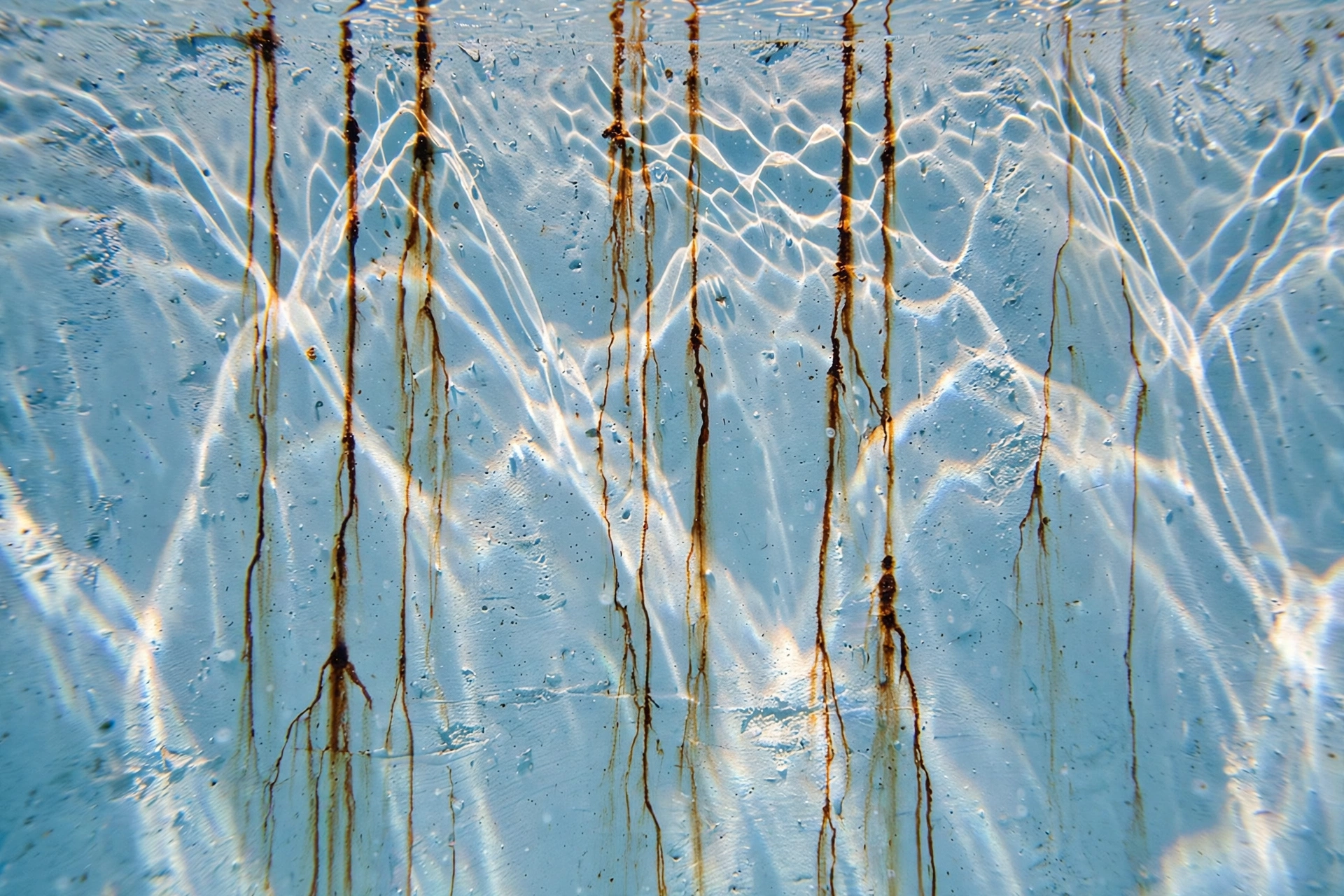
Brownish-red stains on the steps, walls, or floor are usually iron — from well water, a rusting ladder or light niche, or even fertilizer that blew into the pool. One thing I need you to know before anything else: chlorine oxidizes iron, so shocking first makes the stains darker. The order matters — treat the stain, then shock.
Rust Stains in Pool: Removal & Prevention

The vitamin C test

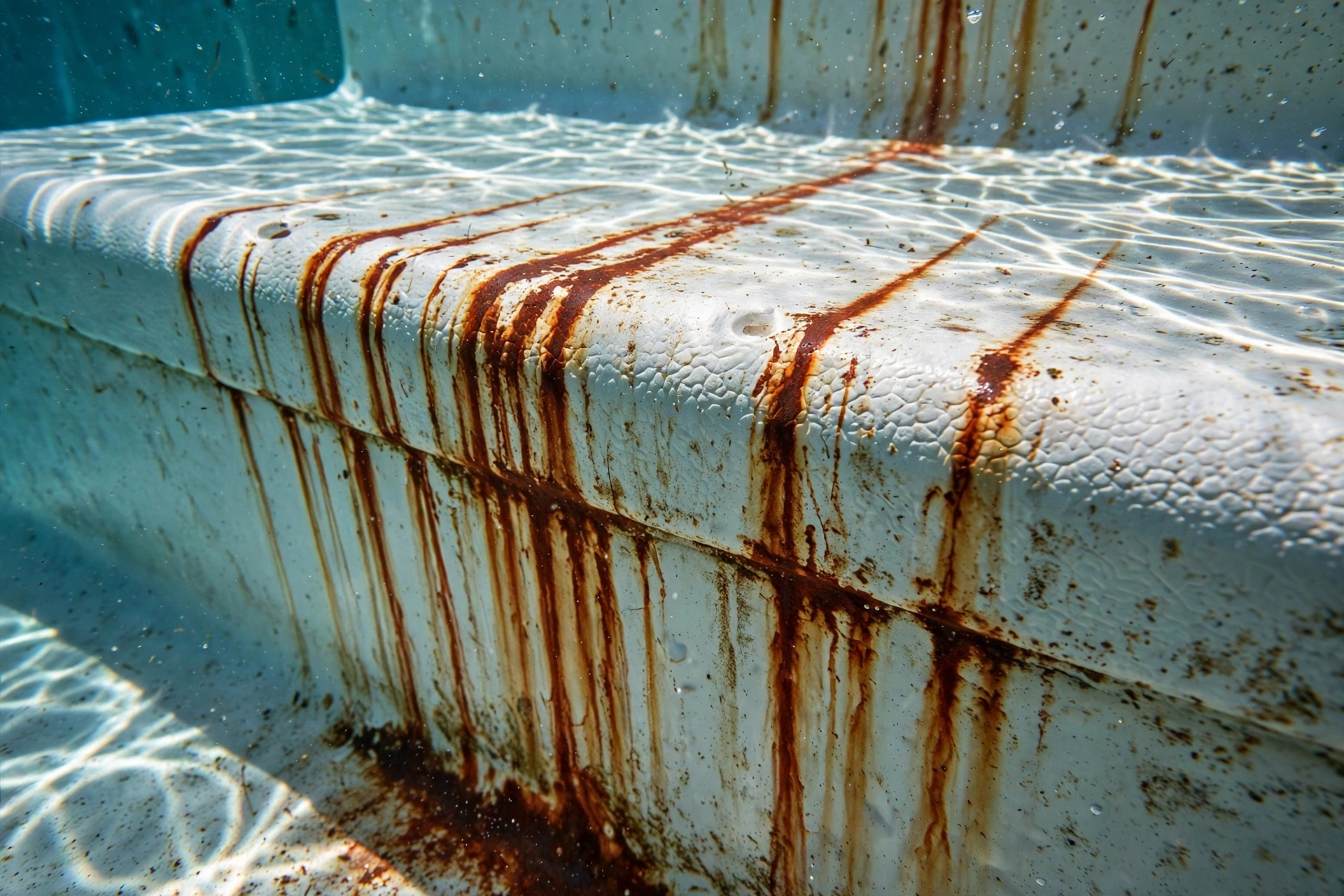
This takes thirty seconds and saves you from treating the wrong problem. Hold a plain vitamin C tablet against the stain. If the stain lightens underneath, it is iron or another metal — ascorbic acid treatment will work. If nothing changes, it is probably organic (leaves, berries), and chlorine handles that. Test first, treat second.
Reddish-brown rust stain streaks on pool steps
Rust streaks on steps — the vitamin C test confirms iron

Ascorbic acid treatment

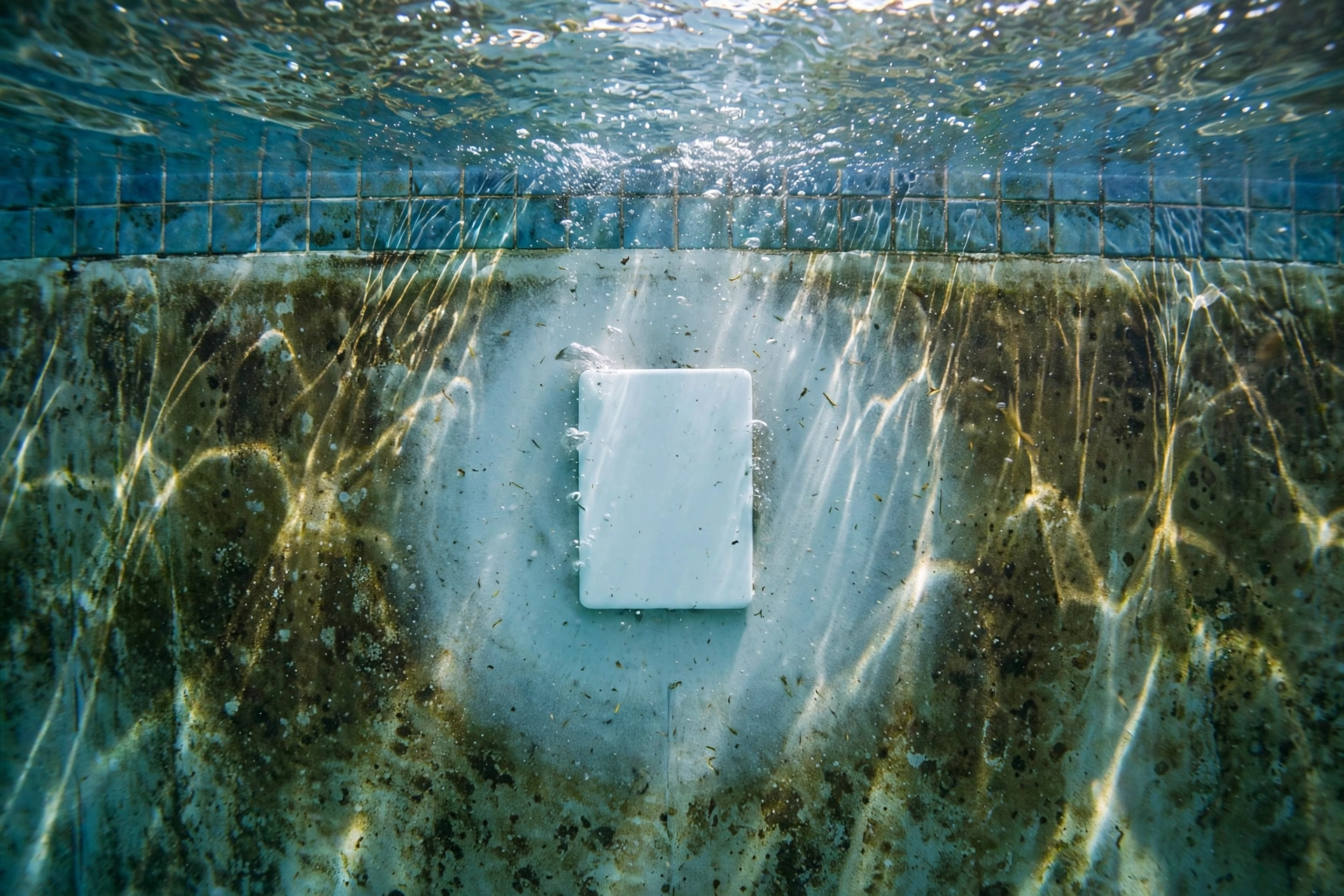
Bring chlorine down to near zero first — chlorine actively fights this treatment, so do not skip that step. Add ascorbic acid per the product directions with the pump circulating; stains usually lift within hours. Then add a metal sequestrant immediately to hold the iron in solution — otherwise the stains come right back the moment chlorine goes up again.

Afterward: rebalance the water, bring chlorine back up slowly, and keep the sequestrant topped up on its schedule (it gets used up). Be honest with yourself about this one — it is ongoing management, not a one-time cure, until the iron source is gone.
Ascorbic acid treatment

Finding the source

Well water is the number-one source — test your fill water for iron. Next suspects: rusting ladders, light niches, or screws that bleed iron steadily into the water. And check the lawn: iron-containing fertilizer, blown or washed in, spots the pool after every treatment. Fix the source or you will be doing this every year.
Safety warning. Never mix different chlorine products together, and never mix chlorine with acid. Wear gloves and eye protection, add chemicals to water (never water to chemicals), and follow the exact instructions on your product label — the label overrides any calculator. Store chemicals dry, separate, and away from kids and pets.
Common questions about rust stains in pool: removal & prevention

Common questions

Will chlorine remove rust stains?
No — chlorine oxidizes iron and the stains get darker. Lower the chlorine, treat with ascorbic acid, then sequester. Backwards from what you would expect, I know.
Do I need to drain to fix rust stains?
Rarely. Ascorbic acid plus sequestrant handles most iron staining without draining — unless your iron levels are truly extreme.
How do I get rust stains out of my pool?
First confirm it's iron with a vitamin C tablet held on the stain — if it lightens, it's iron. Then an ascorbic acid treatment lifts it, followed by a metal sequestrant so it doesn't resettle. Fix the source too, or it comes back.
Can you swim in a pool with rust stains?
Yes — rust stains are a cosmetic problem, not a health one. The water itself is fine to swim in; it's just ugly. Treat it when you're ready.
What causes rust spots on the bottom of a pool?
Dissolved iron, usually from well water, an aging heater element, or rebar bleeding through thin plaster spots. The stains are iron oxidizing once chlorine hits it — find the source or you'll be treating forever.
What kind of rust remover works in pools?
Ascorbic acid (vitamin C) based treatments are the pool-standard fix for iron stains — no grinding through plaster needed. Skip household rust removers; they're not made for pool surfaces and the runoff goes straight into your water.

Last reviewed: September 29, 2026. Dosing figures are estimates from standard pool-industry ratios — always confirm against your product label and a reliable test kit.