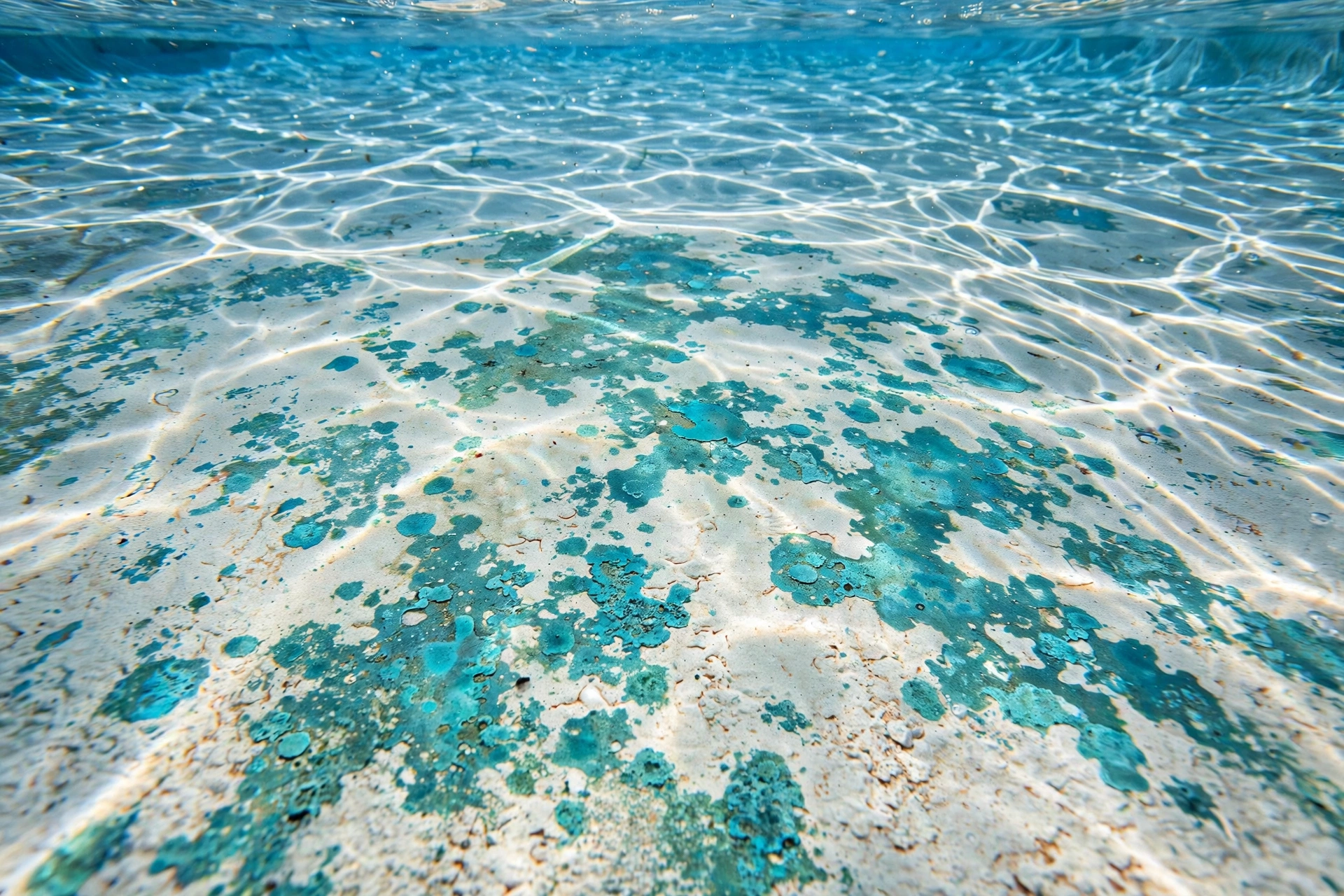
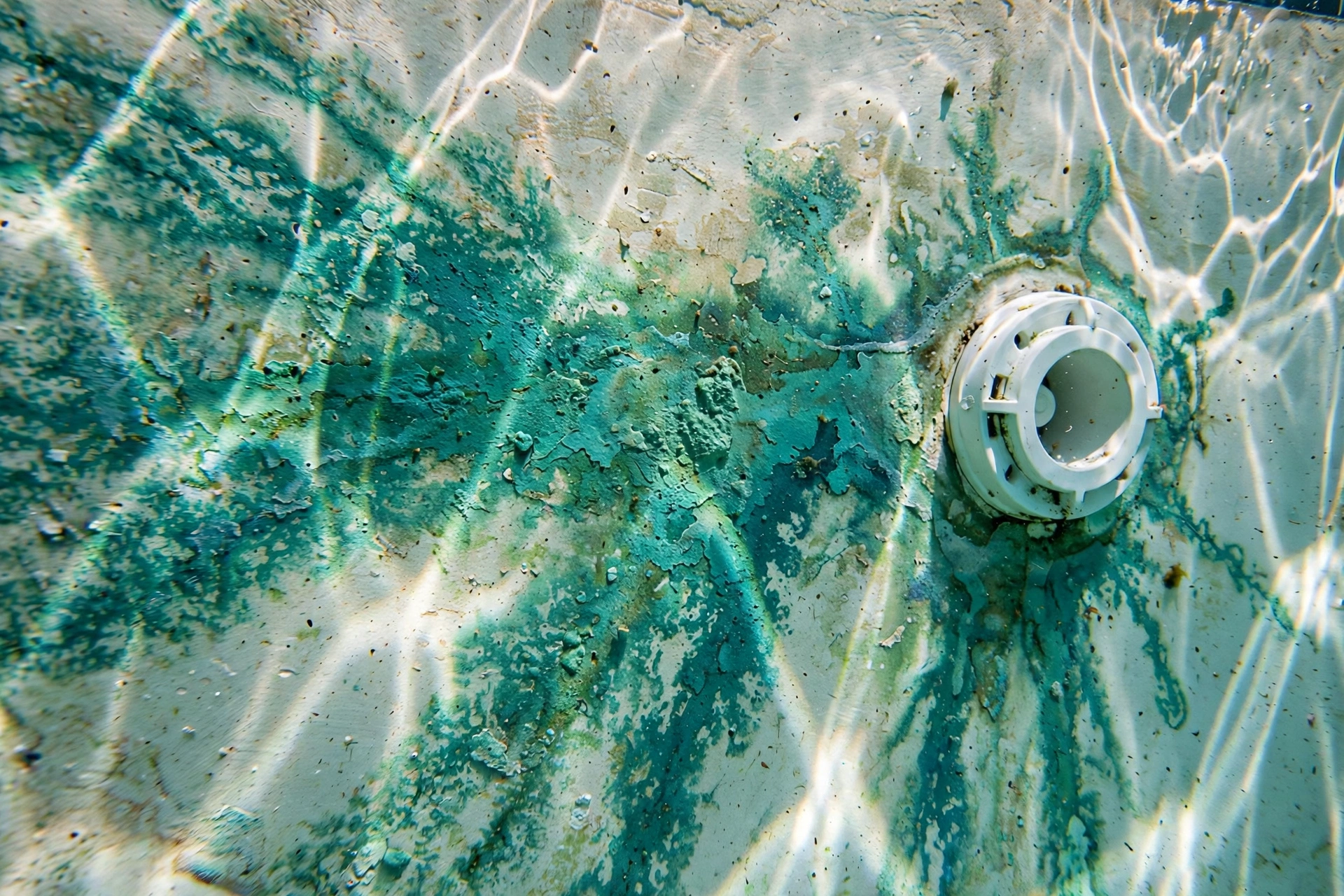
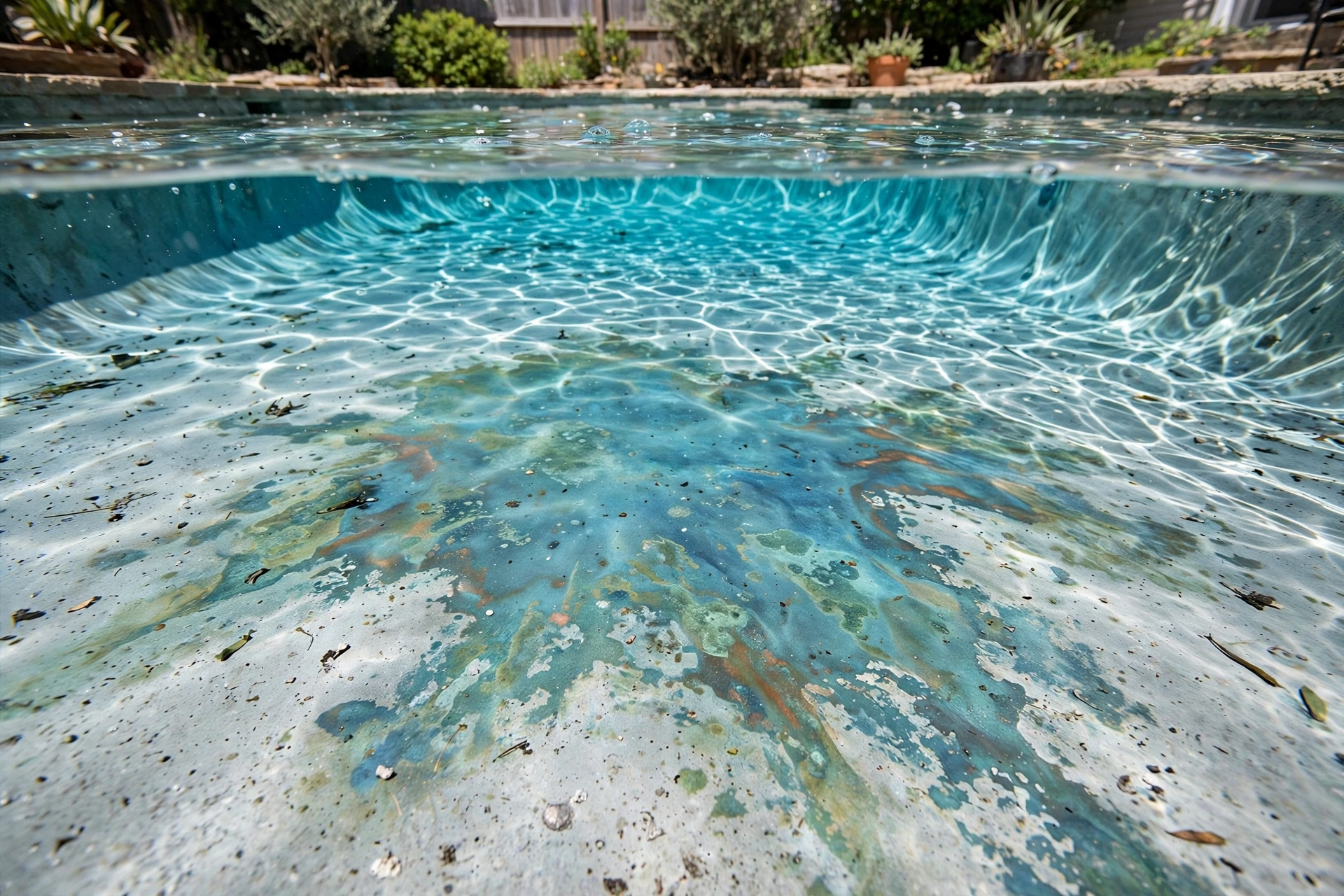
Blue-green or teal stains mean copper — and it almost always came from a copper-based algaecide, a mineral ionizer, or a heater exchanger being eaten by low-pH water. Treatment is the same as iron: ascorbic acid to lift it, sequestrant to hold it, then eliminate the source for good.
I will admit it: copper stains look almost pretty — teal, turquoise, blue-green — right up until you realize they do not brush off and they keep spreading. The treatment is straightforward. Finding where the copper came from matters more, because it will just come back otherwise.
The usual suspects: copper algaecides — yes, the "algae prevention" product is staining your pool; the irony is free with every bottle. Mineral ionizer systems that drip copper and silver into the water nonstop. A corroding heater heat exchanger — low-pH water eats copper, then your pool surfaces wear it as stains. And occasionally old copper plumbing on the fill line.
Here is a handy tell: if blonde swimmers are going green, that is the same copper. If you are seeing it in hair, the pool has a copper problem whether stains have shown up yet or not.
Copper stains tint plaster teal-green, often near returns
Treatment and prevention
Same protocol as iron stains: vitamin C test to confirm it is metal, lower the chlorine, ascorbic acid treatment, sequestrant afterward. Then cut off the source — ditch the copper algaecides (chlorine prevents algae better anyway), look at your heater's pH history, and give ionizers a hard second thought.
One more thing: sequestrant degrades over time. When it does, the copper drops right back out. So this is a routine you maintain, not a cure you finish.
Safety warning. Never mix different chlorine products together, and never mix chlorine with acid. Wear gloves and eye protection, add chemicals to water (never water to chemicals), and follow the exact instructions on your product label — the label overrides any calculator. Store chemicals dry, separate, and away from kids and pets.
Common questions
Why did my blonde hair turn green in the pool?
Copper in the water binds to hair — it is the classic sign of a copper problem, usually from algaecides or ionizers. Fix the water and the hair issue goes with it.
Are copper ionizers worth it?
In my view, no — they add a staining metal to your water to do a job chlorine already does well. Most experienced owners skip them entirely.
What causes copper staining in pools?
Dissolved copper, most often from a copper ionizer set too high, copper-based algaecides overused, or an aging heater with a copper heat exchanger. It plates out as blue-green or dark stains, especially with high pH.
How do I get rid of copper stains in my pool?
Lower the pH slightly into the 7s, treat with ascorbic acid on the stains, then hold the copper with a metal sequestrant. And stop the source — dial back the ionizer or ditch the copper algaecide.
Will muriatic acid remove copper stains?
It can lighten them, but pouring acid on stains is risky — it etches plaster and the stain often comes back worse. Ascorbic acid is gentler and more effective for metal stains. Save the muriatic for water chemistry.
How do I get dissolved copper out of pool water?
A metal sequestrant binds it so it can't stain — that's control, not removal. True removal means partial drain and refill, or a metal trap filter on the fill line if your source water is the culprit.
Last reviewed: September 29, 2026. Dosing figures are estimates from standard pool-industry ratios — always confirm against your product label and a reliable test kit.