Salt Pool Cloudy Water: Causes & Fixes
Cloudy saltwater usually comes down to three suspects: FC too low for your CYA (cell output set too low), high pH causing calcium to precipitate, or early algae. Check in this order: FC against the 70–80 CYA target, pH (salt pools run high — you know this), and the cell for scale. Then treat it like any cloudy pool — and if shocking is needed, use liquid chlorine, not the cell.
Saltwater grants zero immunity from cloudy water — the cell just makes chlorine; everything downstream is identical chemistry to any other pool. Run the salt-specific checks first (they're quick), then fall back to standard cloudy-water diagnosis. Don't let the salt system become a blind spot in your troubleshooting.
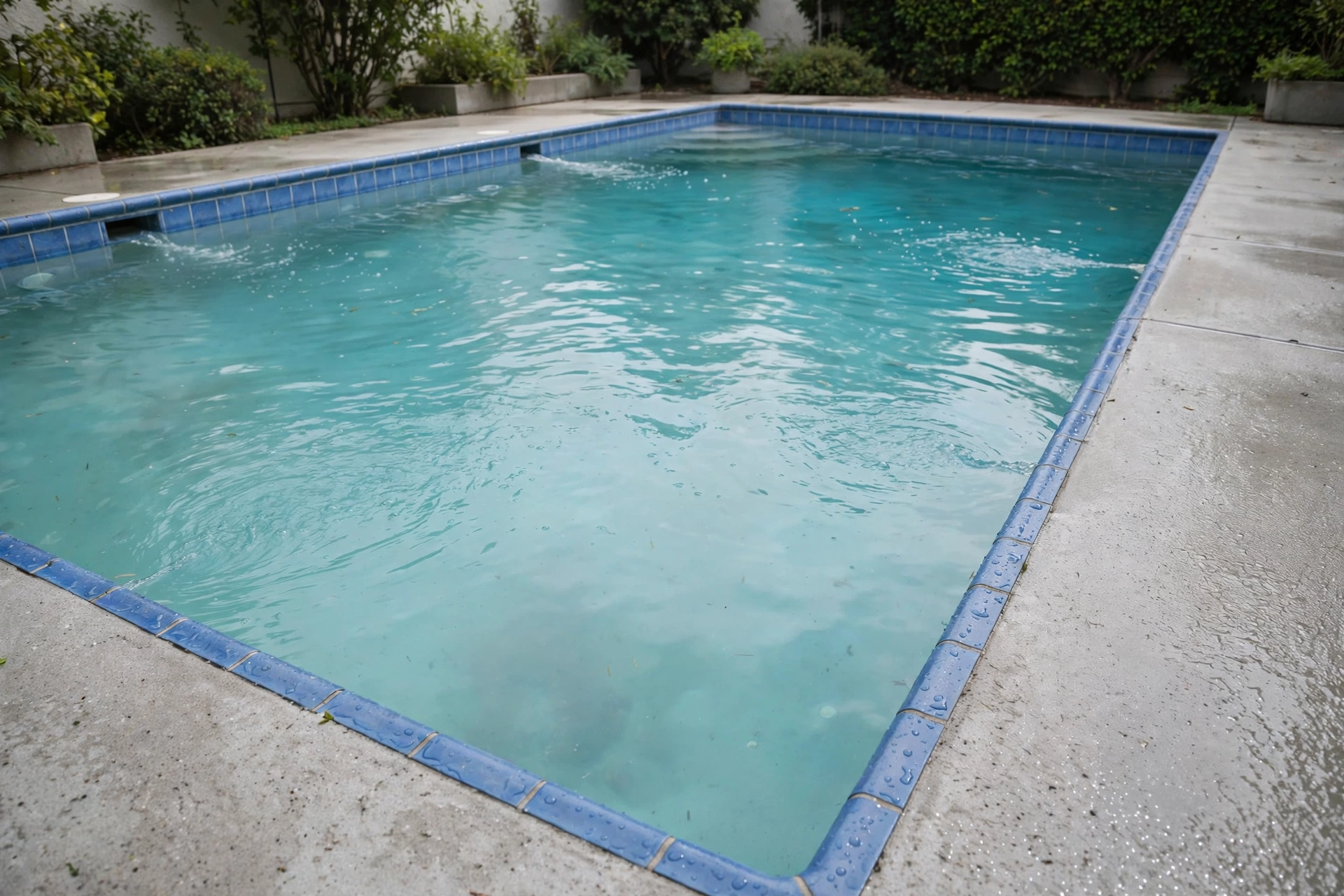
Salt-specific causes first
Cell output too low for conditions: heat waves and pool parties will outrun a dial you set back in April — bump output and retest in 24 hours. Scaled cell: production dropped silently, so inspect and clean. Salt too low: below ~2700 ppm most units struggle, so test independently rather than trusting the display. pH drifted to 8+: calcium precipitates as a fine white haze — the classic salt-pool cloudiness, and honestly the most common one on this list.
Notice the pattern? Three of those four are really "the cell isn't delivering" wearing different masks. Salt pool troubleshooting is mostly cell troubleshooting with extra steps.
Then standard cloudy causes
If the salt system checks out, you're dealing with the usual suspects: early algae (FC too low for CYA — and remember, salt wants CYA at 70–80), filtration issues, or high calcium plus high pH ganging up. Diagnose with the cloudy water guide and treat with liquid chlorine, not the cell. Here's the mantra: the cell maintains, liquid chlorine rescues.
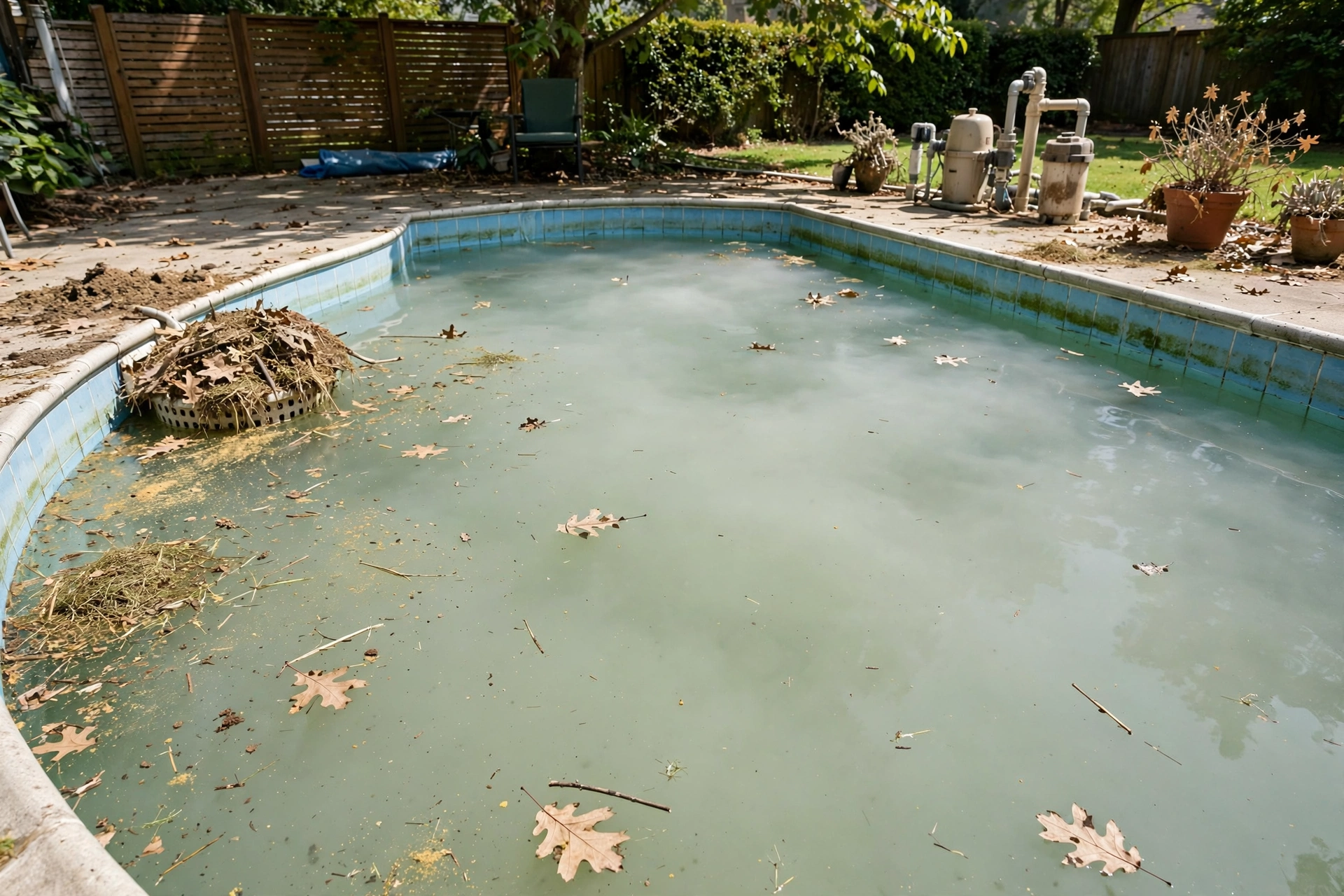
The rescue rule for salt pools
When things go wrong, supplement with liquid chlorine immediately — don't wait for the cell to catch up, because it can't. Cells are sized for maintenance, not recovery. Shock to the appropriate level for your CYA, clear the problem completely, then hand the job back to the cell for its steady daily shift.