Salt Chlorine Generator Not Working? Diagnosis Guide
Work through it in this order: salt level (test it yourself — the unit's own reading lies as cells age), the cell for scale buildup, output percentage and pump runtime, then water temperature (most cells cut out below ~60°F). I can save you some suspense: most "dead" generators turn out to be scaled cells or low salt. The expensive problems are the rare ones.
Your FC reads zero, the salt system swears it's "on," and panic starts creeping in. Before you start pricing a $600 replacement cell, run this diagnostic — the fix is usually cheap, sometimes free. Work the list in order; I arranged it so each step rules out the most likely culprit first.
Step 1: Test salt independently
Here's a sneaky one: the unit's salt reading drifts as the cell ages. A dying cell reads salt wrong, so what looks like a salt problem is actually a cell problem — and you'd never know from the display alone. Test independently with a K-1766 drop test or AquaChek salt strips. If actual salt is under ~2700 ppm, add salt (our salt calculator will tell you exactly how much) and retest in 24 hours. If salt checks out fine, the unit's sensor or the cell itself is suspect — keep going down the list.
Step 2: Inspect the cell for scale
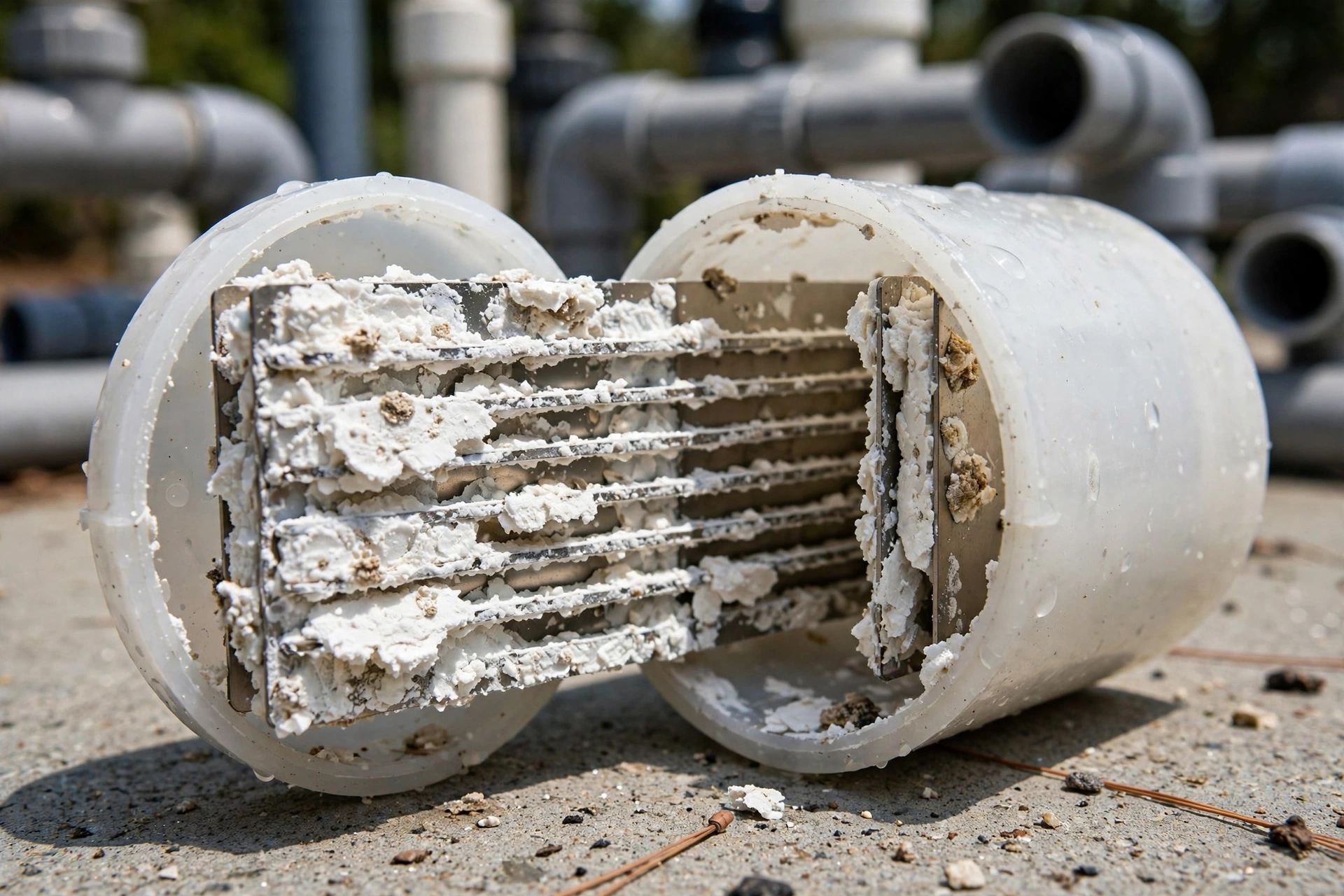
Pull the cell and look between the plates. See white crusty buildup? That's calcium scale, and it strangles chlorine production. Clean it with a diluted muriatic acid soak — always acid into water, never the reverse; gloves and eye protection on — until the fizzing stops, usually 15–30 minutes. Your product label and cell manual are the final word on the dilution and procedure, so follow them over any general guidance. And never scrape the plates with anything metal. Those coatings are delicate, and a scratched plate is a dying plate.
If the plates look eaten or thin, or the unit is 5+ years old with output declining even when spotlessly clean, you're looking at old age — not a fault you can fix. Cells are consumables. 3–7 years is the normal lifespan, and there's no shame in a cell that gave you six good summers.
Step 3: Settings and runtime
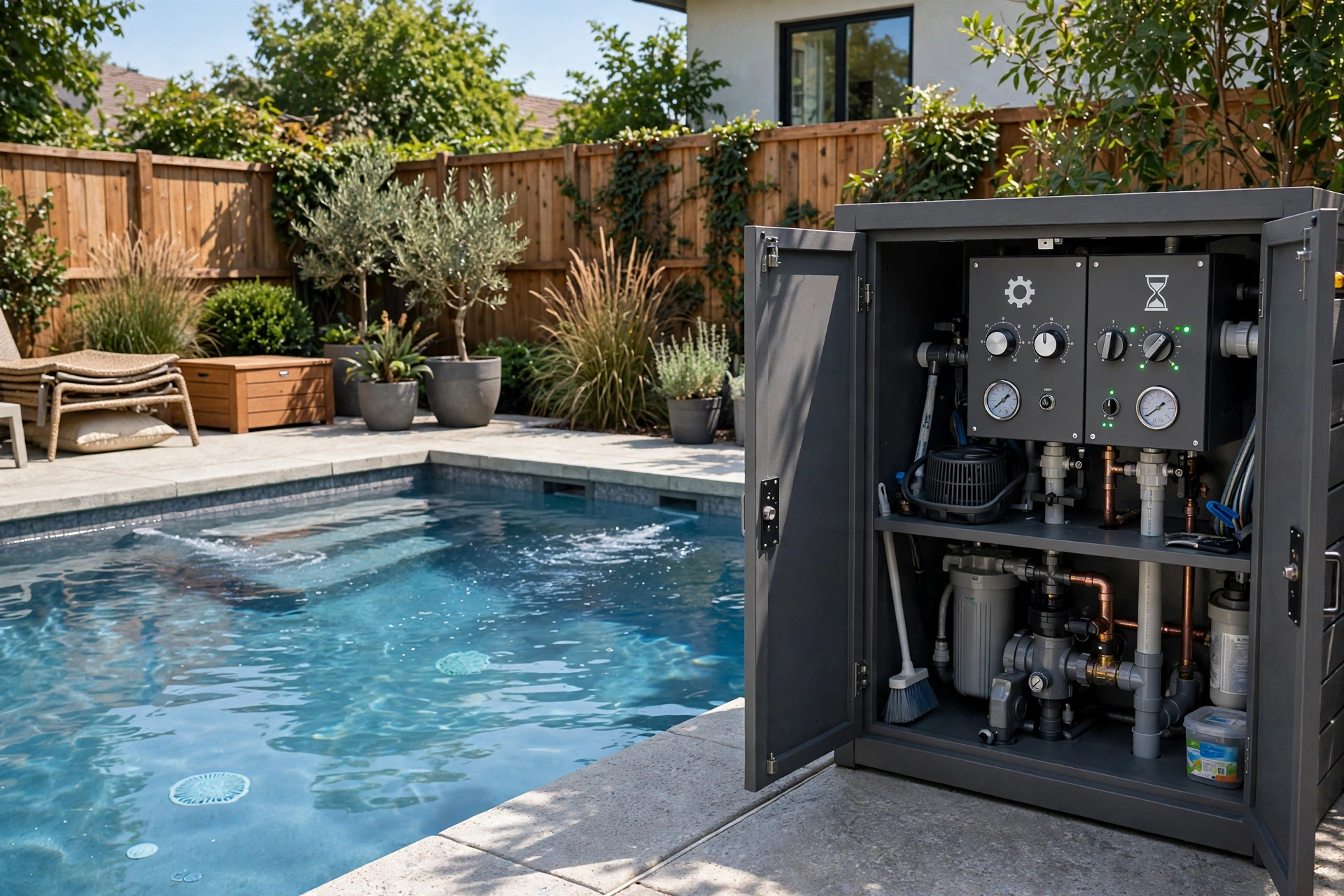
Output at 20% with the pump running 6 hours a day may simply not make enough chlorine for a sunny pool — that's not a malfunction, it's arithmetic. Bump output to 60–80%, extend pump runtime, and retest FC after 24 hours. Two more quick checks while you're here: make sure you're not confusing "super chlorinate" mode with normal operation, and confirm the flow switch is happy — low flow means no production, and the unit won't always tell you that clearly.
Step 4: Temperature and CYA
Most cells throttle down or stop entirely below ~60°F water — that's normal winter behavior, not a breakdown. Supplement with liquid chlorine until spring. And check your CYA: at CYA 30, a salt pool's steady low FC burns off in the sun faster than the cell can replace it. Saltwater wants CYA at 70–80, and that higher target exists precisely for this reason.
- 1. Independent salt test (unit readings lie on old cells).
- 2. Cell inspection — scale = acid soak, no metal scraping.
- 3. Output % + pump runtime (arithmetic, not malfunction).
- 4. Water temp (<60°F = reduced output) and CYA (want 70–80).