For light waterline scale: a wet pumice stone, or a diluted muriatic acid wash applied carefully and rinsed well. For heavy, thick scale: soda or bead blasting by a pro. Then fix what caused it — high pH, high calcium, or both — or you will be doing this again within months.
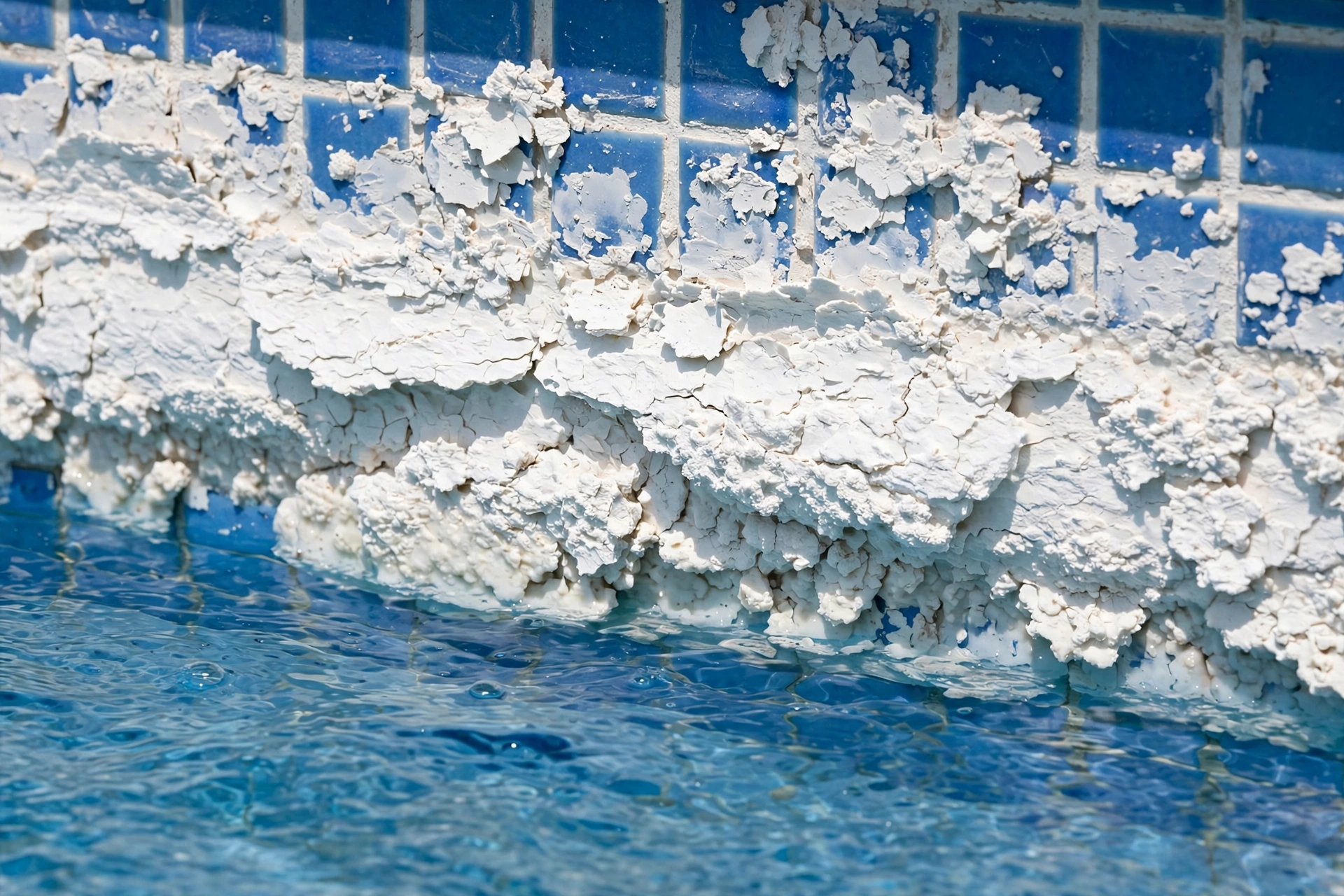
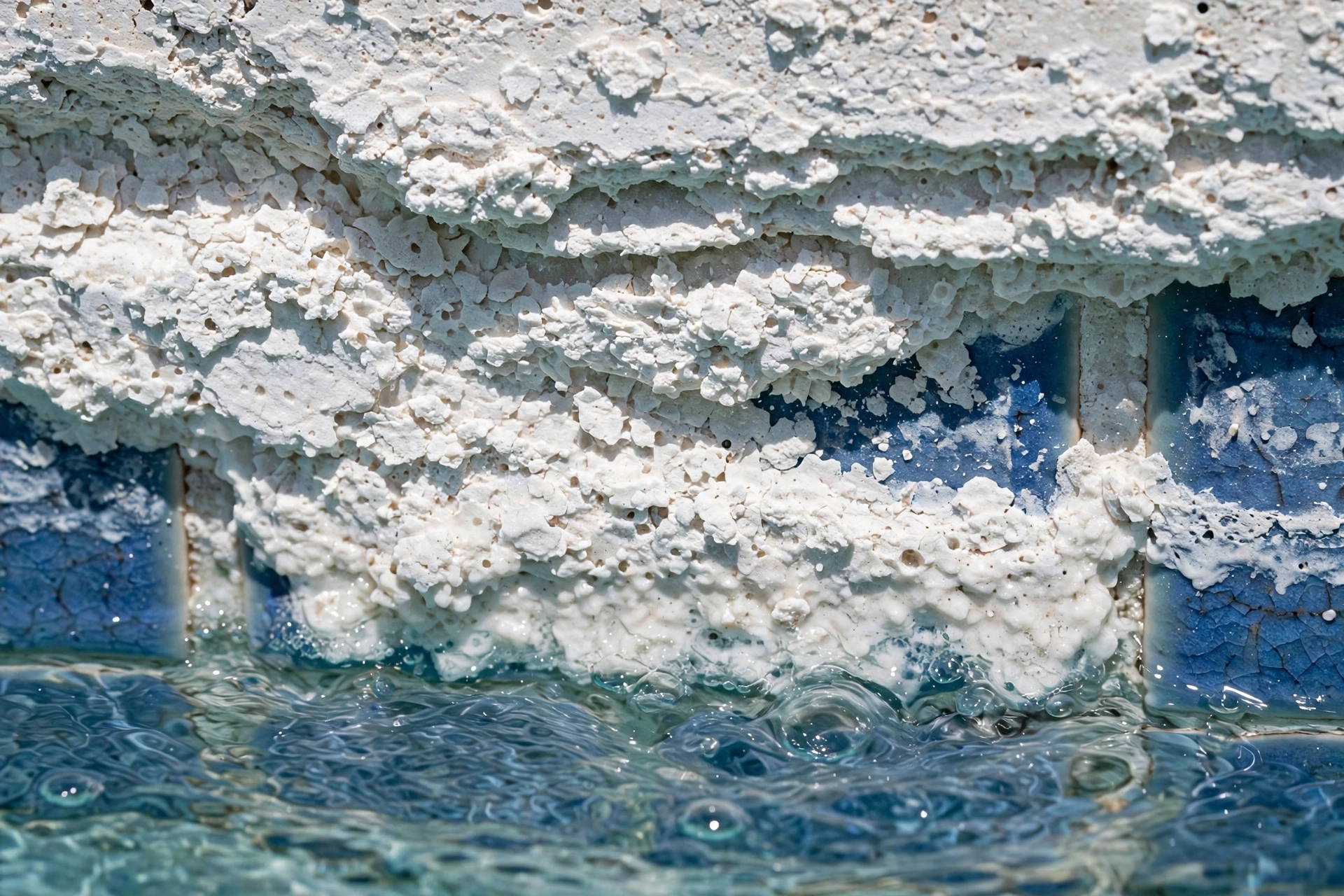
That white crust creeping along your waterline tile is calcium scale — the visible signature of scale-forming water. Getting it off is satisfying. Keeping it from coming back is the actual project, and it starts with the water, not the tile.
Pumice stone: wet the stone and the tile, rub gently. It handles light scale well and is safe on most tile — test a hidden spot first, and never use it on vinyl or fiberglass. Diluted acid wash: sponge it on carefully, let it fizz briefly, rinse thoroughly. Wear gloves and eye protection, work in small sections, and follow your product label's dilution directions exactly — the label is the authority here, not this page. For heavy, thick scale: soda or bead blasting by a professional — fast, no chemicals, typically a few hundred dollars.
You will see vinegar suggested online. It works on a very light film but struggles with real scale — for anything crusty, skip straight to the real methods.
Calcium scale crust at the waterline
Fix the water or it returns
Scale forms when pH and calcium run high together, so after cleaning: hold pH at 7.4–7.6 (not 8+), and check calcium hardness — if CH is 500+, plan a partial drain. Salt pool owners: keep TA at 60–80 to slow the pH climb that drives scaling. The tile is the symptom; the water is the disease. Treat the disease.
Safety warning. Never mix different chlorine products together, and never mix chlorine with acid. Wear gloves and eye protection, add chemicals to water (never water to chemicals), and follow the exact instructions on your product label — the label overrides any calculator. Store chemicals dry, separate, and away from kids and pets.
Common questions
Will muriatic acid damage pool tile?
Diluted, brief, and rinsed well — no, ceramic and porcelain tile handle it fine. Do not let acid sit on grout for long, rinse thoroughly, and always test a hidden spot first. Gloves and eye protection, every time.
How do I prevent calcium on waterline tile?
Keep pH and calcium in range, brush the waterline weekly so deposits never get a foothold, and if your fill water is hard and evaporation is heavy, plan on partial drains as routine maintenance.
How do you remove hard calcium deposits from pool tile?
For light buildup, a pumice stone (on tile, not plaster) or diluted muriatic acid on a sponge. For thick crust, pros use glass-bead blasting — fast, but it's a hired job. Then fix the water (CH and pH) or it'll be back by next season.
What causes calcium buildup on pool tile?
Evaporation leaves minerals behind at the waterline, and high calcium hardness plus high pH accelerates it. It's basically your pool's water chemistry writing on the tile — the fix is in the water, not just the scrubbing.
Does CLR work on pool tile calcium?
I'd skip household descalers like CLR — they're not formulated for pool surfaces and the runoff goes straight into your water. Diluted muriatic acid or a pumice stone is the pool-standard fix, with gloves and eye protection.
What do pros use for heavy calcium on tile?
Glass-bead or soda blasting — it strips thick scale fast without chewing up the tile. It's not a DIY job (you need the rig and the experience), but for heavy buildup it's the fastest honest fix.
Last reviewed: September 29, 2026. Dosing figures are estimates from standard pool-industry ratios — always confirm against your product label and a reliable test kit.