Salt System vs UV vs Ozone: What Each Actually Does
A salt system IS the sanitizer — it makes chlorine. UV and ozone are secondary systems: they kill some contaminants in the water passing through them, but leave no residual behind, so you still need chlorine. Anyone selling UV or ozone as a "chlorine-free" solution is selling you a misunderstanding, whether they know it or not.
Pool equipment marketing loves the phrase "reduce chlorine," and what it usually means is... under-explained. Let me separate the two jobs clearly: the primary sanitizer (what keeps water safe between pump cycles) versus secondary helpers (what zaps the water passing through the equipment). They're not interchangeable, no matter what the brochure implies.
Primary vs secondary, simply
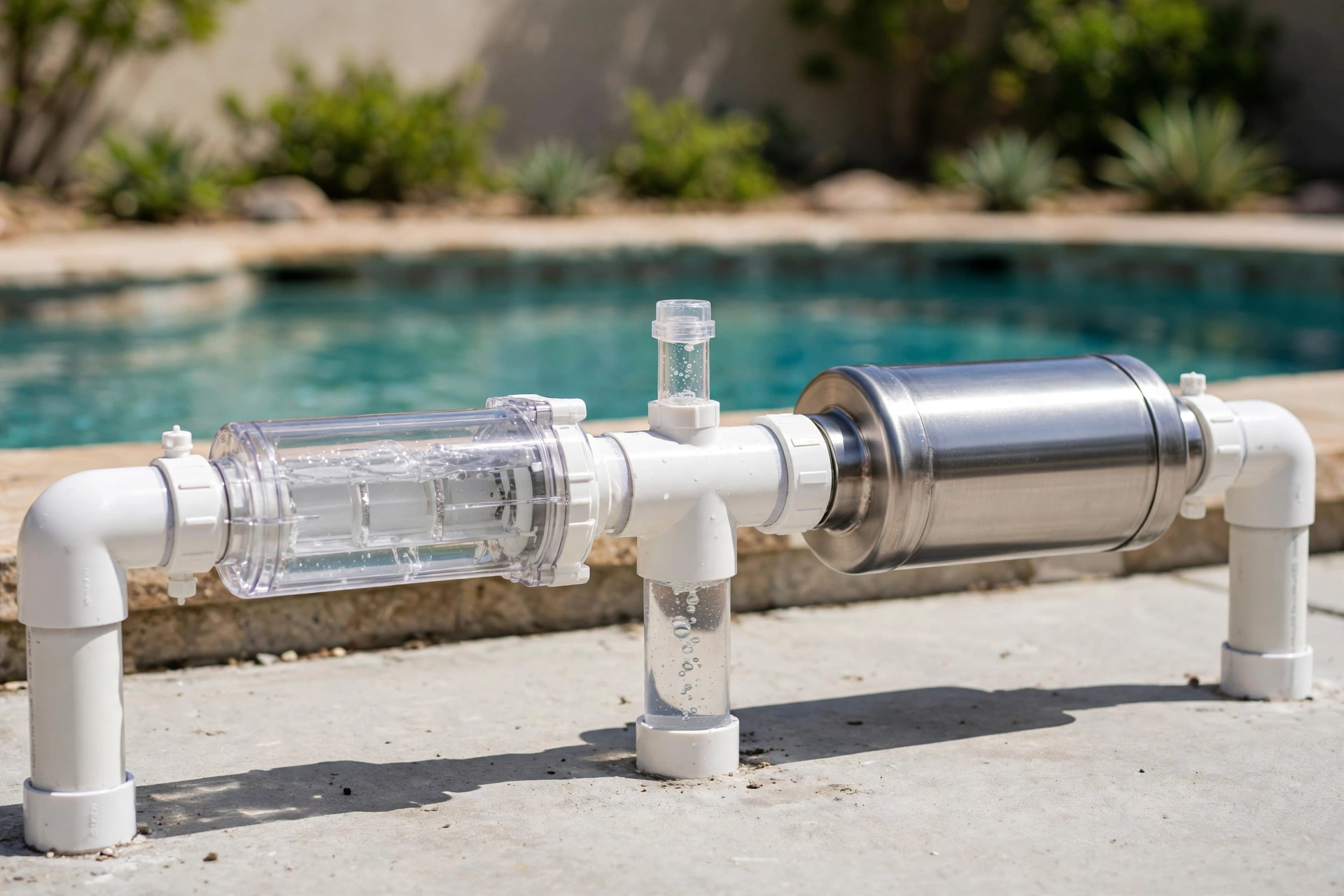
Chlorine — poured in or salt-made, doesn't matter — is a residual sanitizer: it stays in the water, protecting every corner continuously, including the spots your circulation barely reaches. UV and ozone only work on water flowing through them, at that instant. The moment water leaves the unit, it's unprotected again. That's why health codes everywhere require a residual sanitizer no matter what secondary systems you bolt on.
Think of it this way: chlorine is the security guard on duty around the whole building; UV/ozone is a metal detector at one door. Genuinely useful — not a replacement.
What UV and ozone are actually good for
They destroy chloramines (combined chlorine) and some chlorine-resistant organisms like Cryptosporidium in the water passing through — genuinely useful in commercial pools, and for residential owners fighting persistent CC. They can let you run slightly lower chlorine residuals, which is a real benefit. What they cannot do: sanitize the pool. The algae growing on your shady wall never passes through the UV unit, and no secondary system reaches it.
The "chlorine-free" claim
Some systems market "chlorine-free" pools using UV/ozone plus minerals or enzymes. Without a residual sanitizer, these rely on hope and low bather loads — and hope fails the moment real contamination arrives. If anyone promises you a chlorine-free outdoor pool, ask them one question: what kills the algae growing on the shady wall at 3 AM? There is no good answer, because there is no good answer.