Saltwater Pool vs Chlorine Pool: Honest Comparison
Let me say the quiet part first: a saltwater pool IS a chlorine pool. The salt cell just manufactures chlorine from dissolved salt instead of you pouring it in. Saltwater feels softer and frees you from daily dosing, but it costs more upfront, pushes pH up constantly, and the cell is a consumable you will replace every 3–7 years.
That is the most important sentence on this page, so I will say it again: saltwater pools are chlorinated pools. There is no third sanitizer hiding in here. The system electrolyzes dissolved salt into chlorine — same chemical, different delivery truck.
Once that clicks, the whole debate stops being philosophical and gets practical: convenience and feel on one side, cost and pH babysitting on the other.
What saltwater actually changes
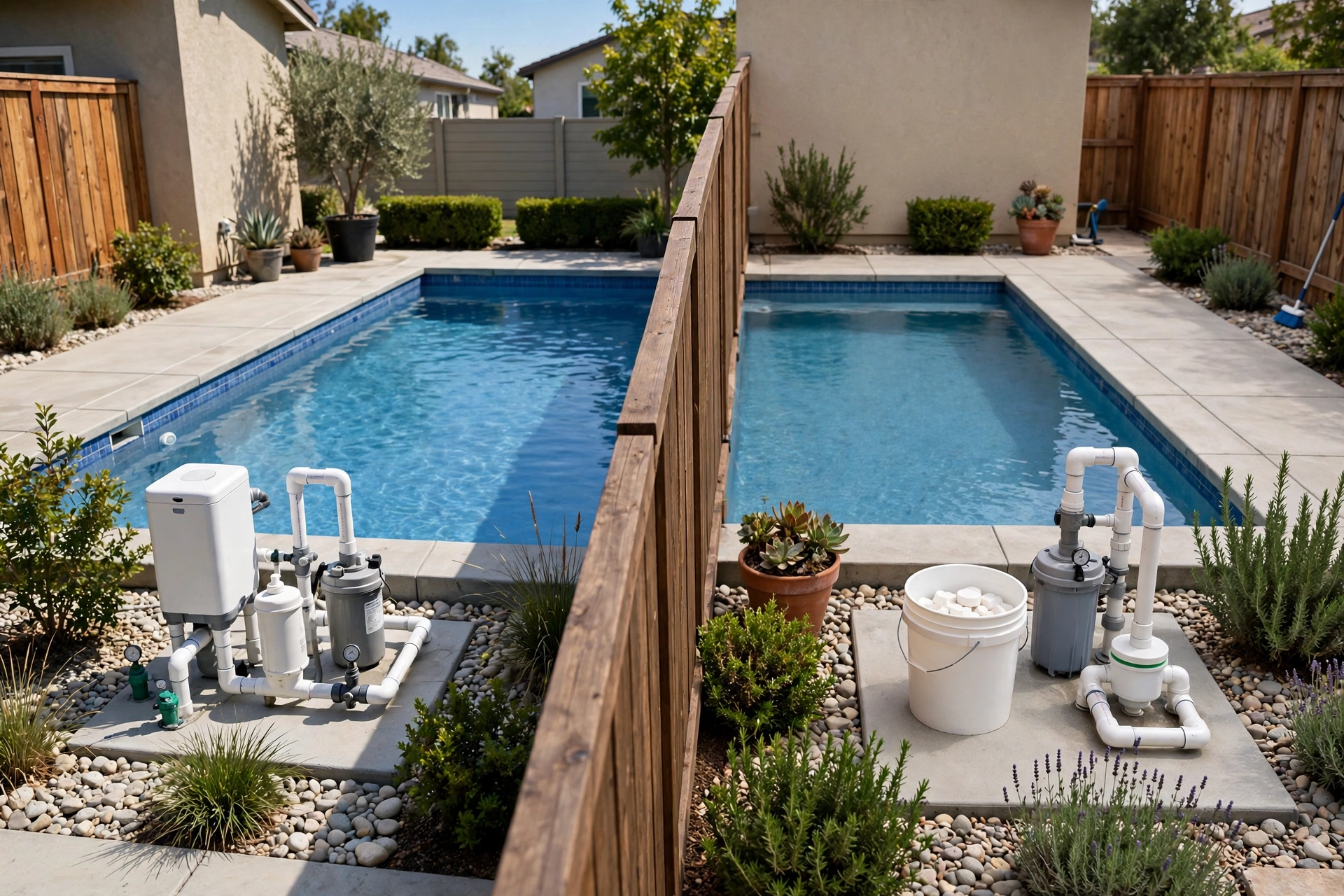
Feel: the water feels softer, and most people get less eye sting — because the cell drips chlorine in steadily instead of in spiky daily doses. Maintenance: you are not pouring chlorine every day, which is lovely — but you are managing pH every week, because salt systems constantly push pH up through aeration. It is a trade, not a free lunch.
What does not change: you still test, still balance TA, CYA, and calcium, still shock occasionally. Salt does not sanitize anything. Chlorine does — the cell just makes it on-site.
The real costs
Upfront: a salt system runs several hundred to over a thousand dollars installed. Ongoing: salt itself is cheap — pennies per season in top-ups. The real bill is the cell, which is a consumable: expect 3–7 years, then $400–$800+ for a replacement, depending on brand and size.
Chlorine pools: near-zero equipment cost, but a steady chemical bill — liquid chlorine every week of the season. Over 5 years the totals land closer than most people expect; I have run the numbers in the cost breakdown.
Equipment and surface considerations
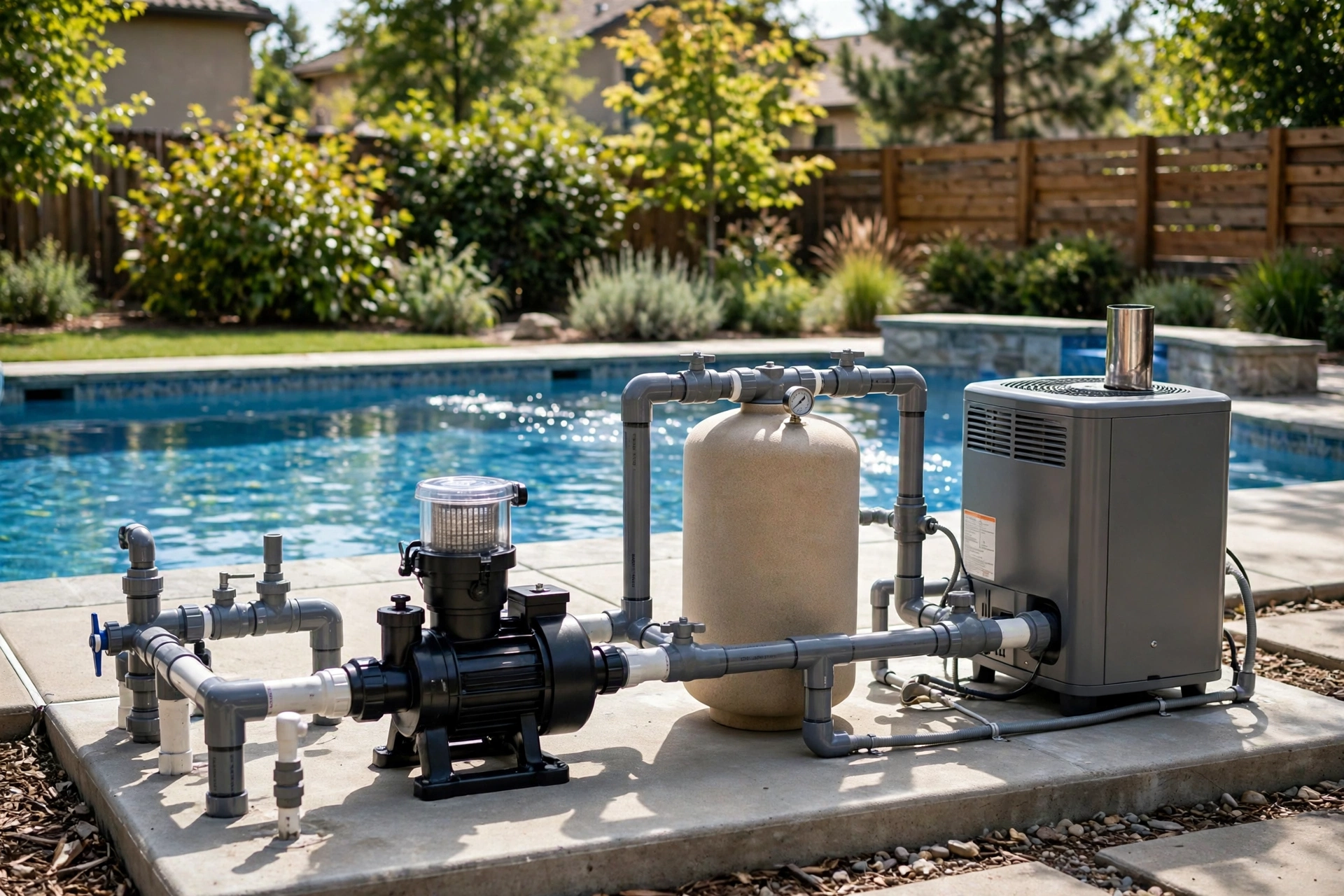
One thing people skip: salt is corrosive to some metals. Cheap ladders, certain heater elements, and natural stone coping can all suffer. Most modern equipment is salt-rated, but check yours before converting — not after. And saltwater wants higher CYA (70–80) than chlorine pools (30–50), so do not copy a chlorine pool’s targets.
Who should pick which
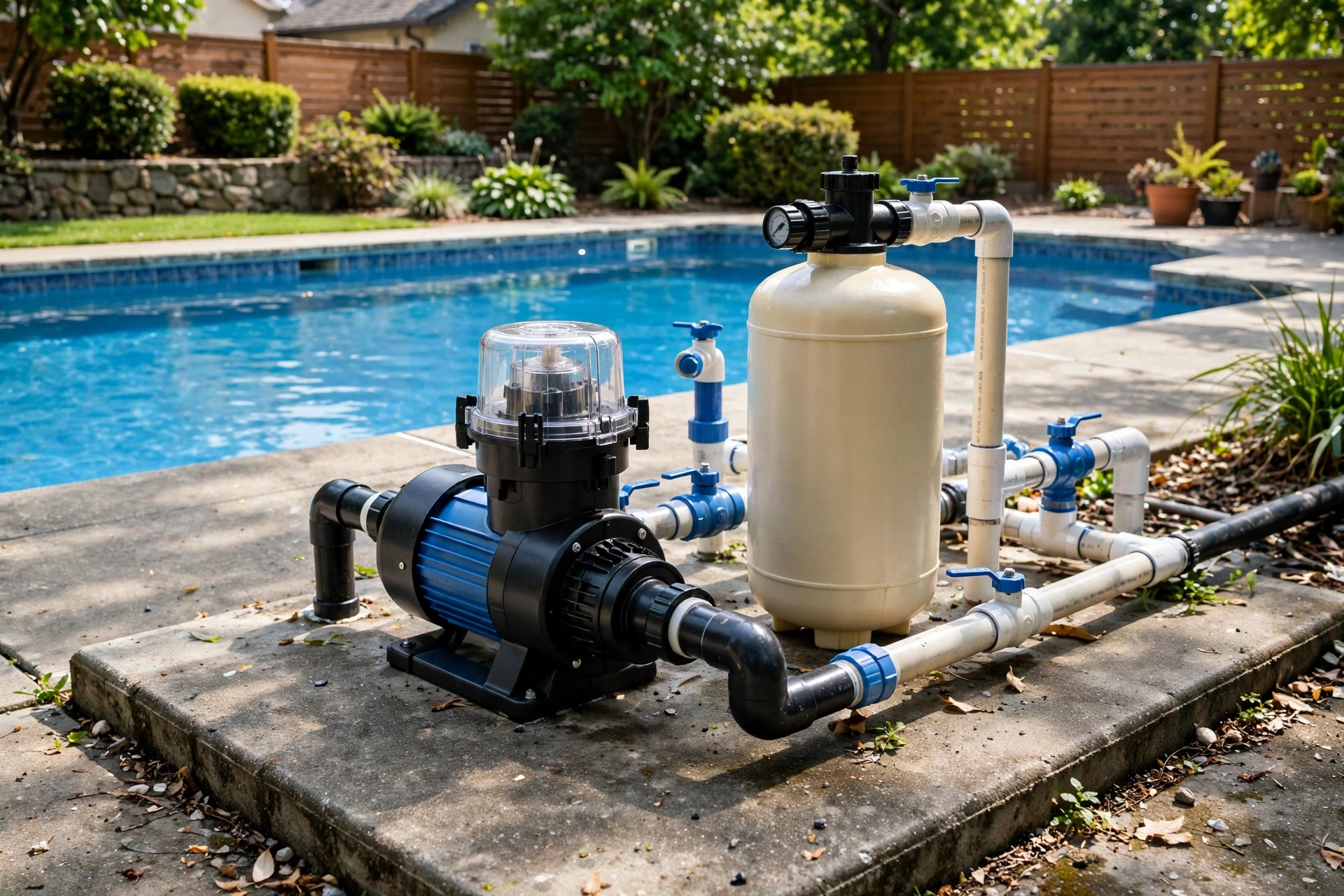
My take, no fence-sitting: pick saltwater if you hate daily dosing, you swim a lot and care about the feel, and you will actually test pH weekly. Pick chlorine if you want the lowest upfront cost, the simplest equipment, or your pool has corrosion-prone fittings. Run right, both give equally clean water — the chemistry does not play favorites.