Pool Stabilizer (CYA) Calculator: Dose It Right
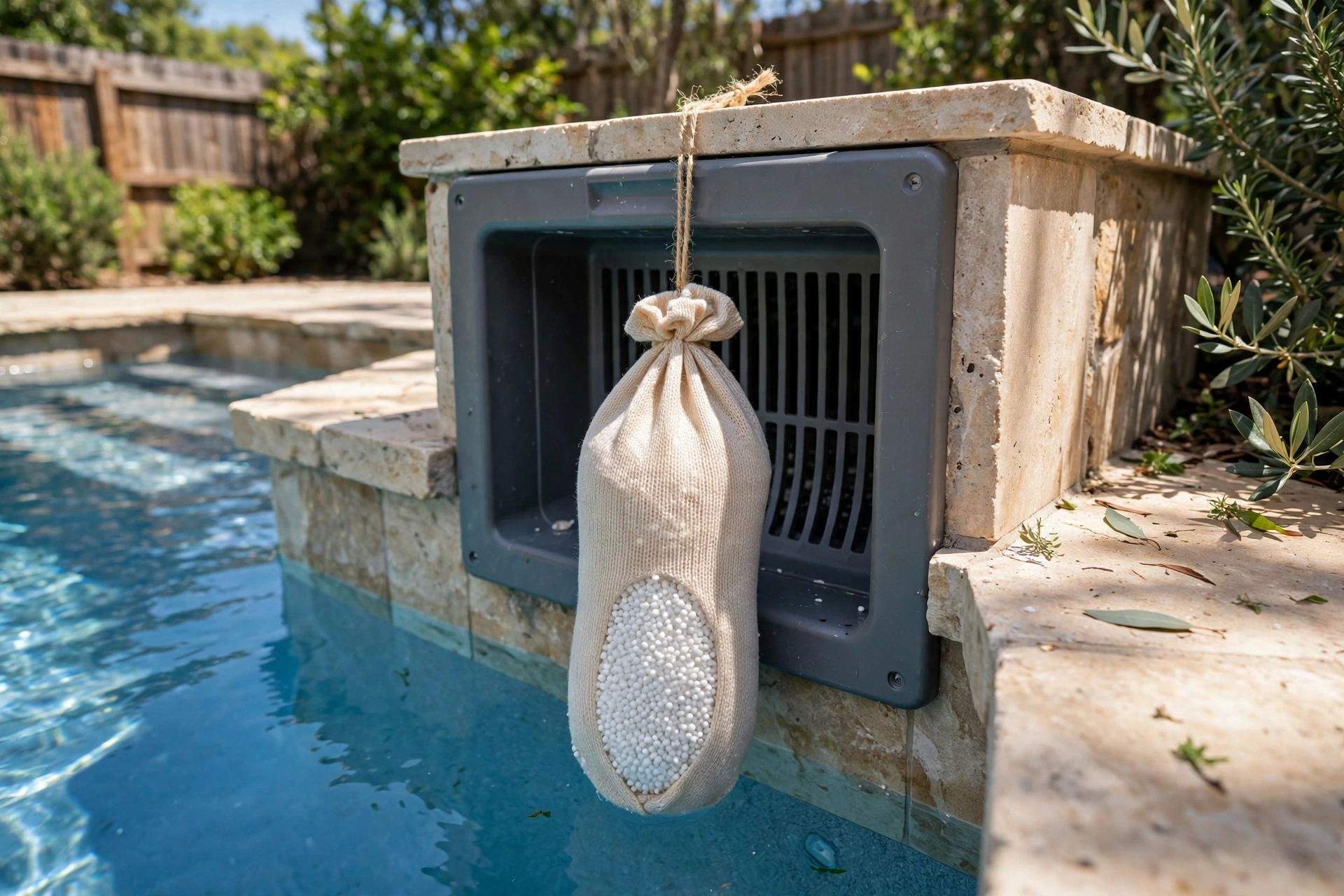
Enter your gallons and current → target CYA above. The rule: 1 lb of stabilizer per 10,000 gallons raises CYA about 12 ppm. Target 30–50 ppm (70–80 for saltwater). Add it via a sock in the skimmer — it takes days to dissolve, so don't retest or backwash for a full week. I mean it: a week.
Stabilizer is the slowest chemical to take effect and the most commonly overdosed — and I understand why. You retest too soon, see no change, add more… then a week later your CYA is 90 and you're asking why your chlorine stopped working. The pattern I see in forum threads is always the same: impatience, then a second dose, then regret.
So here's the discipline: dose once by the calculator, wait a full week, then test. CYA doesn't evaporate and doesn't get used up — whatever you add stays in there until water physically leaves the pool.
Pool chemical dose calculator
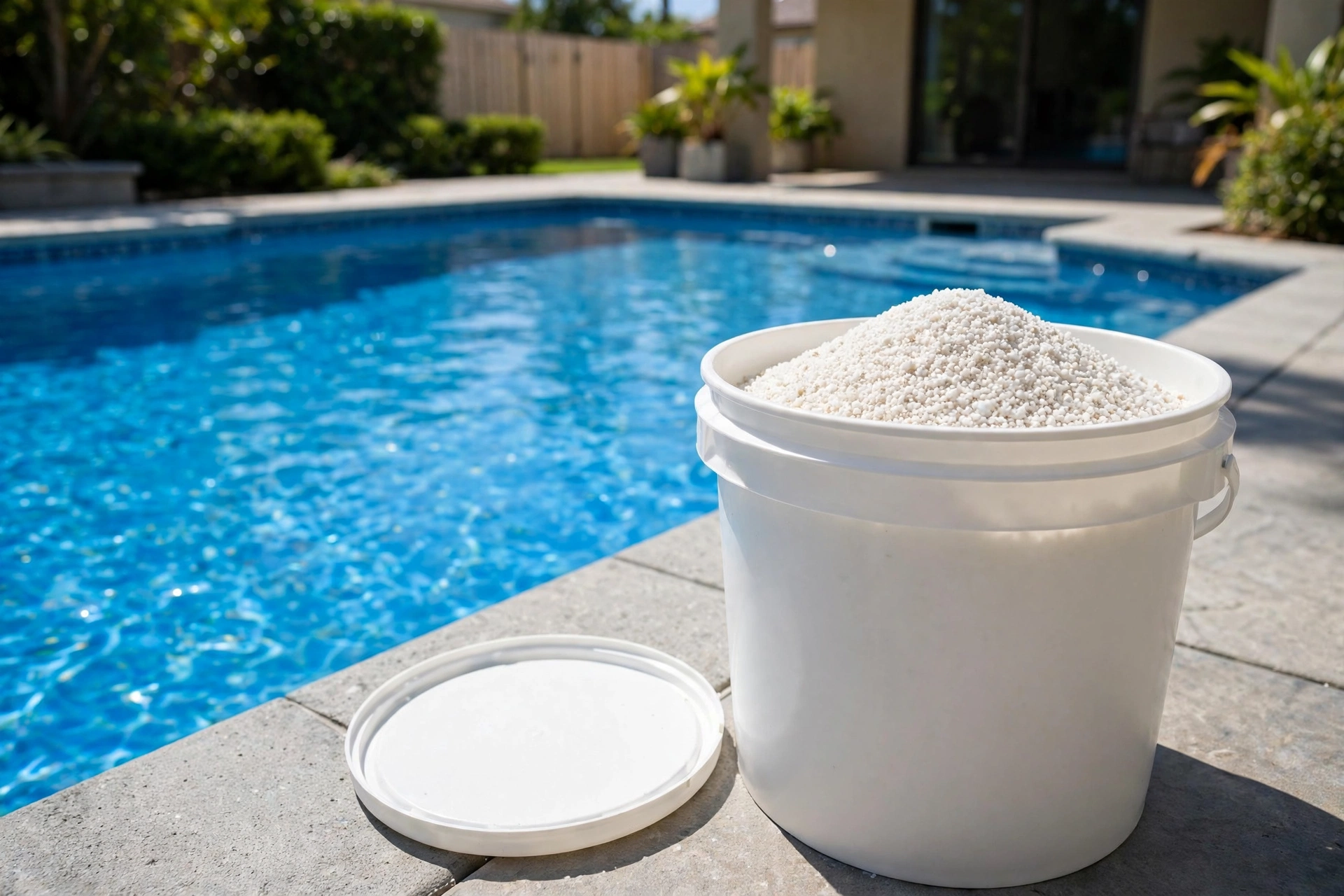
Estimate from standard pool-industry dosing ratios. Add two-thirds, retest after circulation, then top up. Never mix chlorine products together. Your product label has the final say.
The sock method
Pour the granular stabilizer into an old sock or stocking, tie it off, and hang it in front of a return jet — or just place it in the skimmer basket. It'll dissolve over 3–7 days. Give the sock a squeeze now and then to help it along. And don't backwash or clean the filter for a week: undissolved granules caught in the filter are still dissolving and still working.
Liquid stabilizer exists and works faster, but it costs much more per ppm. Granular plus patience wins — every time.
When NOT to add stabilizer
If you use trichlor tablets or dichlor shock regularly, you're already adding CYA with every single dose — test before you add more. And if CYA is already high, hear this clearly: no product lowers it. Only partial drain and refill does. Adding stabilizer to a high-CYA pool is the classic self-inflicted wound, and it's an expensive one.
- 1 lb per 10,000 gal ≈ +12 ppm CYA.
- Target: 30–50 ppm (chlorine pools), 70–80 ppm (saltwater).
- Full dissolution: 3–7 days. No retest for a week.
- Trichlor adds ~6 ppm CYA per 10 ppm FC; dichlor ~9.