How to Convert a Pool to Saltwater: Steps & Costs
The short version: 1) verify your heater, ladder, and coping are salt-compatible; 2) buy a system rated above your pool size; 3) install the cell in the plumbing after the heater and filter; 4) balance the water first; 5) add salt (~3200 ppm); 6) fire up the system and dial in output over a couple of weeks. Budget $800–1,500+ installed. Read the rest of this page before spending a dime — step zero is the one people skip.
Converting to saltwater is one of the most satisfying upgrades you can make — a weekend project that ends daily chlorine dosing for good. But a few compatibility checks up front prevent expensive regrets later. Do them before you buy anything. I mean it: the checks come first, the shopping comes second.
Step 0: the compatibility check (do not skip)
Salt is corrosive to some metals and stones, so check three things: your heater (most modern cupro-nickel or titanium exchangers handle salt fine; old copper ones suffer), ladders and rails (cheap stainless can rust — 316L grade is what you want to see), and coping (soft natural stone like limestone or sandstone can degrade; sealed or salt-rated stone is fine). If any of the three fail the check, budget for replacements — or reconsider the conversion. Finding out after installation is the expensive version.
Sizing and installation
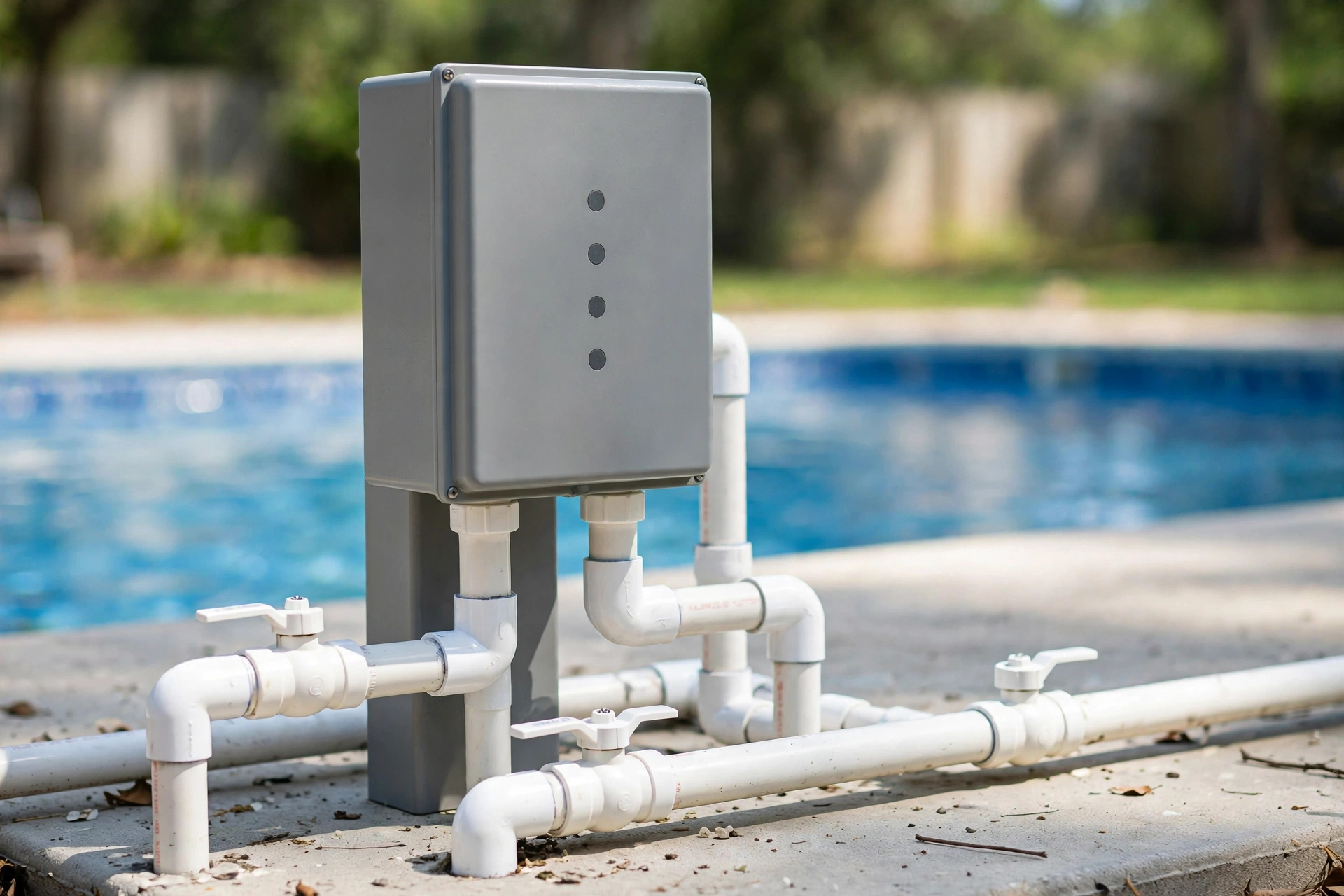
Buy a system rated for MORE than your gallons — I'll keep saying it: an oversized cell running at 50% lasts years longer than a maxed-out one. Installation is mostly plumbing: the cell goes in the return line after the filter and heater, with the control box mounted and wired near the equipment pad. Plenty of owners DIY the plumbing and hire an electrician just for the wiring — that's a sensible split, since water mistakes are forgiving and electrical ones aren't.
The conversion sequence
Balance the water FIRST — TA, pH, CYA up to 70–80, calcium — because a salt system inherits whatever chemistry you hand it, problems included. Then add salt to ~3200 ppm per our salt calculator, brush until it's fully dissolved, wait 24 hours, and only then power up the cell at a moderate output setting. Dial it in over the first two weeks: test FC every few days and adjust the percentage until FC holds steady at 4–6 ppm. Patience here pays off for years.
- Heater, ladder metal, and coping salt-compatible?
- System rated above your pool gallons.
- Water balanced first (CYA to 70–80).
- Salt to ~3200 ppm, dissolved, 24h before startup.
- Budget: $800–1,500+ installed; cell lasts 3–7 years.