Pool Clarifier: When It Helps and When It's a Waste
Clarifier is a mild coagulant: it clumps microscopic particles into bigger ones your filter can catch. It helps with light haze from dust or dead particles — and it is a waste of money for algae cloudiness, calcium precipitation, or any problem with a chemical cause. Fix the cause first; clarifier is a finishing touch, never the fix.
Clarifier might be the most oversold bottle in the pool aisle. It is marketed like a cure for cloudy water, and pool owners buy it by the gallon — then wonder why the pool is still cloudy. Here is the thing nobody at the store explains: clarifier does not fix anything. It assists filtration, and only filtration, and only for certain kinds of particles.
Used right, it is a decent finishing touch. Used as most people use it — as the first response to any cloudiness — it is money in the skimmer. Let me show you the difference.
What clarifier actually does
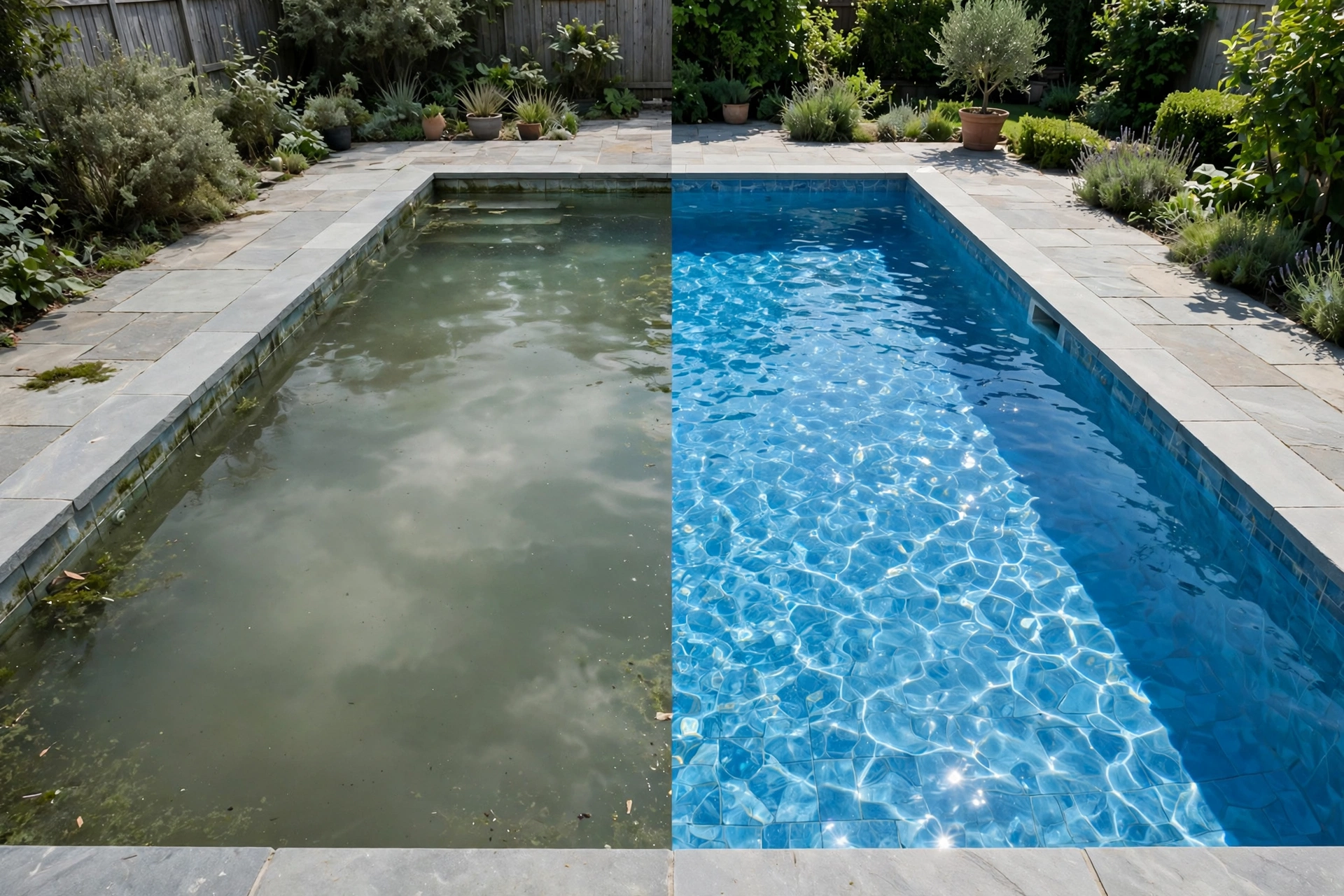
Clarifier contains polymers (often chitosan or similar) that make tiny suspended particles sticky, so they clump into clusters big enough for your filter to trap. That is all it does. It does not kill algae, dissolve calcium, fix pH, or replace filtration — it just helps your filter catch what it was almost catching already.
Think of it as reading glasses for your filter: useful when the filter is doing 90% of the job and needs help with the last 10%. Useless when the filter is doing 0% of the job because the problem is chemical.
When clarifier actually helps
Light, persistent haze after the real problem is fixed — e.g., the water is 95% clear a day after a SLAM but has a faint dullness left. Dust/pollen haze in spring when chemistry is otherwise correct. And post-cleanup polishing when you want that last bit of sparkle before a party.
In these cases, one dose per the label, pump running 24 hours, and a clean filter do the trick. If it does not visibly help within 24–48 hours, stop — the problem is not particle size, and more clarifier will not change that.
When it is a waste of money
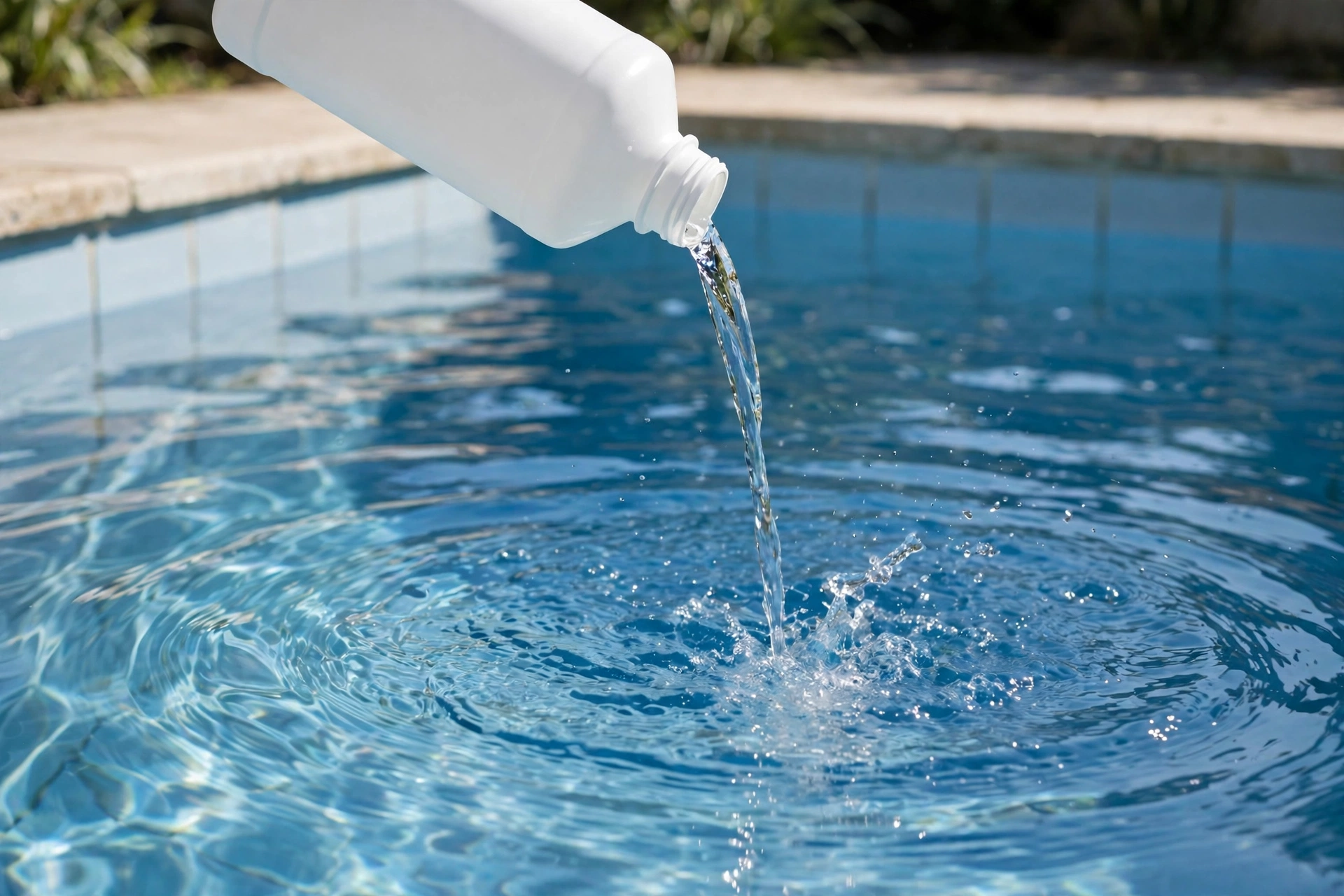
Live algae (green water): clarifier cannot kill anything — you need SLAM, not polymer. Calcium cloudiness: the particles keep forming as long as the chemistry is off; clarifier chases a moving target. Filter problems (channeling sand, missing DE powder, clogged cartridges): no chemical compensates for a filter that is not filtering.
Overdosing is its own problem: too much clarifier can gum up a sand filter or coat cartridges, making filtration WORSE. If the first dose did nothing, the answer is diagnosis, not a second bottle.
Clarifier vs flocculant: know the difference
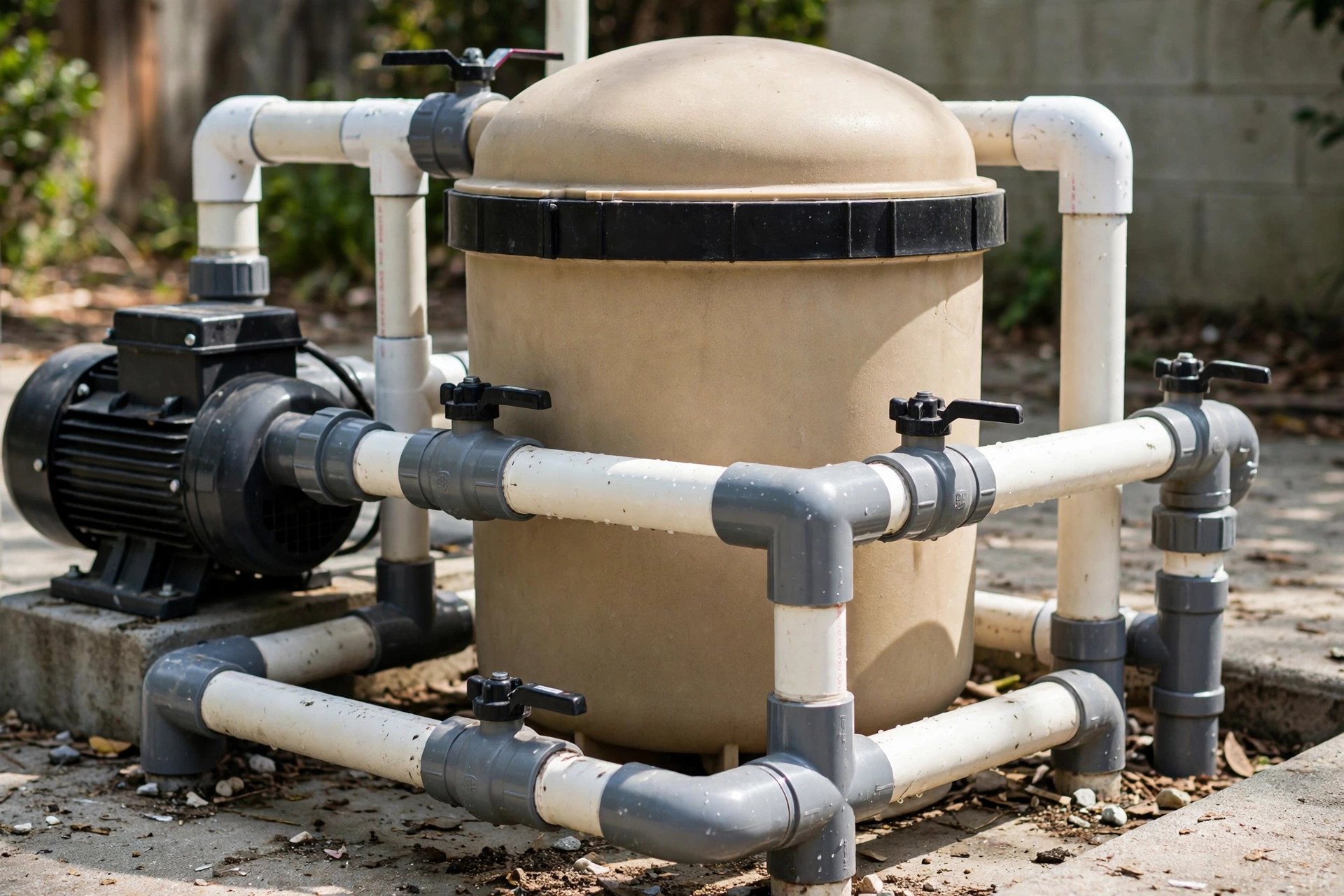
They get confused constantly. Clarifier keeps particles suspended while clumping them for the FILTER to catch — pump stays on. Flocculant (floc) clumps particles so heavily they SINK, and you vacuum them to waste — pump goes off, and you need a multiport valve with a Waste setting.
Rule of thumb: clarifier = mild haze, filter running. Floc = heavy particulate you want on the floor tonight, vacuumed tomorrow. Never use floc with a cartridge filter, and never use either one as a substitute for fixing the actual cause.
- Helps: light haze after the real fix, dust/pollen dullness, final polish.
- Waste: live algae, calcium cloudiness, broken filtration.
- Overdose risk: can gum up sand filters and coat cartridges.