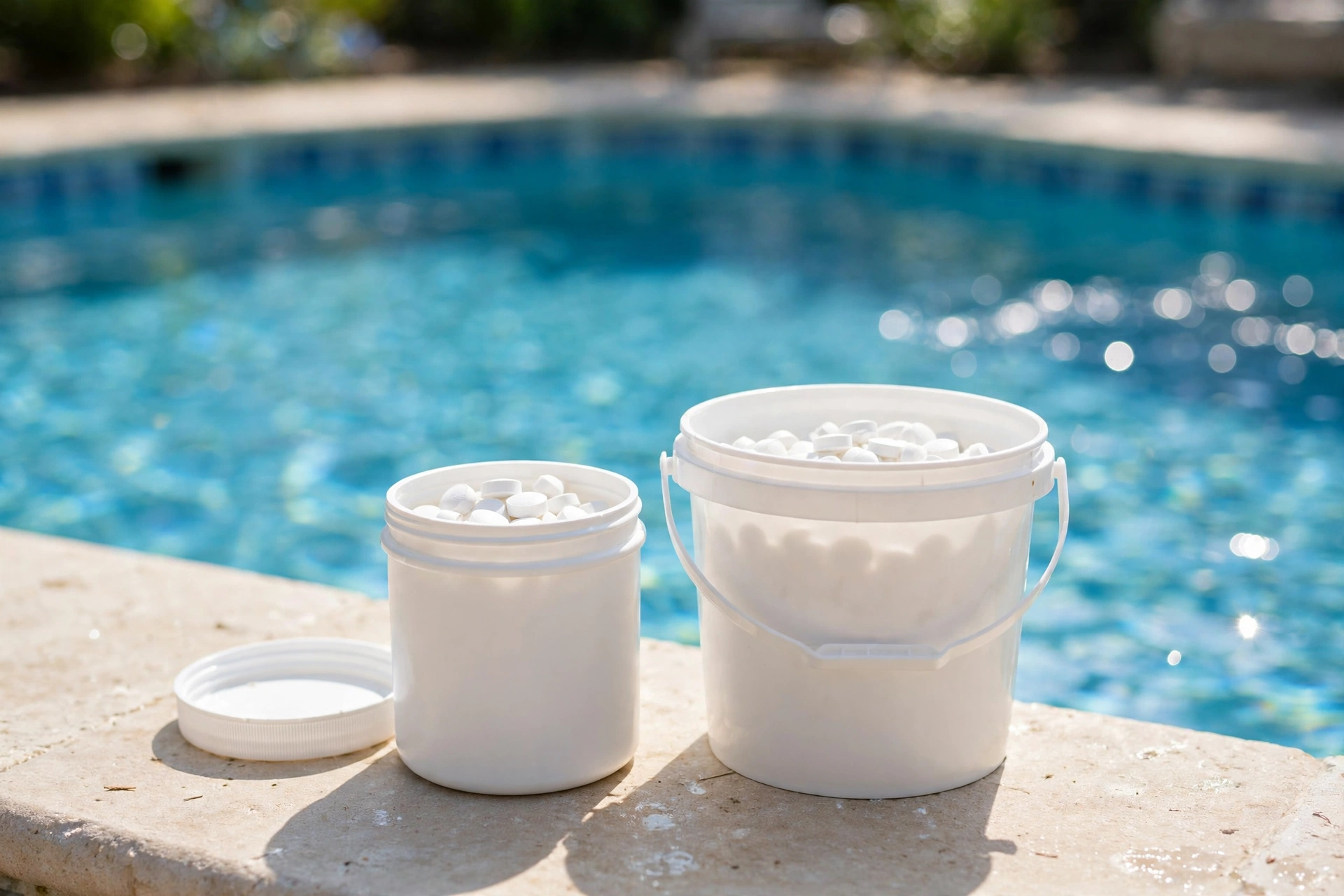
Outdoors? Chlorine, and it is not close. Bromine has no sunlight stabilizer — no equivalent of CYA — so the sun eats it alive, and it costs more per pound of sanitizing power. Bromine earns its keep indoors and in hot tubs, where UV is not in the picture and it handles hot water gracefully.
Bromine vs chlorine sounds like a fair fight until you add sunlight — then it is over in round one. I will give bromine its fair credit (it genuinely earns it indoors), but outdoor pools are chlorine territory and I am not going to pretend otherwise.
Here is the whole outdoor argument in three sentences. Chlorine has CYA, a stabilizer that shields it from UV. Bromine has nothing equivalent — nobody has invented one. So in an outdoor pool, bromine burns off so fast that holding a residual becomes expensive and annoying. That single fact decides it.
Where bromine wins: spas and indoor pools
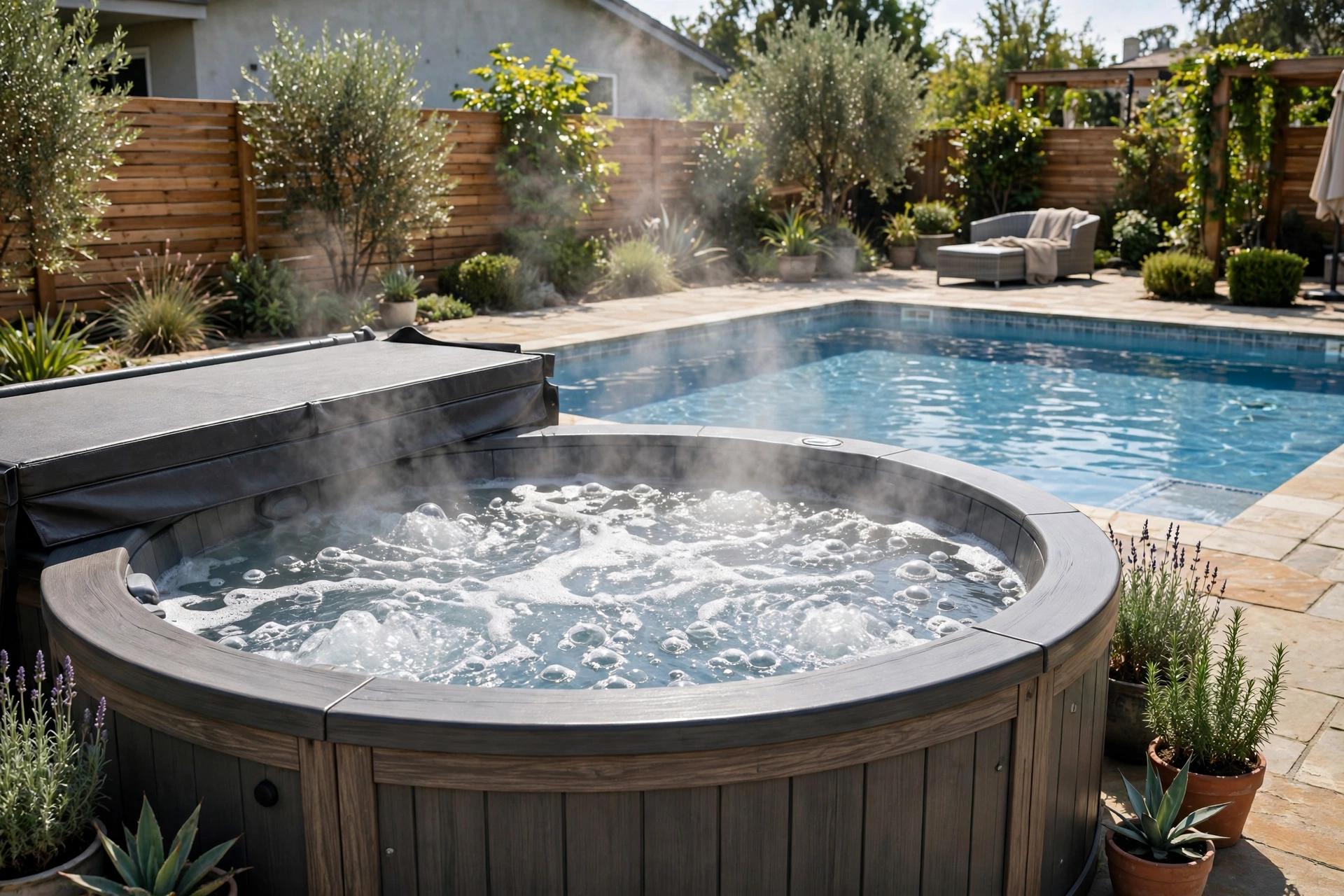
Now bromine’s home turf. Hot tubs: bromine stays stable in hot water better than chlorine and feels less harsh at spa temperatures — which is exactly why most spa programs are bromine-based. Indoor pools: no UV to fight, and bromine’s milder odor at indoor concentrations is genuinely pleasant. If your water lives under a roof, bromine is a perfectly good choice.
Cost and practical notes
Two practical notes. Bromine typically costs more per pound of sanitizing power, and you cannot manage it with the CYA-based charts every pool owner knows — different playbook. And if you search any pool forum for "switched my outdoor pool to bromine," you will find the same story arc every time: excitement, expense, switching back. I did not invent that pattern; the forums did.
Safety warning. Never mix different chlorine products together, and never mix chlorine with acid. Wear gloves and eye protection, add chemicals to water (never water to chemicals), and follow the exact instructions on your product label — the label overrides any calculator. Store chemicals dry, separate, and away from kids and pets.
Common questions
Can I use bromine in my outdoor pool?
You can, but I would not. Sunlight destroys it fast with no stabilizer available, which makes it expensive and fiddly. Chlorine is the practical outdoor sanitizer, full stop.
Can I mix bromine and chlorine?
Do not mix the dry products — ever. (A bromide bank plus chlorine shock is a deliberate spa technique, not a casual mix.) As a pool owner, pick one sanitizer and commit to it.
Is it safe to swim in a pool with bromine?
Yes — bromine is a registered sanitizer and the standard choice for hot tubs. At proper levels it's as safe as chlorine; it just costs more and breaks down fast in sunlight, which is why it's rare in outdoor pools.
Is bromine or chlorine better for a pool?
For outdoor pools, chlorine — bromine burns off too fast in UV to be practical or affordable. For indoor pools and hot tubs, bromine has real advantages: it stays effective at higher pH and smells less. Match the sanitizer to the setting.
Is bromine more toxic than chlorine?
Not in any way that matters at pool levels. Both are oxidizers that must be dosed correctly — too much of either irritates eyes and skin. Plenty of swimmers actually find bromine gentler, with less of that harsh 'pool smell.'
Last reviewed: September 29, 2026. Dosing figures are estimates from standard pool-industry ratios — always confirm against your product label and a reliable test kit.