Pool Losing Water? Leak vs Evaporation and the Bucket Test
Most pools lose roughly a quarter to half inch of water a day to evaporation — hot, dry, windy weather pushes it higher. If you are consistently losing more than that, run the bucket test: it takes 24 hours and tells you definitively whether water is escaping somewhere it should not. Do the test before you call anyone or buy anything.
Few things spike a pool owner’s blood pressure like a dropping waterline. Is it a leak? Is the pool about to cost me thousands? Take a breath — most of the time it is just the sun doing what the sun does.
I always start here because the answer is usually boring and cheap. Let’s measure first, panic never.
What normal evaporation looks like
A typical residential pool loses about a quarter to half inch per day to evaporation. Hot, dry, windy days can push past an inch — desert and plains owners know this rhythm well. Anything inside that range, steady day after day, is almost always normal.
What is NOT normal: losing an inch or more daily in mild weather, the waterline dropping faster some days for no weather reason, or wet spots appearing around the equipment pad. Those patterns point at a leak, and that is when you test instead of guessing.
The bucket test, step by step
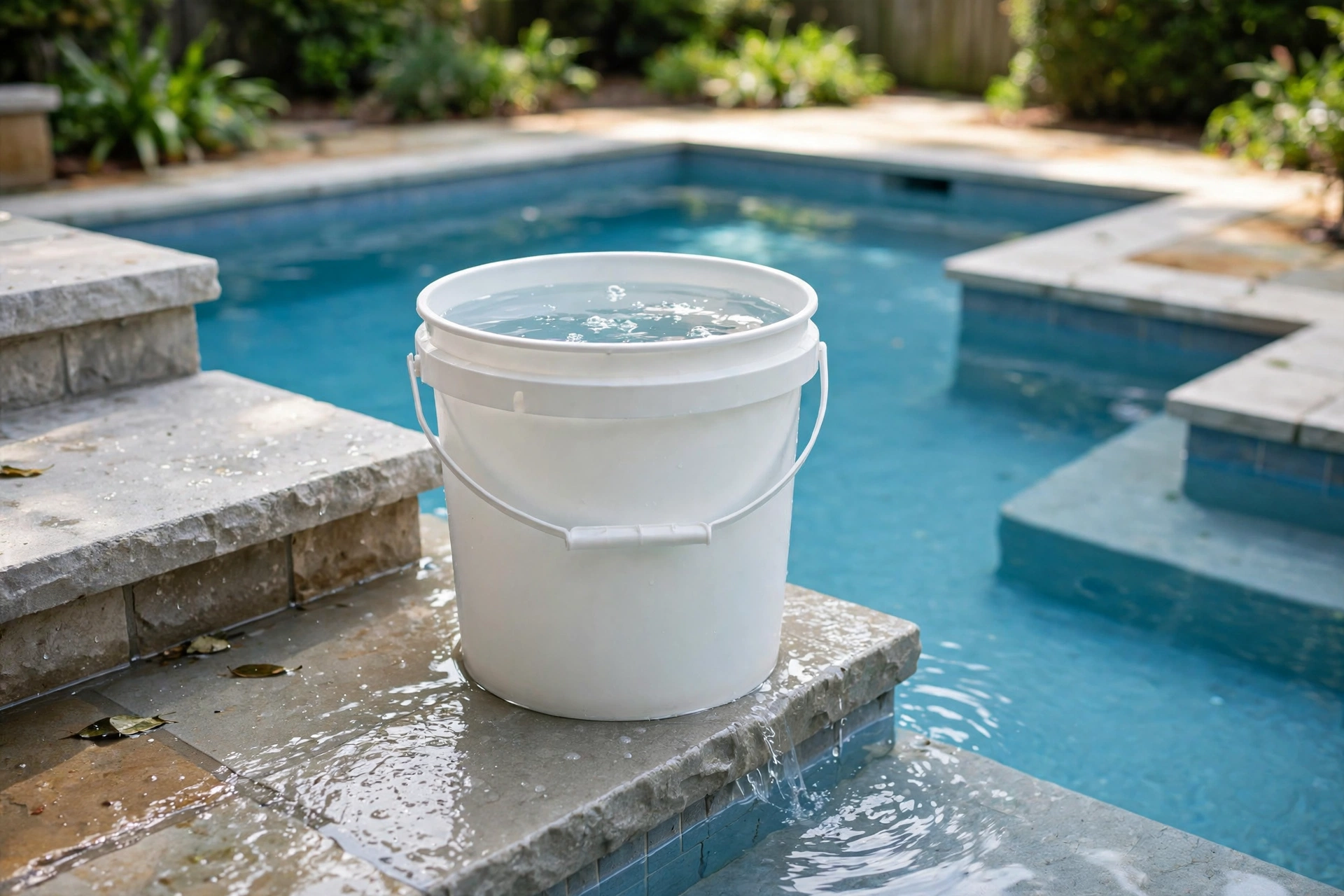
Fill a bucket about three-quarters with pool water and set it on a pool step so it sits in the pool water, rim above the surface. Mark the water level inside the bucket and the pool’s waterline on the outside (tape works). Run the pump as normal for 24 hours.
Then compare. If the pool and the bucket dropped by the same amount, that is evaporation — the bucket only loses water to the air, so equal loss means the pool did too. If the pool dropped noticeably MORE than the bucket, water is leaving through something other than the air: you have a leak. A repeat test with the pump off for 24 hours narrows it further — if the loss slows with the pump off, the leak is usually in the pressurized plumbing, not the shell.

If it is a leak: where to look first
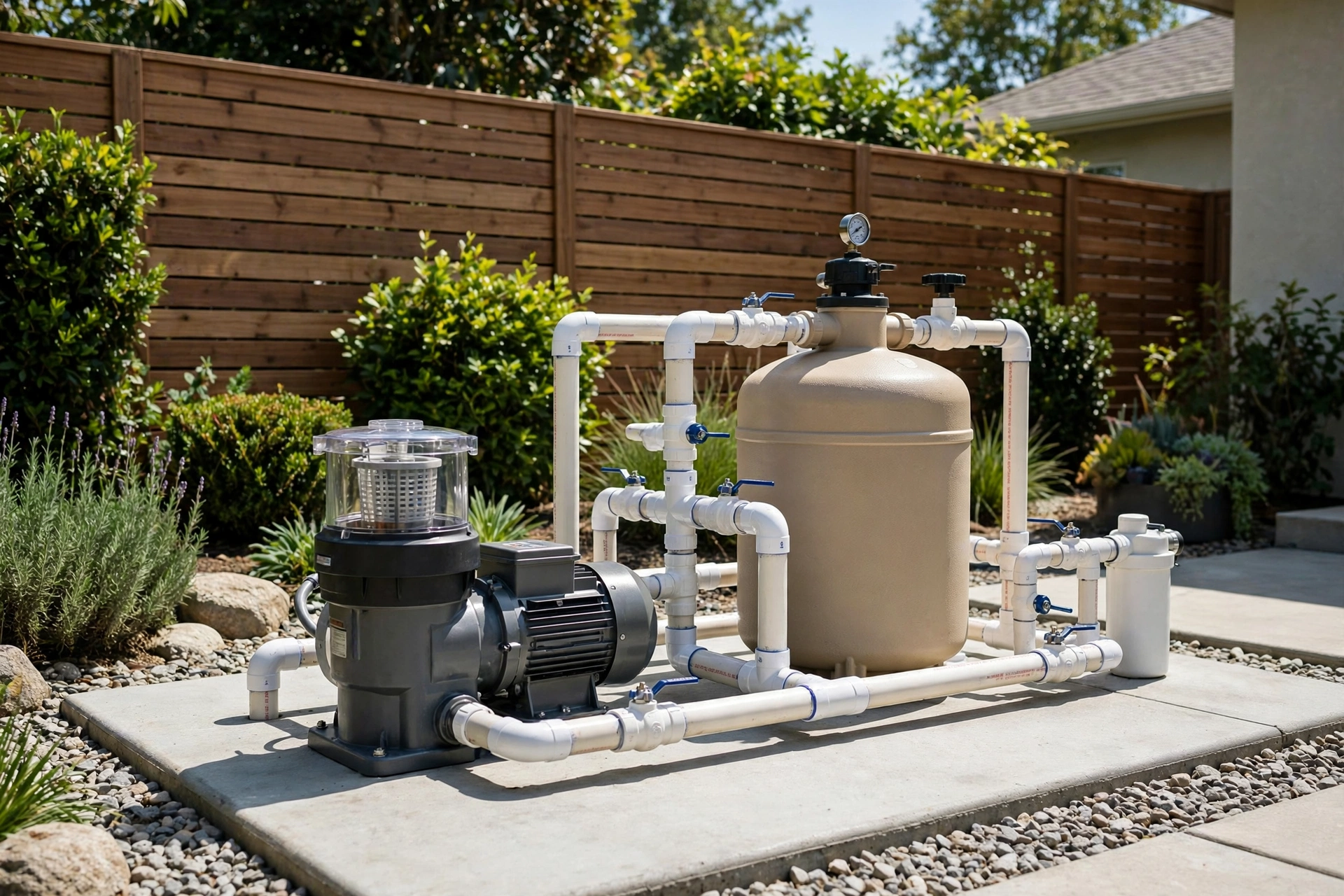
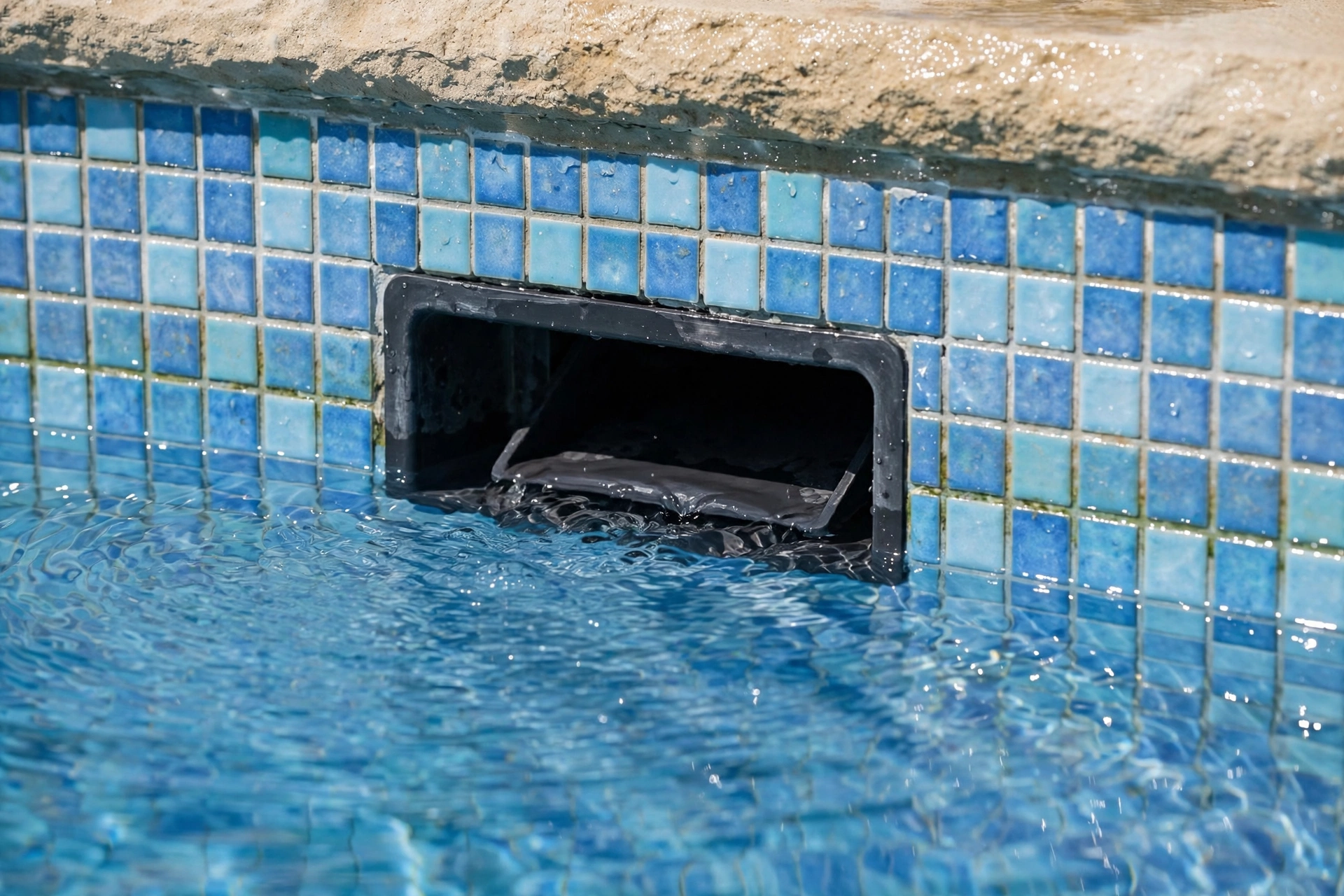
Check the cheap suspects before the expensive ones: the skimmer throat and mouth (gaps in the sealant are classic), return fittings, the pump lid o-ring and drain plugs (look for drips with the pump running), and the backwash line (a multiport valve stuck slightly open silently sends water to waste).
Dye testing around fittings — a tiny squirt of dye near a suspect spot while the pump is off, watching whether it gets sucked in — finds most structural leaks without any digging. There are good walkthroughs of this on the pool forums if you want the full technique.
When to call a professional
Call a leak-detection pro if the bucket test says leak and you cannot find it in an afternoon of checking, if the loss is over an inch a day, or if you suspect underground plumbing. Pros use pressure testing and acoustic gear that finds in an hour what takes homeowners a week.
One thing I would not do: keep the pool running low while you "think about it." Low water starves the skimmer, the pump sucks air, and a $200 service call turns into a $600 pump repair. Keep it topped to mid-skimmer while you diagnose.