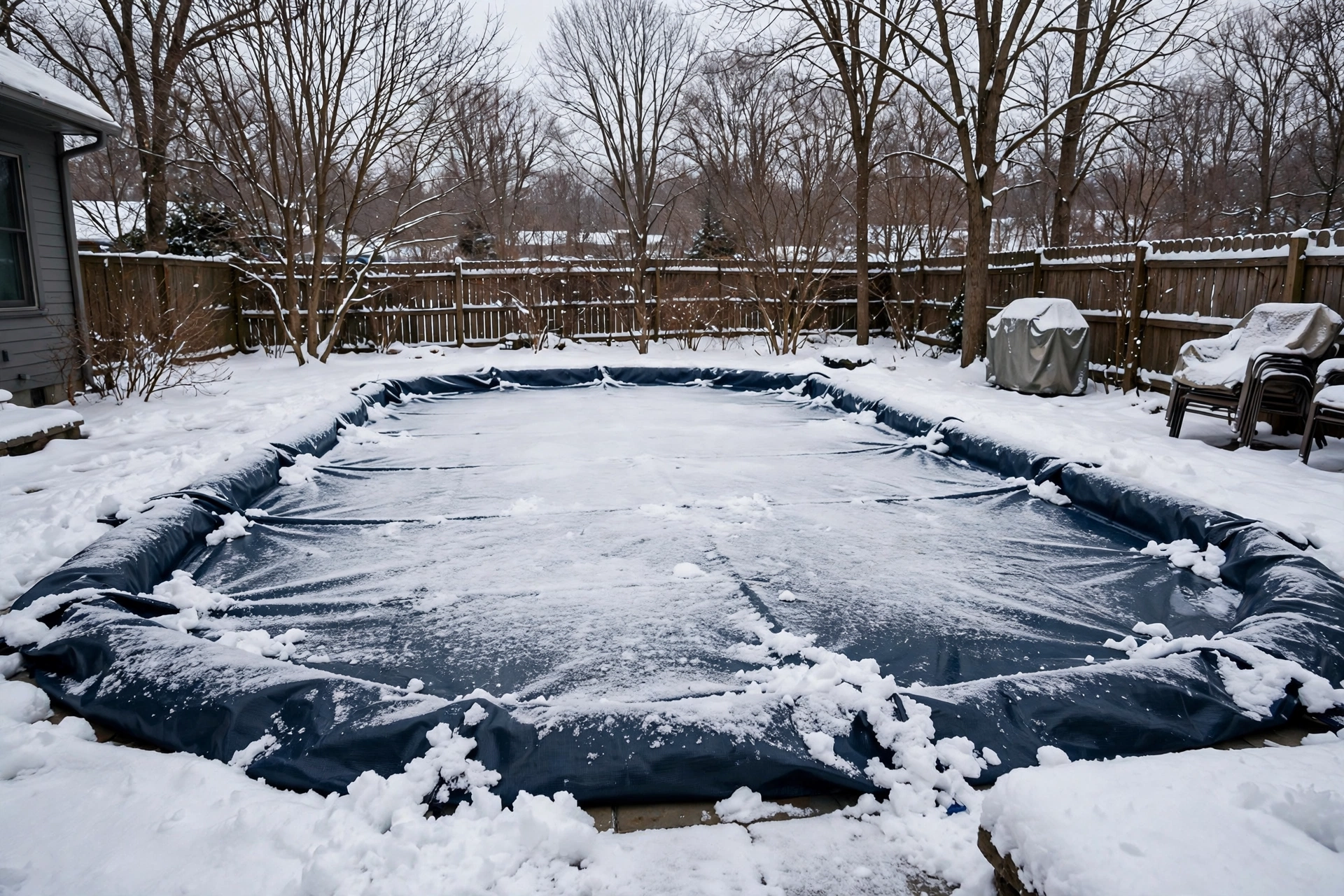
How to Winterize a Pool: a Closing Checklist That Works
Winterizing is: balance the water, clean thoroughly, lower the water below the skimmer, blow out and plug the lines, add antifreeze where needed, and cover it. The whole job exists for one reason — so you open in spring to clear water instead of a swamp. An hour of careful closing saves a week of spring SLAMming.
Here is the trade nobody tells new pool owners: spring-you is entirely at the mercy of fall-you. Close the pool clean and balanced, and April is a calm weekend. Close it dirty because you were tired, and April is a green swamp and a chemistry bill.
I winterize with one goal: make spring boring. This is the order that does it.
A week before closing: get the water right
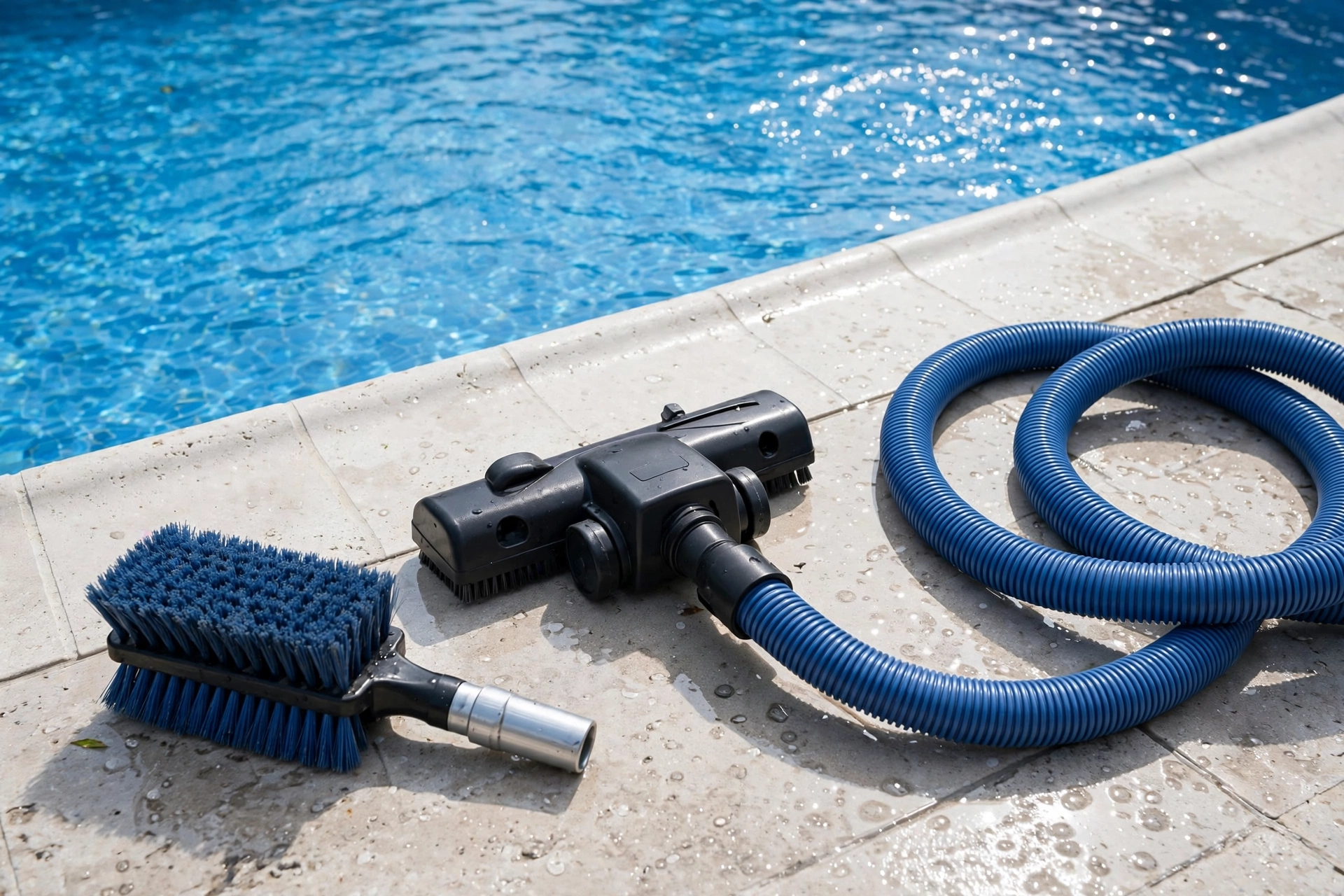
Do not close a dirty pool — you are just refrigerating the problem. A week out, balance everything to the middle of its range, shock to clear any lingering organics, brush the walls, and vacuum. The water going under the cover should be clear and balanced.
This is also when I do a preventive dose of polyquat algaecide — one of the few times I genuinely recommend it. It sits under the cover all winter discouraging growth while you are not watching.
Closing day: the sequence
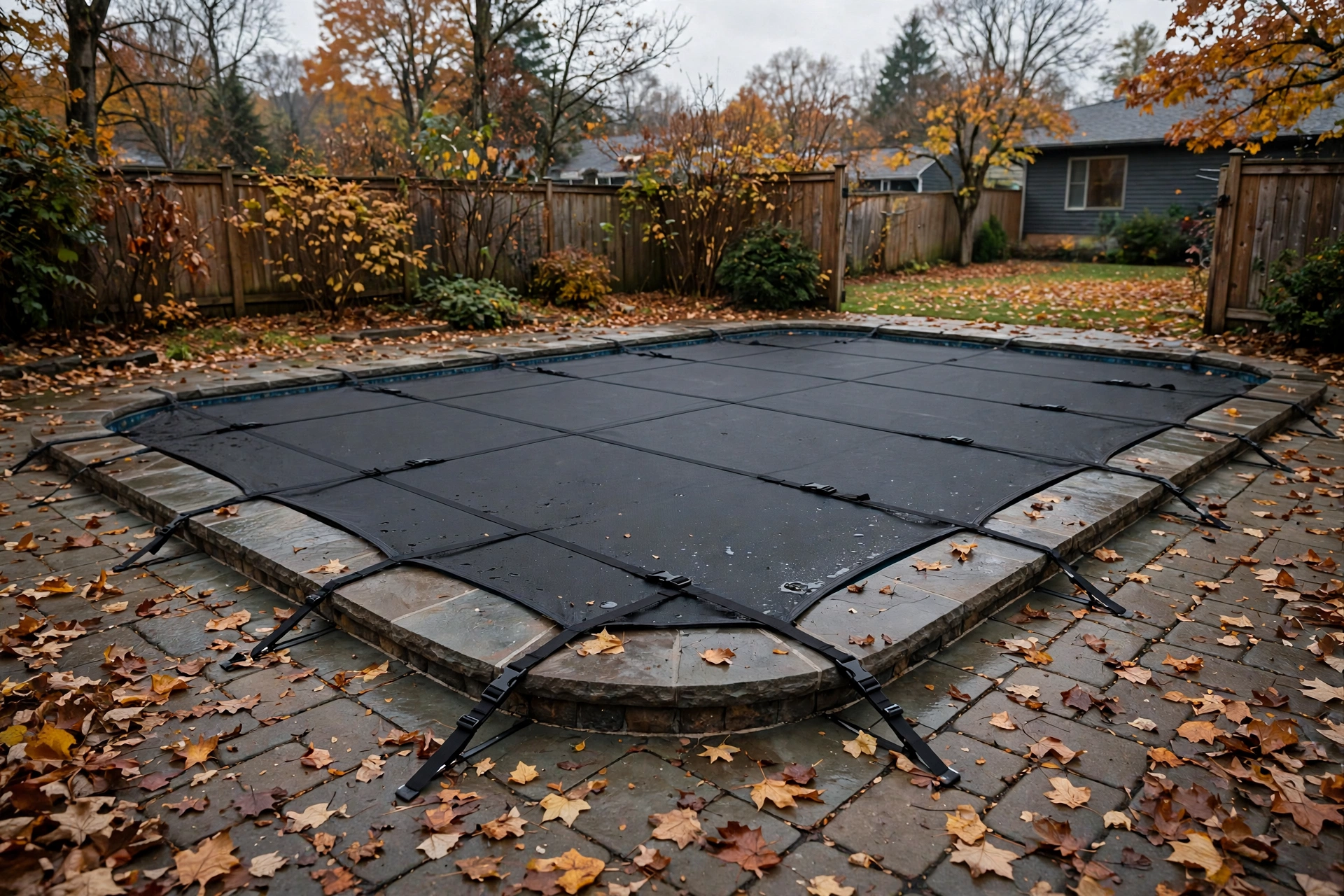
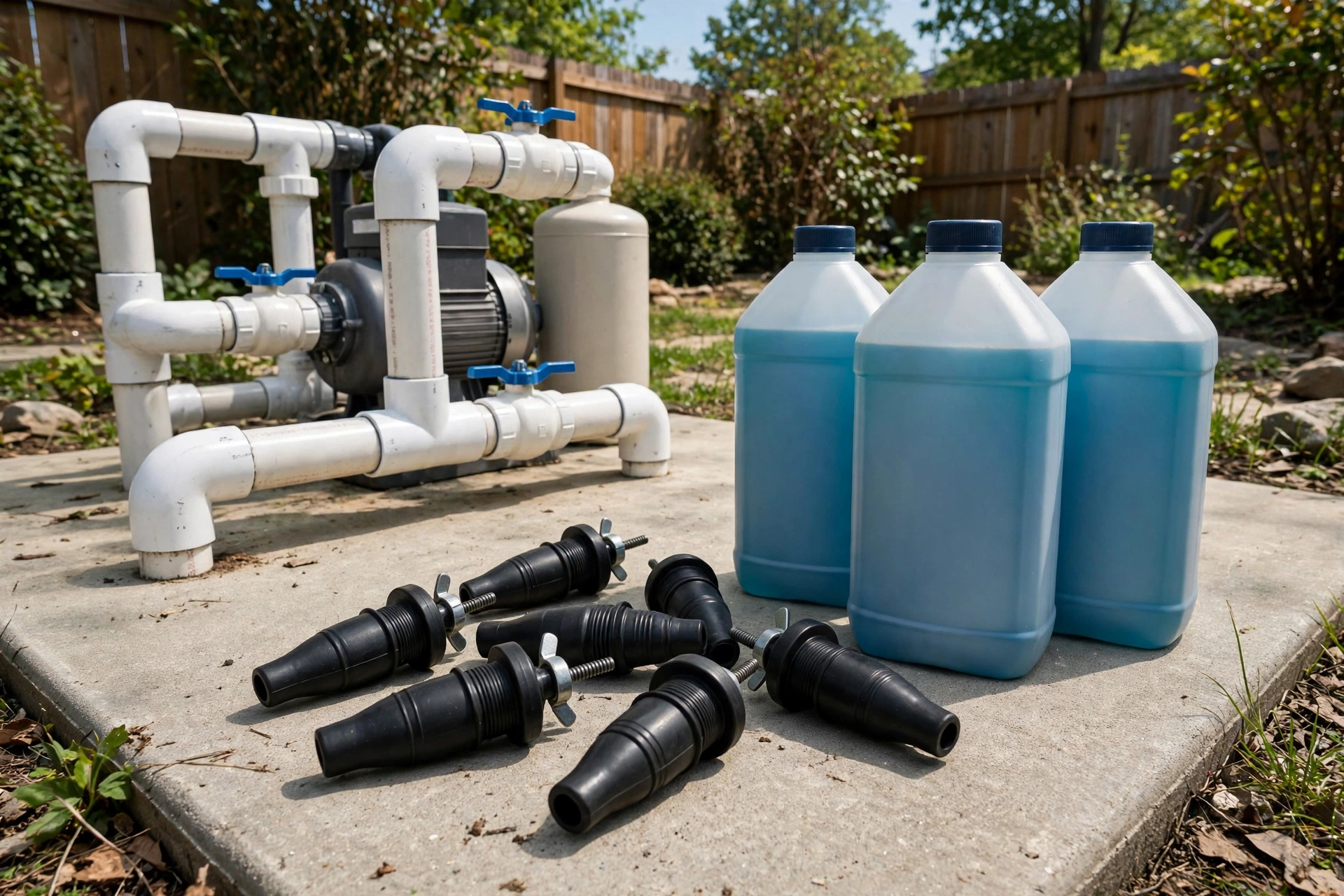
Clean and remove ladders, rails, and baskets. Lower the water to just below the skimmer mouth (mesh covers) or a few inches lower for solid covers — check your cover’s instructions. Blow out the lines with a shop vac or compressor until only air and mist come out, then plug the returns and skimmer with winter plugs.
Drain the pump, filter, and heater per their manuals — every manufacturer has a slightly different drain-plug map, and cracked equipment from freeze expansion is the most expensive closing mistake there is. Pool antifreeze goes in the lines (never automotive antifreeze — it is toxic), then the cover goes on, tight and centered.
What not to do
Do not drain the pool fully "to be safe." An empty pool in winter can pop out of the ground in high water tables or crack plaster as it shifts — the water is structural. Do not toss in extra shock "for the winter" and walk away; undissolved shock sitting on a liner all winter bleaches it.
And do not skip the cover pump or maintenance. A cover full of water all winter sags, dumps foul water in at opening, and in a hard freeze becomes an ice block sitting on your cover seams.
Mid-winter: the five-minute checks
Twice over winter, peek under the cover edge: water still clear-ish? Cover still tight? Pump any standing water off the cover. That is the whole job. If you closed clean, there is nothing to fix mid-winter — resist the urge to "add a little chlorine" through the cover without circulating it.
Come spring, you will reverse this with the opening sequence — and if fall-you did the work, spring-you gets the easy version.