Pool Algaecide: When It Helps and When It Is a Waste of Money
Algaecide is a preventive, not a cure: it helps stop algae from getting started, but it will not clear a green pool — only chlorine at shock level does that. I use algaecide in three situations: at spring opening, at winter closing, and as backup during the weeks I cannot test often. If your pool is already green, put the bottle down and shock first.
Walk into any pool store with a green pool and you will walk out with algaecide. I am not saying the product is useless — I am saying it gets sold for the wrong job constantly. Algaecide is a seatbelt, not an ambulance.
Here is how I think about it: chlorine kills, algaecide discourages. Once you truly understand that split, every algaecide decision gets easy — including the decision not to buy it.
What algaecide can and cannot do
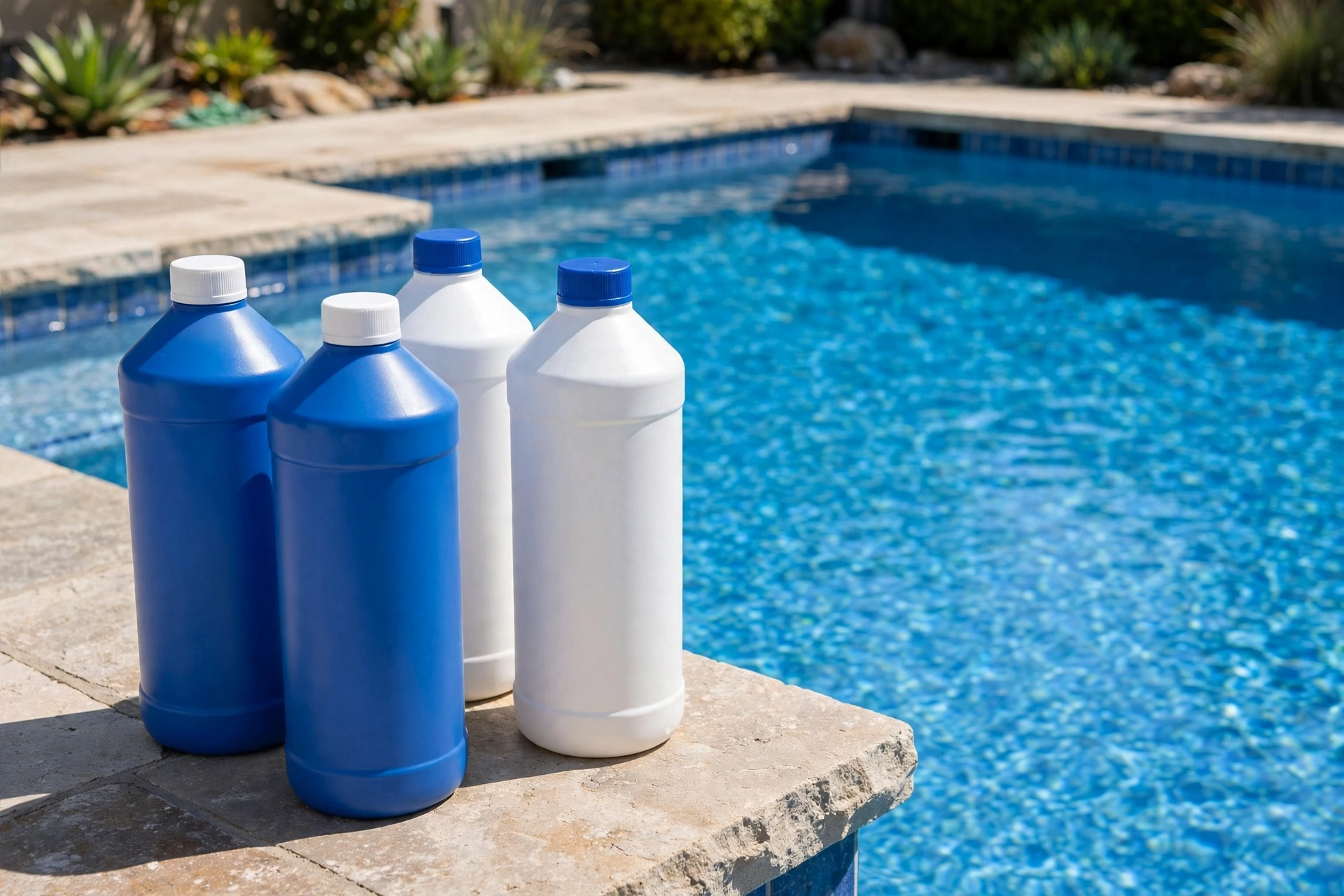
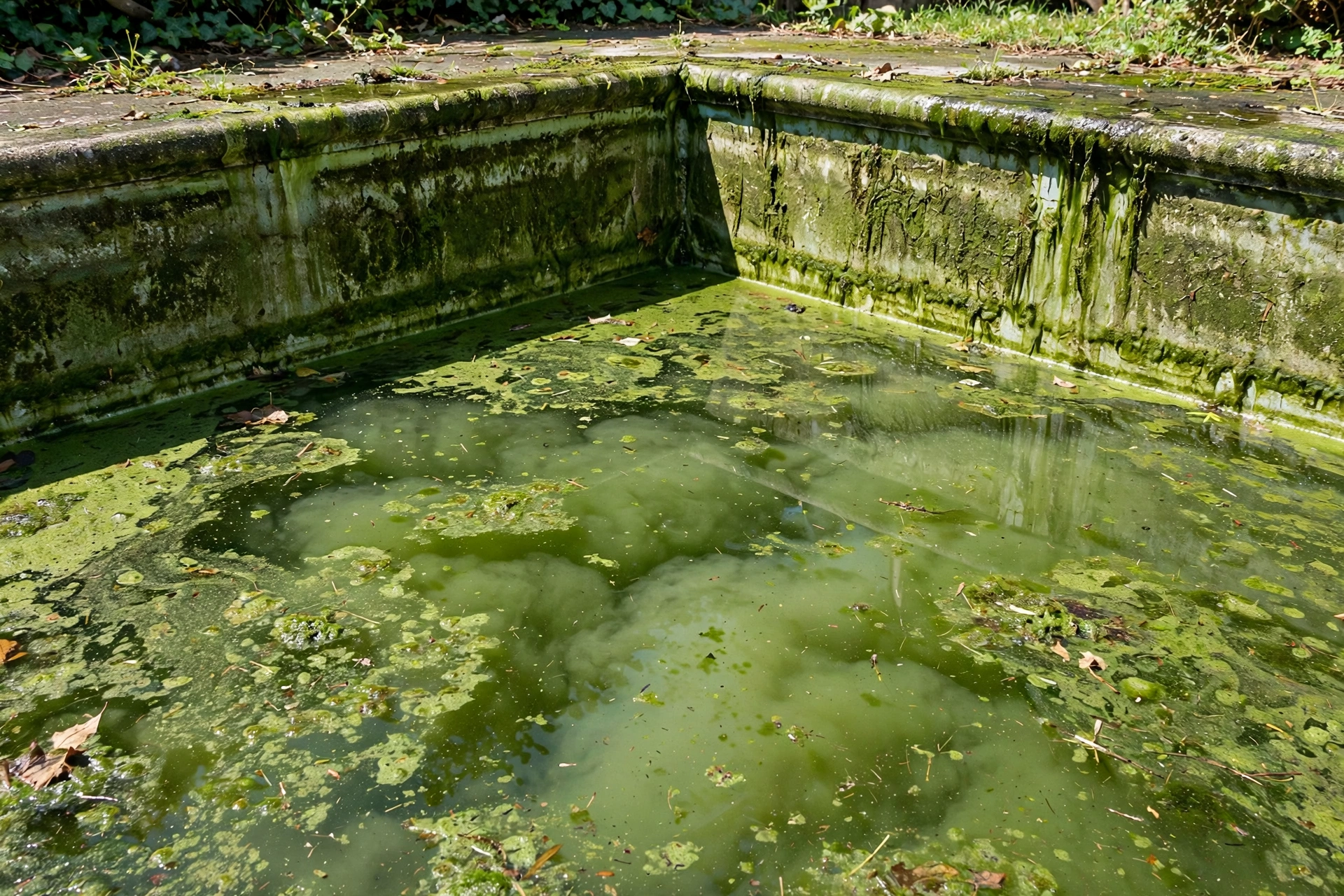
Algaecide makes the water inhospitable to new algae growth. It does not oxidize and destroy an existing bloom the way chlorine does. Pouring algaecide into a green pool is like spraying weed preventer on a lawn that is already waist-high — technically related to the problem, practically useless.
This is the mistake I see in forum threads every spring: someone dumps two bottles of algaecide into green water, waits three days, and concludes "algaecide does not work." It was never going to work for that. The green pool fix is chlorine, brushing, and filtration — algaecide enters the story after the water is clear, if at all.
The three types, honestly ranked
Quat algaecides are the cheap ones — and they foam. If you have ever seen a spa turn into a bubble bath, quat was usually involved. I do not recommend them for pools you actually swim in.
Polyquat (polyquaternium) is the one I reach for when I reach for one at all. Effective against green algae as a preventive, no foaming, no metals. It costs more than quat, and it is worth it.
Copper and silver "mineral" algaecides work, but they add metals to your water — and metals are what cause the blue-green staining people write to me about. If you go this route, keep the dose conservative and test for metals occasionally. Blonde hair turning green is the classic tell.
The three times I actually use it
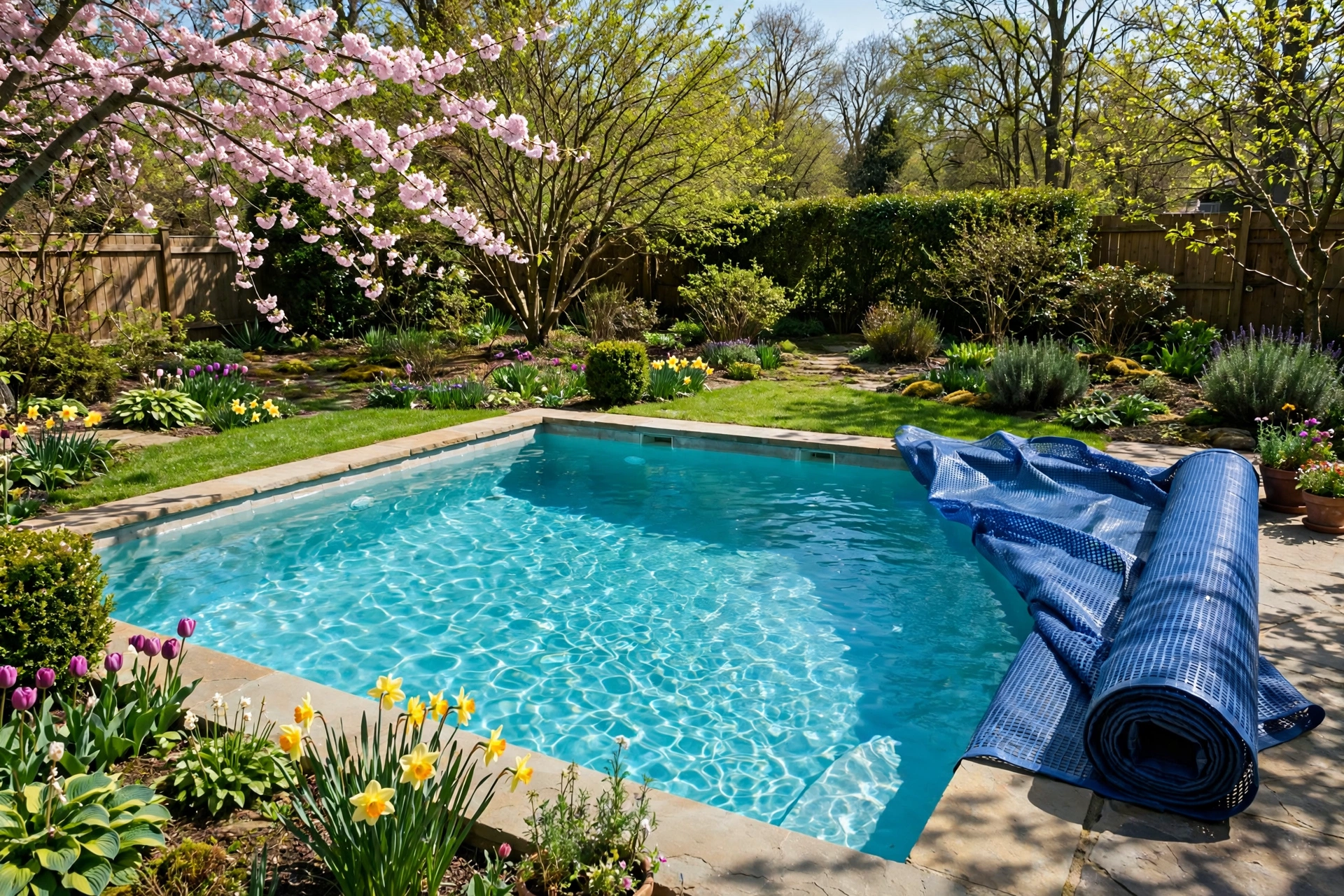
One: spring opening, after the water is balanced and clear — a preventive dose while the system wakes up. Two: winter closing, as part of the closing routine, so you do not open to a swamp. Three: the weeks I know testing will slip — vacation, busy stretches — as a safety net under normal chlorination, never instead of it.
Notice what is not on the list: "my pool is green," "my chlorine is zero," "the store said." If chlorine is absent, algaecide is a garnish on a missing meal.
How to use it without side effects
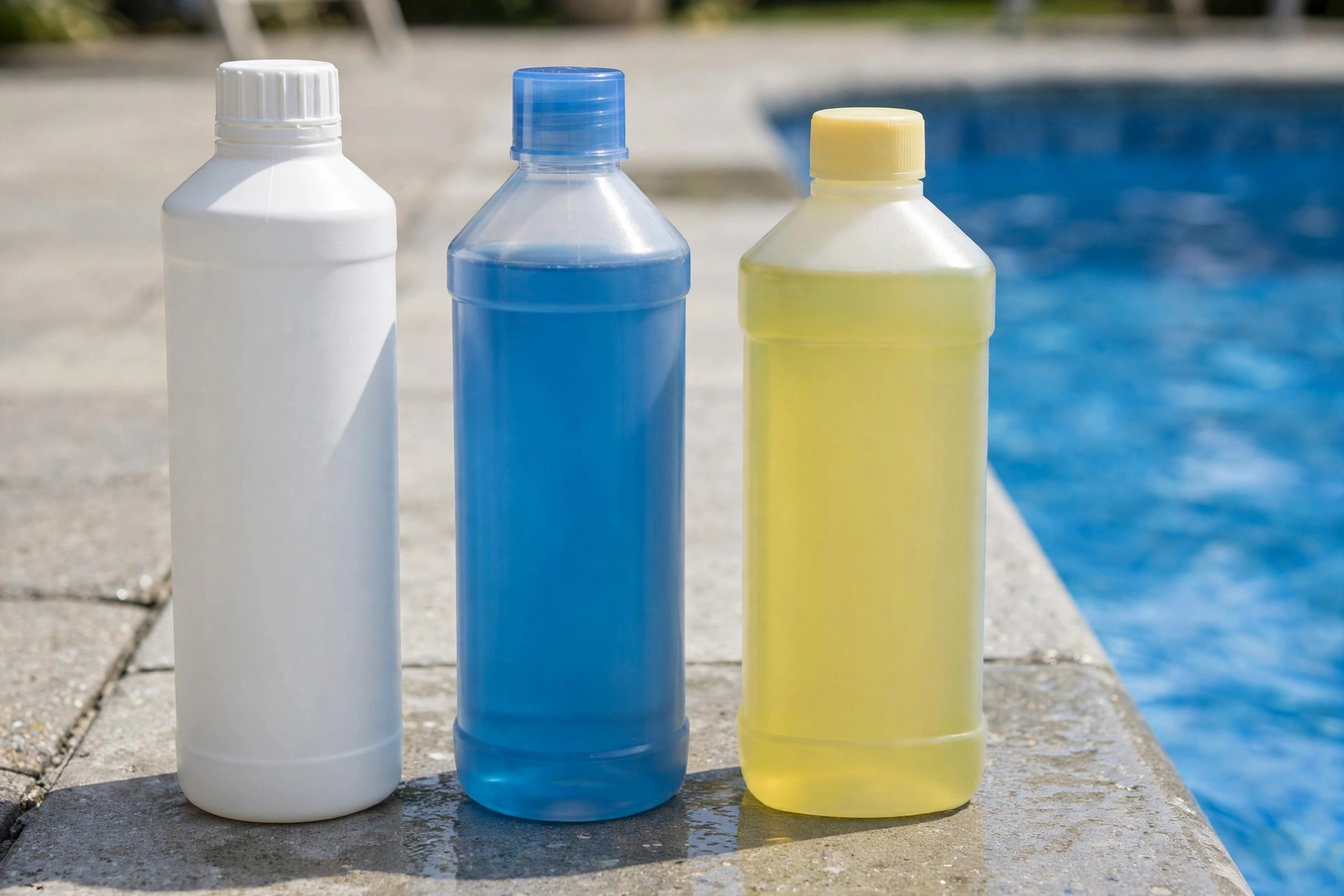
Dose exactly per the label — algaecide is one of those products where "a little extra for good luck" buys you foam or metal stains. Add it with the pump running, in the evening, and never in the same hour as shock; give chlorine its moment first, then the preventive a day later.
And the safety basics apply like any pool chemical: gloves, eye protection, chemicals kept dry and separate, and the product label as the final authority over anything you read here.