How to Lower Chlorine in Pool: 5 Safe Methods
I get this question after heavy shocks and dosing mistakes, so here is the honest menu: waiting works (sunlight burns roughly 2–4 ppm a day off an uncovered pool), swimming it down works for mild overshoots, and a partial drain works fastest. Sodium thiosulfate or hydrogen peroxide neutralize chlorine in hours — but they demand exact dosing. Overdo the thiosulfate and you will drive chlorine to zero and hand bacteria a food source.
You over-chlorinated — a heavy shock, a misread scoop, or the pool store telling you to "just add another bag" — and now FC is sitting at 12 while the kids are asking to swim. I will be straight with you: bringing chlorine down is the easy part. The skill is picking the method that fits your timeline without creating a second problem.
My one hard rule: nobody swims until FC is back in normal range (under ~5 ppm for most pools). Everything below is just different routes to that number.
Method 1: sunlight and time (easiest)
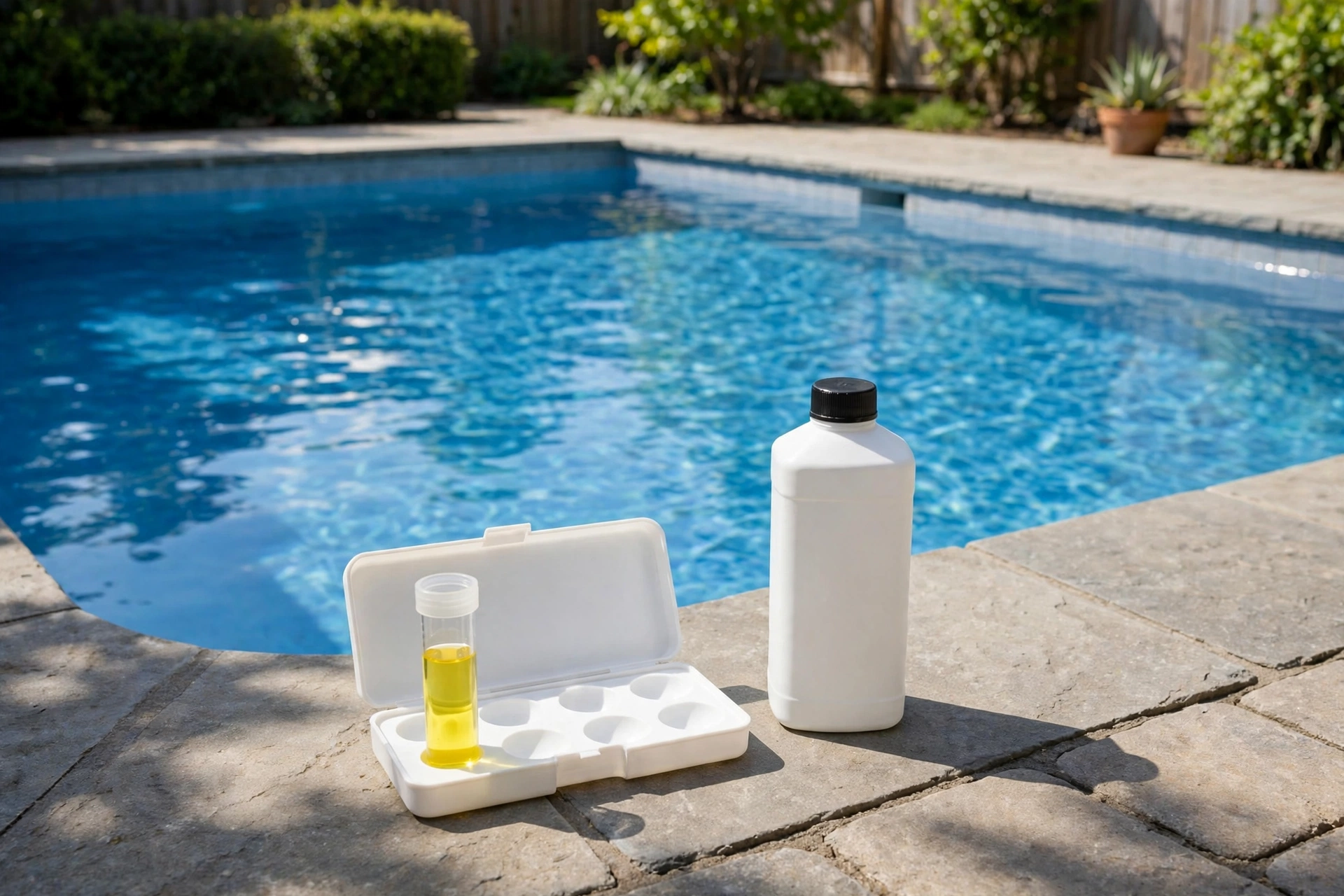
Uncover the pool and let the sun do the work. An uncovered pool in full sun loses roughly 2–4 ppm of FC a day (faster when CYA is low), so run the pump to keep it circulating. Going from 12 ppm to 4 takes about 2–4 sunny days. It is free, it is foolproof, and it is the slowest option on this list — which is fine when nobody is in a hurry.
Method 2: swim it down / heavy use
Bodies burn chlorine — a busy swim session can pull FC down noticeably. But treat this as a finisher, not a shortcut: only once FC has already drifted back near normal range (around 5 ppm). Never swim through high chlorine to "burn it off faster" — at very high FC, stay out and pick another method from this list.
Method 3: partial drain and refill
Drain about 25% and refill with fresh water and FC drops by roughly 25% immediately — along with CYA and everything else in the water. I reach for this one when chlorine is extremely high (20+) or when high FC comes with high CYA, since it fixes both. One caveat: check your local water restrictions before you start draining.
Method 4: sodium thiosulfate (neutralizer)
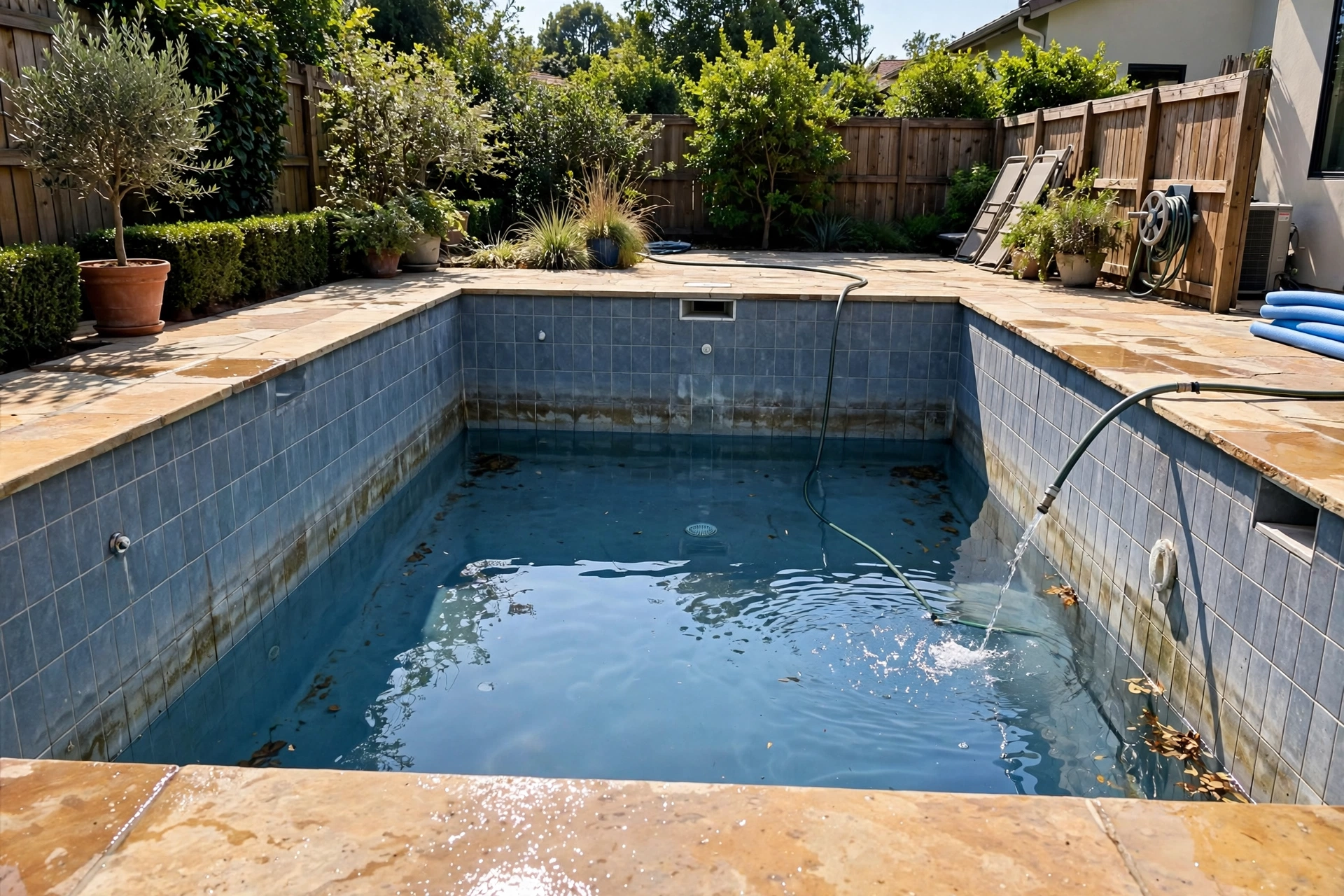
This is the pool-store "chlorine neutralizer," and it genuinely works in hours. But dose it like it matters, because it does: roughly 2.5 oz of sodium thiosulfate per 10,000 gallons per 1 ppm of FC you want gone — and check your product label, because strengths vary. Add half your calculated dose, retest in an hour. I say half because this is the method people wreck through impatience: an overdose drives FC straight to zero, and the leftover thiosulfate becomes food for bacteria. Slow and measured beats fast and sorry.
Method 5: hydrogen peroxide
Plain 3% hydrogen peroxide neutralizes chlorine too — roughly a pint per 10,000 gallons per ppm, though that is approximate, so test after. The upside versus thiosulfate: it leaves no residue that feeds bacteria. The downside: it gets consumed fast and you will need to retest. And do not get creative with "food grade" high-concentration peroxide — that stuff is dangerous to handle and has no business near a casual pool fix.
What NOT to do
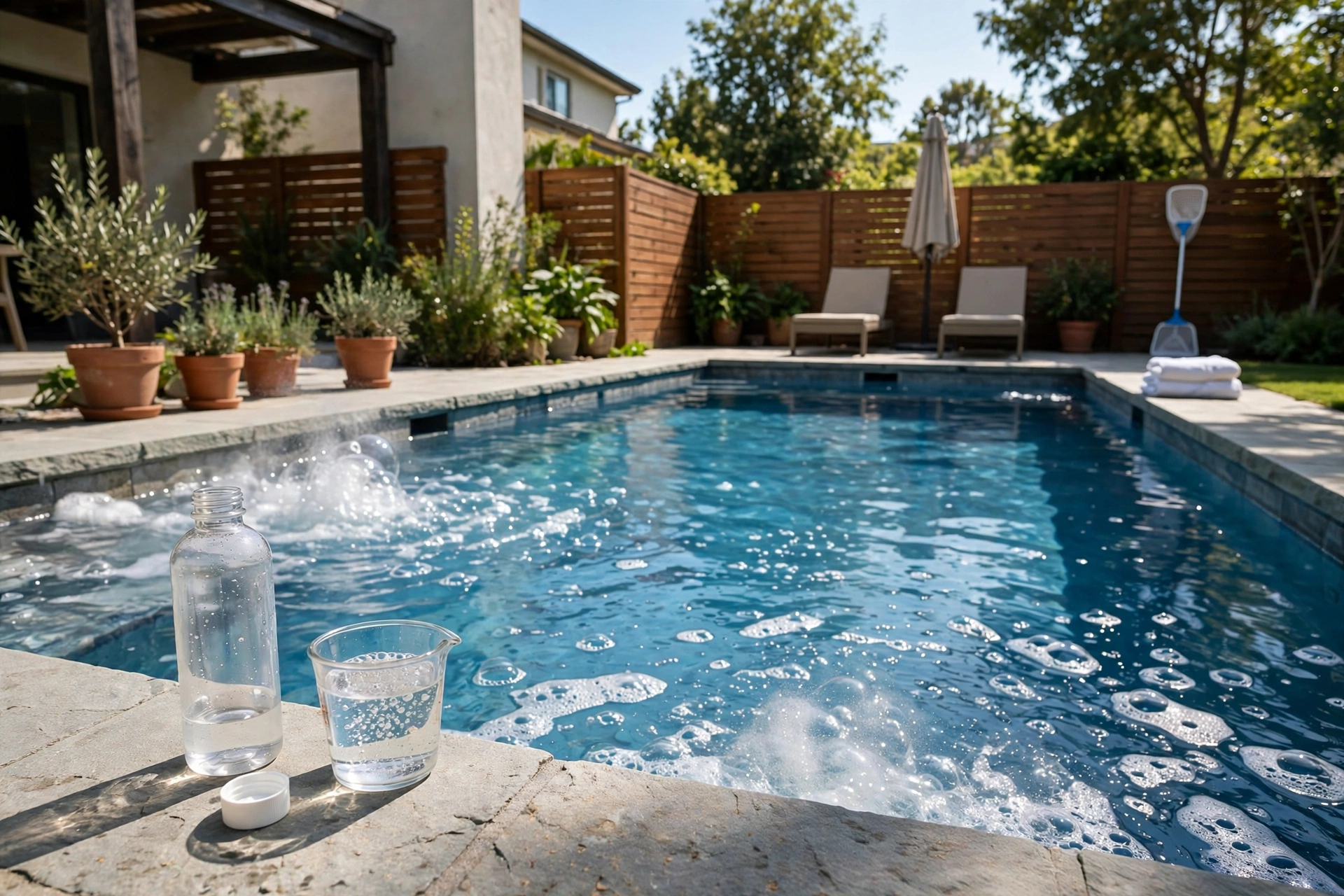
Do not toss more chemicals at it hoping things "balance out" — that is how a chlorine problem becomes a chemistry soup. Do not swim at shock-level FC and hope it is fine; it is not. And never mix neutralizer products directly with chlorine — dose one thing at a time into circulating pool water.
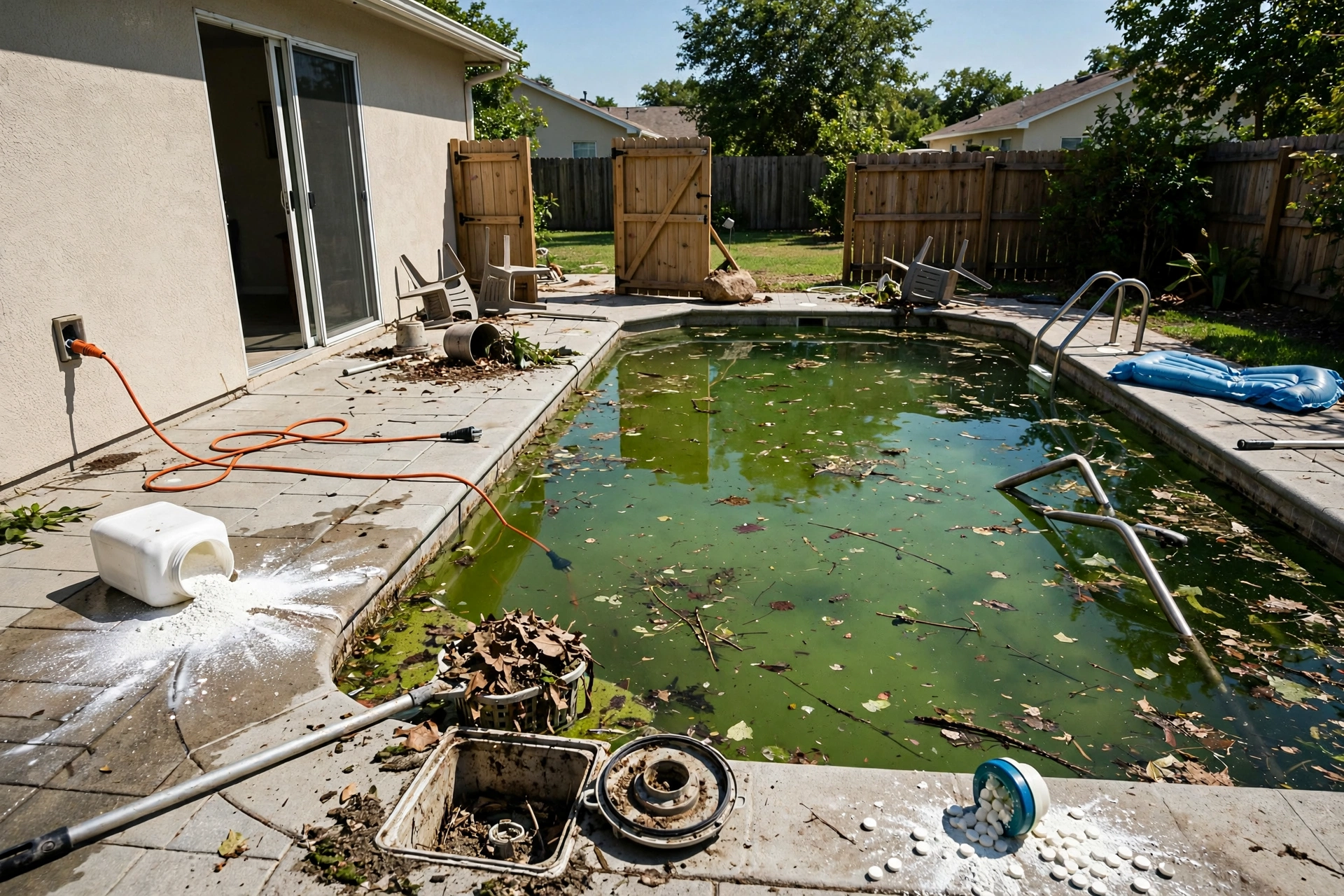
- Sunlight: ~2–4 ppm/day loss uncovered.
- Thiosulfate: ~2.5 oz/10k gal per 1 ppm (check label).
- Swim only when FC is back under ~5 ppm.
- Neutralizer overdose → FC zero + bacterial food. Half-dose + retest.