Learn Pool Chemistry: The Full Course, Free
I sequenced the whole site into a course — here is the path. 1) basics — the six numbers. 2) CYA — the master relationship. 3) TA vs pH — the golden order. 4) testing — get a real kit. 5) SLAM — the rescue method. 6) maintenance — the routine.
Pool chemistry is six numbers, one master relationship, and one golden order. You can learn it in an afternoon — and it will pay you back for years. I laid this page out as a course, so go in order: each page assumes you have read the previous one.
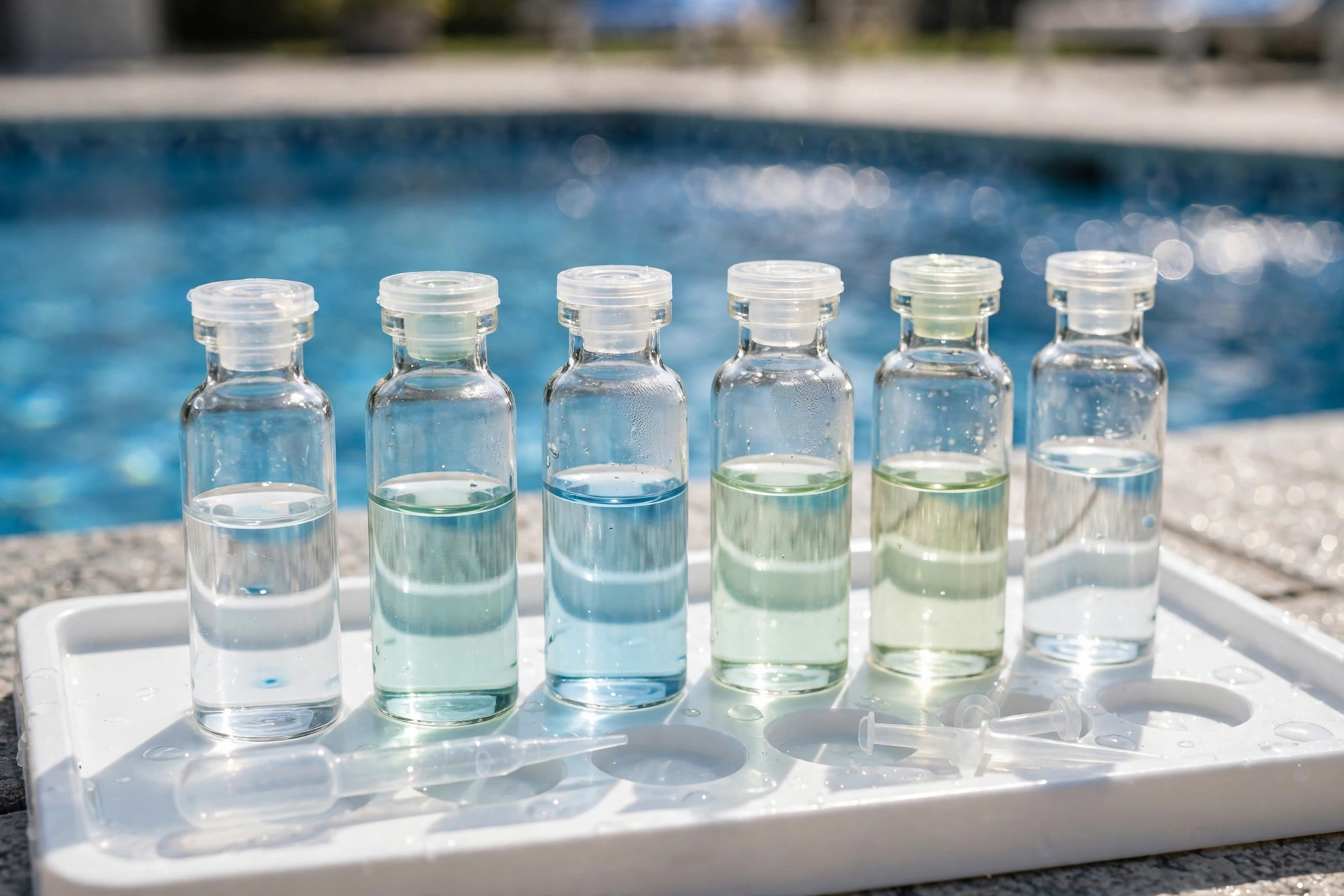
Level 1: Foundations
The vocabulary and the targets — bookmark the chart. Pool water chemistry basics — the six numbers and the myths to unlearn. Ideal chemical levels — the target chart to bookmark. Pool volume — know your gallons before dosing anything.
Level 2: The core relationships
This is where it gets interesting — how the numbers push each other around. What CYA is — the master relationship. FC vs TC vs CC — reading your test right. Alkalinity vs pH — what to fix first. Liquid vs tablets — the CYA trap.
Level 3: Skills
Time to get your hands wet — the actual moves. Testing properly — the K-2006. Lowering pH, raising pH, lowering TA, raising TA — the four adjustments. Dosing chlorine and dosing anything.
Level 4: Rescue & routine
For when things go wrong — and for keeping them from going wrong. The SLAM method — curing green pools. Green pool recovery, cloudy water diagnosis. The maintenance schedule — staying boring forever.
Level 5: Saltwater & comparisons
The electives, once the core is solid. Saltwater systems and the saltwater hub. The calculator index. Every symptom guide for reference.