Pool Salinity: What It Is and How to Test It
Salinity is the salt concentration in your pool water, measured in ppm. Most salt chlorine generators want 3000–3500 ppm — enough for the cell to make chlorine, not enough to taste very salty (the ocean is ~35,000 ppm). Test it with a salt test strip or digital meter, and adjust with the salt calculator.
Every salt pool owner eventually stares at a "low salt" or "high salt" light and wonders what the number even means. Here is the plain version: salinity is just how much salt is dissolved in your pool, and your salt cell is picky about it. Too little and it cannot make enough chlorine; too much and some systems shut down to protect the cell.
The good news: salinity barely moves on its own. Once you dial it in, it mostly stays put — unlike chlorine and pH, which need weekly attention. This page covers what the number means, how to test it right, and what to do when it is off.
What salinity actually measures
Salinity = total dissolved salt (sodium chloride) in ppm. Your salt chlorine generator splits that salt into chlorine through electrolysis — no salt, no chlorine. The 3000–3500 ppm target is not random: it is the concentration where most residential cells produce their rated chlorine output without working overtime.
For perspective, that is about one-tenth the saltiness of seawater. Most swimmers cannot taste it at all, though very sensitive people notice a slight softness to the water. If your pool tastes noticeably salty, you are probably well above range.
How to test salinity correctly
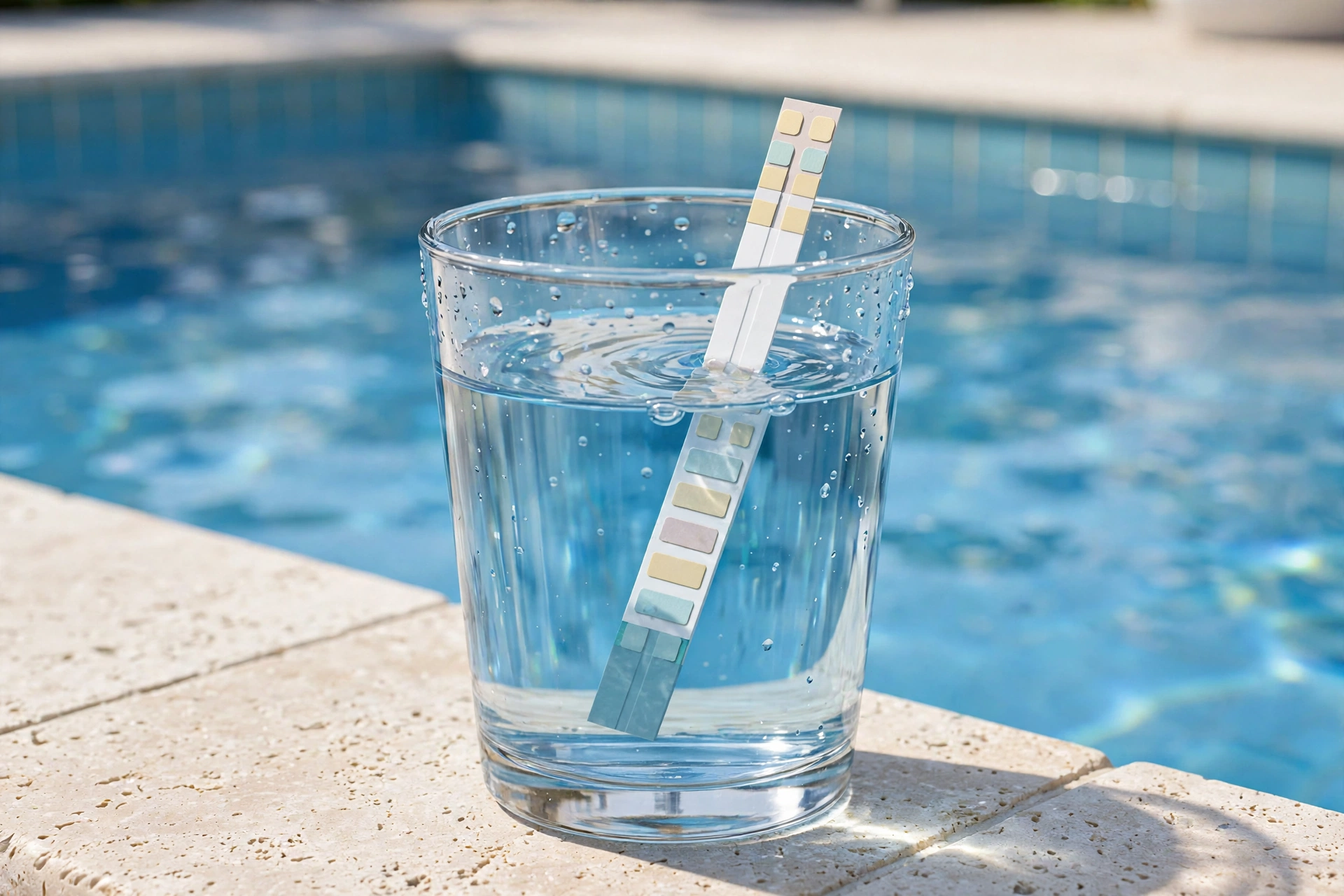
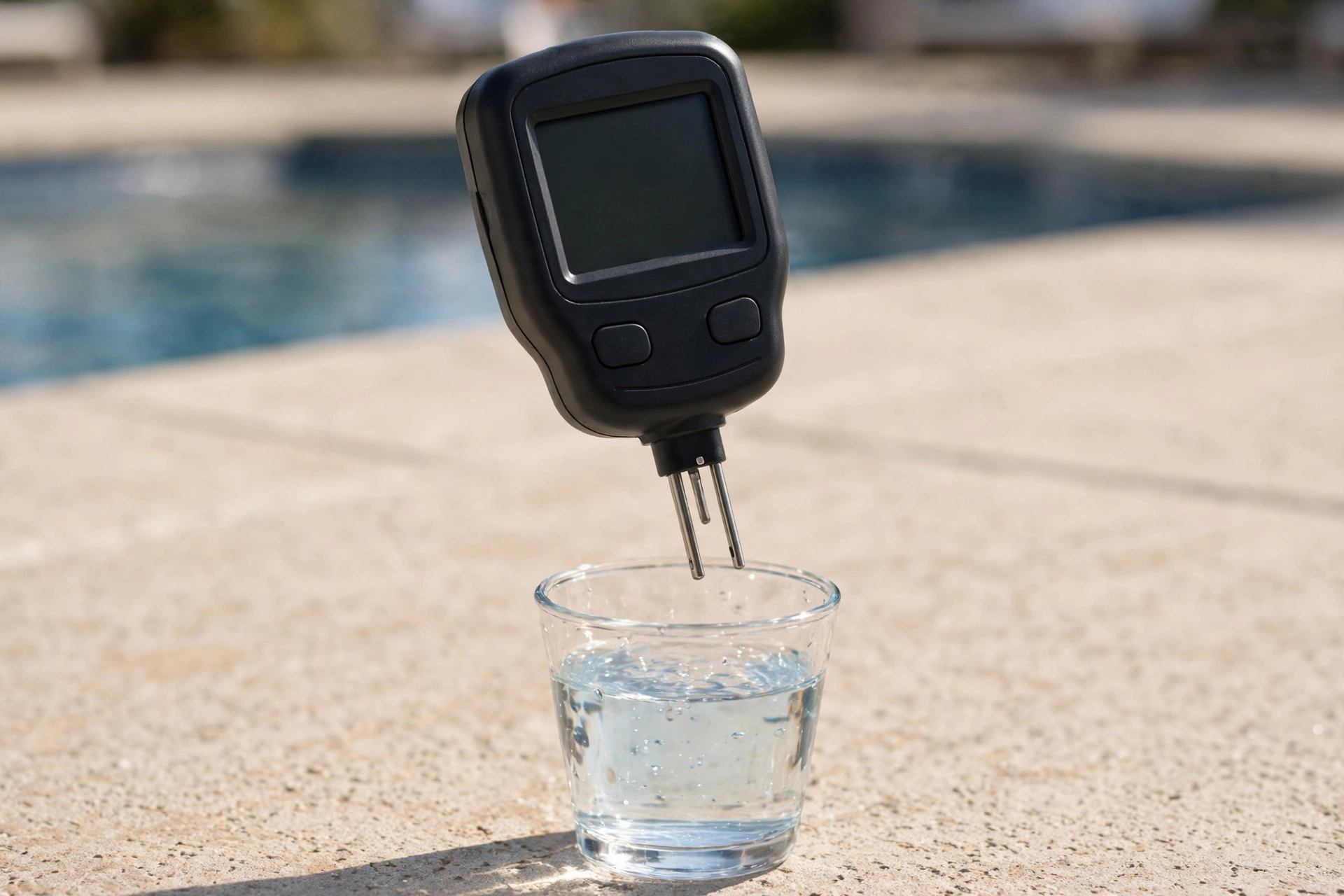
Three options, in order of trust: a digital salt meter (most accurate, ~$20–30), salt test strips (fine for routine checks), or your salt system's own readout (convenient but the least trustworthy — sensors drift and scale up). When the system says low salt but strips say fine, trust the strips and inspect the cell — a scaled cell reads low.
Test monthly in season. Salinity does not swing like pH, so weekly testing is overkill — but check after heavy rain, big splash-out parties, or any partial drain, since all three dilute it.
What moves salinity up and down
Down: rain, splash-out, backwashing, and partial drains all remove salty water and replace it with fresh. A rainy month can drop you a few hundred ppm without you adding a thing. Up: only you — salt does not evaporate, so the only way salinity rises is if you add salt (or, very slowly, from chlorine products over seasons).
This one-way behavior is why overshooting is annoying: if you dump in too much salt, the only fix is diluting with fresh water. Add about 80% of the calculated dose, retest in 24 hours, then top up. Undershooting is a five-minute fix; overshooting is a drain.

Fixing low or high salinity
Low: use the salt dose calculator — enter gallons and current vs target ppm. Broadcast the salt across the shallow end with the pump running, brush it around so it dissolves instead of sitting on the plaster, and keep the system off for 24 hours so undissolved granules do not hit the cell.
High: partial drain and refill with fresh water, then retest. There is no chemical that removes salt — anyone selling one is selling you a story. And before you drain for a "high salt" reading from the system display, confirm with strips or a meter. I have seen scaled-up cells cry "high salt" when the real problem was the cell itself.
- Target for most salt systems: 3000–3500 ppm (check your manual).
- Ocean water: ~35,000 ppm — your pool is about one-tenth as salty.
- 40 lb of pool salt in 10,000 gal raises salinity ~480 ppm.