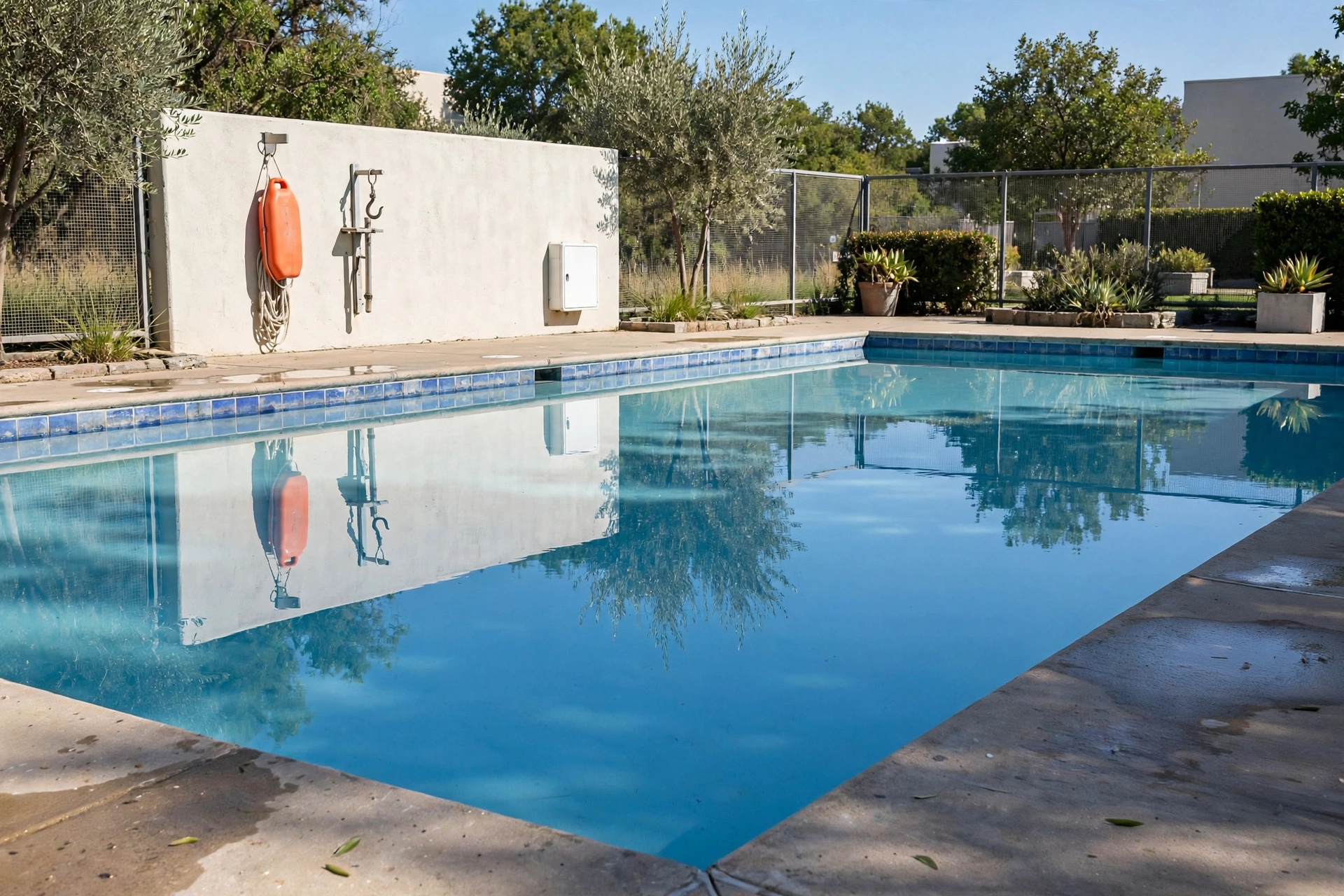
How Long After Shocking Can You Swim?
Swim when free chlorine is back in the normal 1–4 ppm range and pH is 7.2–7.8 — for a typical evening shock, that is usually the next afternoon. But "usually" is not a measurement: test the water before anyone gets in. High chlorine irritates eyes and skin, and no shortcut is worth that.
This is the question every pool owner asks at 9pm after dumping in shock — usually with kids asking "can we swim tomorrow?" Here is my honest answer: the clock does not decide, the test kit does. Time gives you a rough idea, but only a chlorine reading tells you the water is actually safe.
That said, there are reliable patterns. A normal maintenance shock in the evening is usually swimmable by the next afternoon. A SLAM-level shock for a green pool can take days. Let me give you the real rules instead of a single number.

The rule: test, don't guess
My one rule: nobody swims until FC is back in the normal range — 1–4 ppm for most pools — and pH reads 7.2–7.8. Shock-level chlorine (10–30+ ppm) bleaches swimsuits, irritates eyes and skin, and is hardest on kids. The water does not care how many hours passed; it cares what the chemistry is right now.
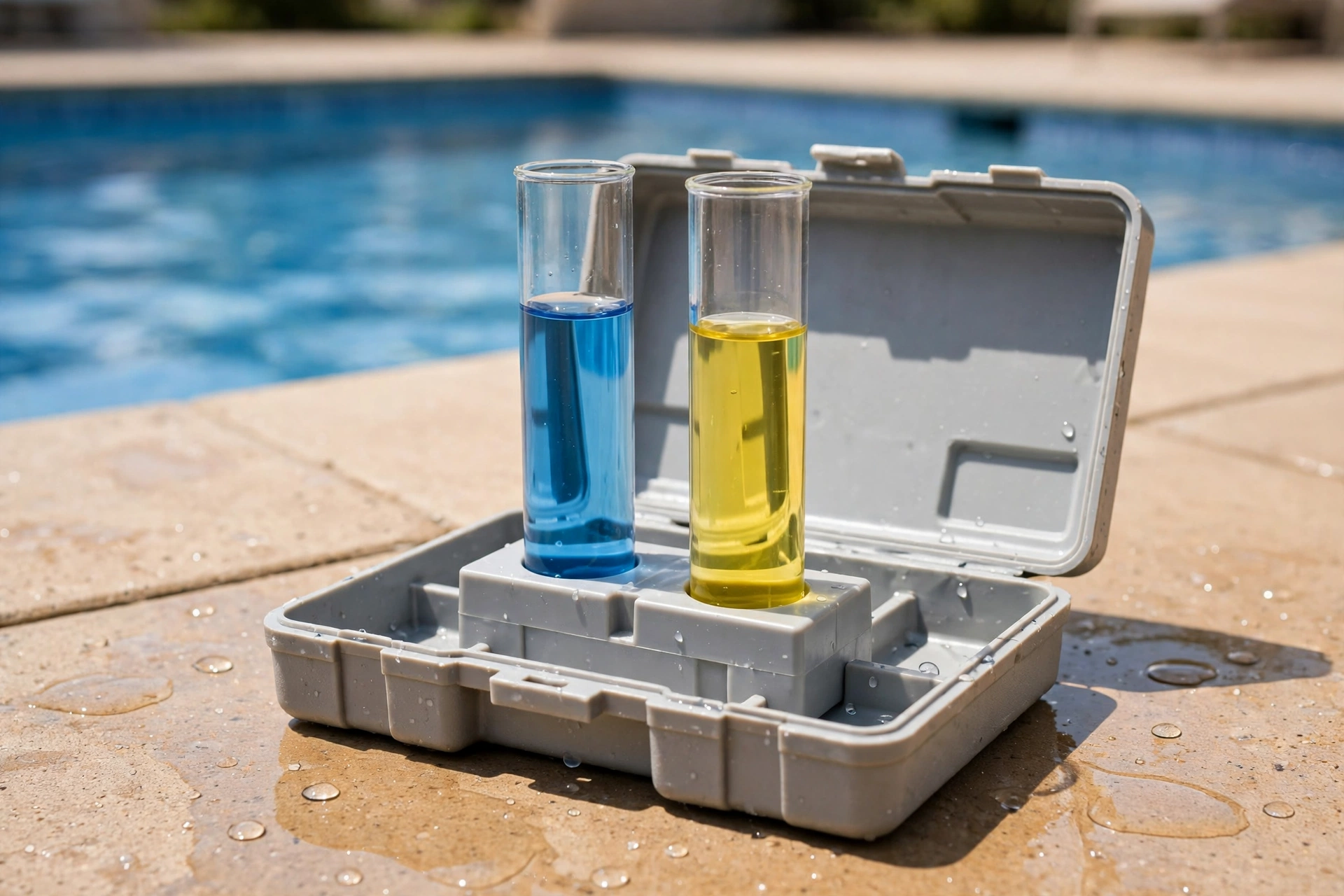
Keep the test kit by the pool, not in the garage. A 30-second FC check beats every rule of thumb I could give you, and it settles every "but can we pleeease" debate instantly.
Typical timelines (rough guide)
Evening maintenance shock (FC raised to ~10 ppm): usually swimmable by the next afternoon — sunlight burns off several ppm by midday. Morning shock: often fine by evening, since UV works fastest in the first hours. SLAM-level shocking (FC 16–30+ ppm held for days): wait until you pass the SLAM completion criteria and FC drifts back under 5 ppm on its own.
These are patterns, not promises. CYA slows chlorine loss (high CYA = slower drop), a pool cover blocks the UV that burns chlorine off, and cool cloudy weather stretches everything out. When in doubt, the test kit is the tiebreaker.
What speeds it up (safely)
Sunlight is the fastest safe reducer — uncover the pool and let UV work. Running the pump with good circulation helps a little. Swimming itself burns chlorine, but I only suggest that as a finisher once FC is already near normal — never swim through high chlorine to "burn it off."
What NOT to do: do not add hydrogen peroxide or thiosulfate just to swim sooner unless you know the exact dosing — overshooting either one creates its own problems. Patience + sunlight is the safe combination.

The kid question
Kids are the reason this rule exists in its strict form. Their eyes are more sensitive, they swallow more water, and they will not tell you the water "feels a bit stingy" until they are already miserable. With kids, I hold the line at FC under 4 ppm and pH in range — no exceptions, no "it's probably fine."
Make it a ritual: test, show them the number, then swim. Kids accept rules they can see. "The test says 3 — we're good" ends the argument better than any lecture.
- Safe to swim: FC 1–4 ppm and pH 7.2–7.8.
- Typical evening shock → swimmable next afternoon (test to confirm).
- SLAM levels (16–30+ ppm) → wait until FC drifts under 5 ppm.