How to Lower Cyanuric Acid (CYA) in Your Pool
The only reliable way to lower CYA is a partial drain and refill with fresh water — drain 50%, CYA drops roughly 50%. No chemical reliably destroys CYA in pool water. "CYA reducer" products have a poor track record in real pools, and the honest pool-care answer has not changed: replace water, then stop the CYA from climbing again.
High CYA is the most common "mystery" I see in forum threads: chlorine tests fine, but algae grows anyway, and nothing the owner adds seems to work. Then someone tests CYA and it is 120, 150, sometimes 200+. At that point the chlorine is handcuffed — present on the test, useless in the water.
If that is you, here is the path out. It is not complicated, but it is also not what product marketing wants you to hear: there is no powder that fixes this. There is only water replacement, done with a little math so you do it once instead of three times.
Why your CYA got too high
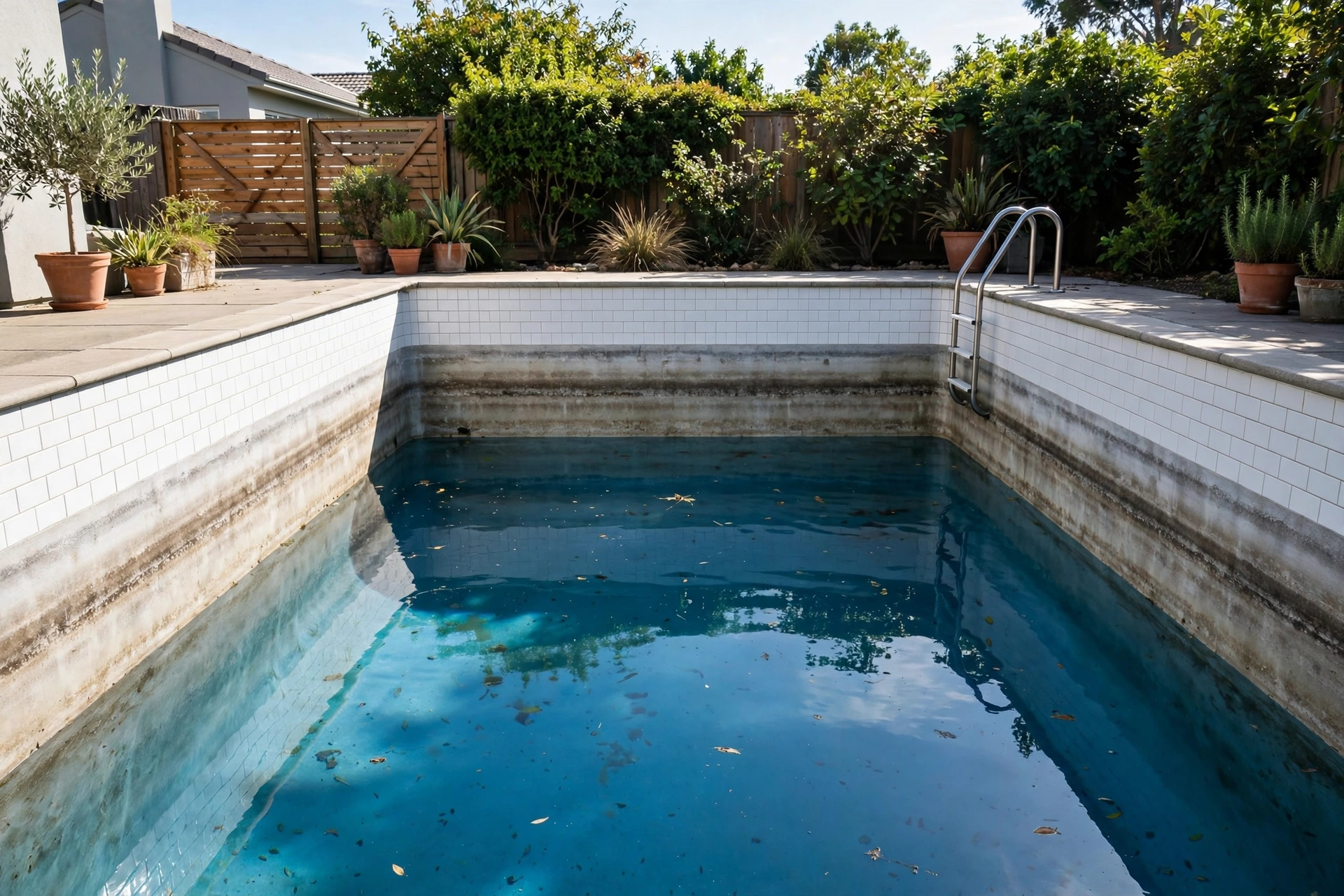
Almost always: trichlor tablets or dichlor shock. Every 10 ppm of FC from trichlor adds about 6 ppm of CYA; dichlor adds about 9. Two summers of tablets-only chlorination can take CYA from 30 to 150 without anyone noticing — because nobody was testing it.
That is the trap: the chlorine keeps working just well enough that the pool looks okay, while the stabilizer quietly accumulates. By the time algae breaks through, the CYA is enormous and every "just shock it" attempt fails. Read what CYA is if you want the full mechanism.
The fix: partial drain and refill
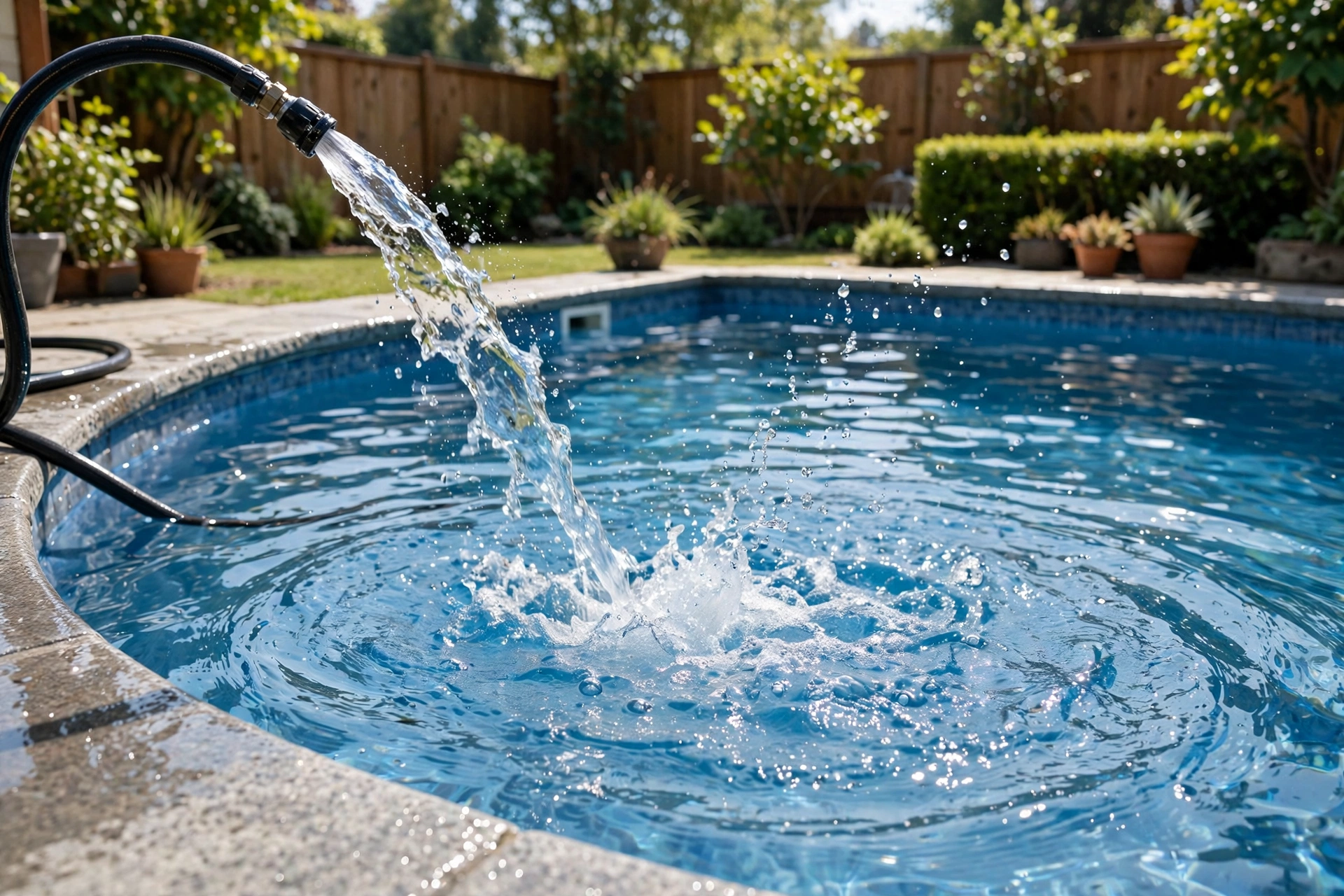
Drain a fraction of the pool and refill with fresh water. The math is beautifully simple: replace half the water, CYA roughly halves. CYA 160 and you want 40? That is a 75% replacement — which usually means doing it in two rounds, because draining a pool more than halfway at once risks structural problems (especially with high groundwater or vinyl liners).
Practical method: pump water out from the deep end while adding fresh water to the shallow end is NOT the way — that just mixes. Drain first, then refill. For big reductions, do 40–50% twice with a few days between, retesting CYA each time. Never drain a vinyl or fiberglass pool completely, and in high-water-table areas keep it to partial drains only.
What about "CYA reducer" products?
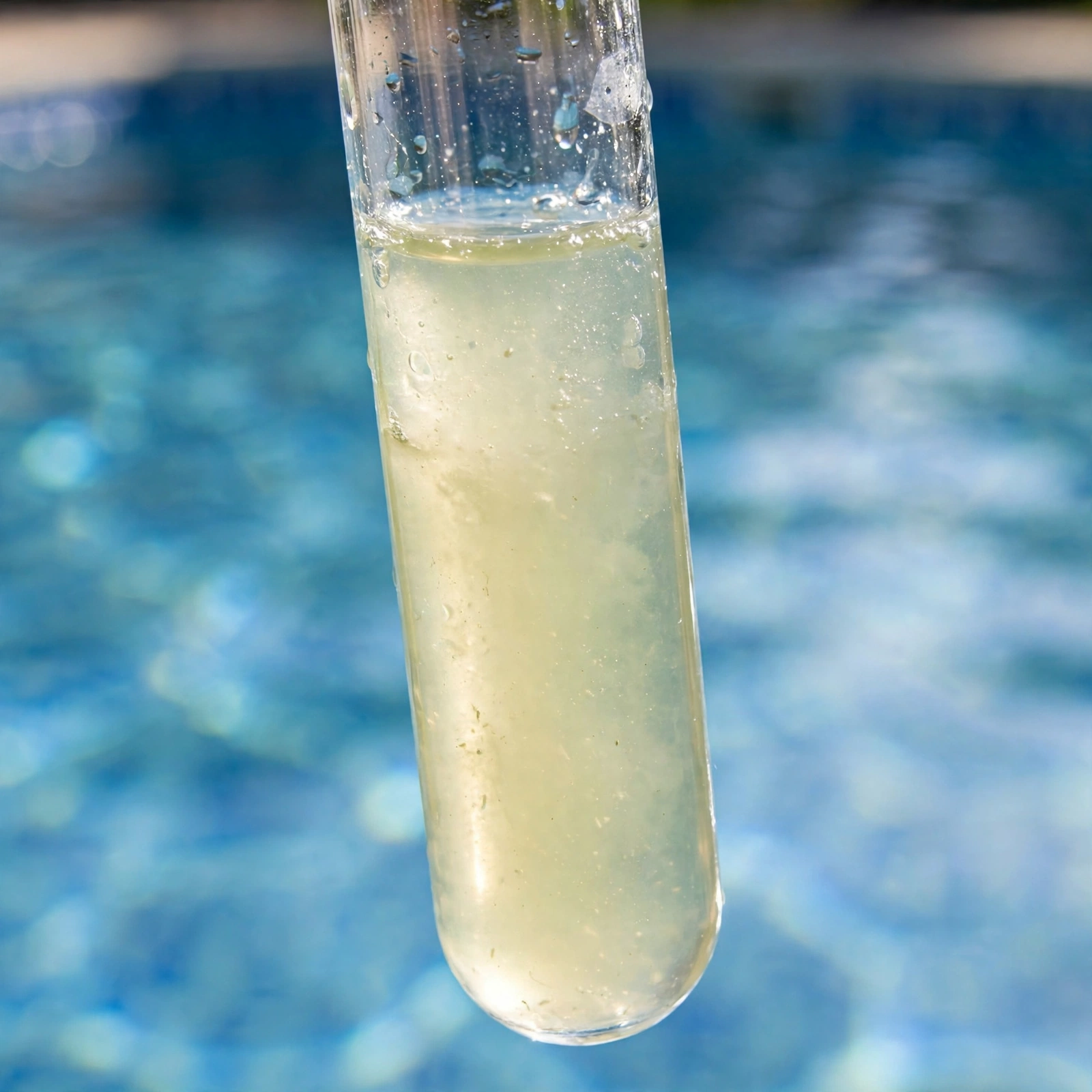
Here is my honest take: products claiming to destroy CYA chemically have been around for years, and the consistent real-world reports are underwhelming — small reductions at best, inconsistent results, and meaningful cost. The chemistry of breaking the cyanuric acid ring in pool conditions is genuinely difficult, which is why no major pool-chemistry authority recommends them as the primary fix.
If you want to experiment with one after draining most of the way, that is your money. But do not buy it INSTEAD of the drain. The drain is the fix; everything else is a gamble.
Keeping it down afterward
The drain is wasted if you go back to tablets-only. Switch to liquid chlorine for daily chlorination — it adds zero CYA — and use tablets only when you are away, or while watching CYA monthly. Test CYA monthly, not yearly; it is the number that sneaks.
Target 30–50 ppm for most outdoor pools (70–80 for saltwater). If you are in the habit of "a tablet a week and never test CYA," you now know exactly where that road ends.
- Replace 50% of water → CYA drops ~50%. Replace 75% → drops ~75%.
- Trichlor: every 10 ppm FC adds ~6 ppm CYA. Dichlor: ~9 ppm CYA.
- Ideal CYA: 30–50 ppm (chlorine pools), 70–80 ppm (saltwater).